
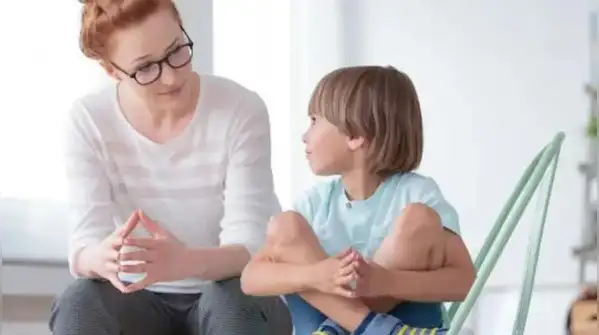
Every parent knows the feeling: your kid comes home with that look on their face. Maybe they weren’t picked for the soccer game at recess. Maybe they forgot their math homework at school. Maybe their favorite toy just broke. Instinctively, you want to jump in and fix everything. You find yourself dialing another parent, explaining the homework, digging out your wallet for a replacement toy, or racing back to school to retrieve what was left behind. After all, a big part of parenting feels like smoothing out life’s rough bits for your kid.
Instead of saying, “I’ll fix this,” try, “What happened? That’s why the AAP says parents should model working through frustration, rather than rushing in to tidy away every obstacle. But here’s the thing nobody likes to admit: Always making life easier for your child can quietly leave them less confident and less prepared for the bigger, messier stuff waiting down the road. This is the heart of psychiatrist Daniel G. Amen ’s advice, who’s spent over forty years working with families and kids and goes by the name of @doc_amen on Instagram. The real skill is in finding the balance: staying close enough to guide and support, without yanking the steering wheel every time. Think of yourself as building scaffolding, not a cage. What ideas do you have? What might happen if you try that? If the solution is safe, let them go for it. And if it doesn’t work out? That’s not failure; it’s just more feedback for next time. One thing that sometimes gets left out of this conversation is the role of support. Growing up mentally strong doesn’t mean kids stop needing their parents. It means kids start to rely on your support in a new way. Research keeps repeating itself on this point: Strong kids almost always have at least one stable, caring grown-up cheering them on, helping them dust themselves off, and setting healthy boundaries. So it’s not, “I’m needed less. It’s, “My child needs me to help them need me differently. That’s a subtle but powerful shift. It’s gut-wrenching, sometimes, watching your kid squirm through a minor mess-up. Maybe they left their science project at home and have to own up to their teacher. Maybe they try (and fail) to fix a tiff with a friend. Maybe they choose poorly and have to live with the fallout. As much as you want to jump in and spare them the discomfort, protecting kids from every small mistake just means they’ll miss a thousand chances to practice problem-solving. Instead of giving the answer right away, you might say, “That sounds tough. What could you try? If your kid comes up with a workable solution, let them try it, even if it’s not perfect. At the end of the day, raising a resilient child doesn’t mean raising a pint-sized stoic who never cries or asks for help. Fair warning: Emotional strength is not emotional numbness. It’s about supporting your kids as they learn how to actually feel hard emotions, think through tricky situations, tackle setbacks, and reach out when they’re truly stuck. Give your kid some options instead of making every choice for them. Let them mess up while it’s safe to do so, and step back far enough for them to experiment. Try praising effort or persistence, instead of just saying, “You’re so smart. Most of all, let them see you navigating problems; none of us have it together all the time, and that’s okay.


Instead, say something like, “You’re so smart, what do you think we should do about it?” before you even start offering solutions. Telling a kid, “You can do this,” is nice. What he posted on Instagram recently cuts through the noise: If you want mentally tough kids, you have to resist the urge to constantly step in. The trick? The next time your child brings you a problem, hold off on the rescue. It’s not about tossing kids into the deep end or leaving them to muddle through serious trouble alone. It’s about nudging them to discover they actually can solve problems, make choices, cope with setbacks…and realize they don’t always need someone else to step in. In fact, research backs this up. The American Academy of Pediatrics points out that kids thrive when adults give them room to make decisions and figure things out, but in an environment that’s still supportive and safe, not just endless freedom or constant “tough love. Picture a little kid struggling over a puzzle. An adult can step in, spin the right piece into place, and the picture’s finished. Sure, it feels good to help. But honestly, the kid just missed out on the best part: that little jolt of pride from struggling and finally figuring out which piece goes where. The same rule applies to bigger bumps in life. Sure, it’s tough to watch your kid wrestle with a hard math problem, or freeze up trying to resolve an argument with a friend. Still, those moments — when they try, mess up, or even flounder a bit, those are how kids learn, “I can handle this. It’s called self-efficacy. It’s the belief that, when things go sideways, you can take action and eventually sort it out. Harvard’s Center on the Developing Child calls this sense of control and growing independence the backbone of resilience. Every time a child is given a chance to try, make a small decision, or work something out, that belief gets stronger. But letting them experience the reality of doing it is what really sticks. Now, it’s not that simple. There’s a world of difference between letting a child try on their own and letting them drown. A five-year-old choosing which toy to put away? They can manage. A twelve-year-old tangled up in bullying at school, or dealing with real anxiety or depression? That’s where a parent needs to step in, no question.

What could you do next?”, suddenly they learn something else: “I might be able to solve this myself. The hardest part might be tolerating those little moments when your child is frustrated, discouraged, or just plain mad. Sometimes, that’s exactly the lesson they need. If parents constantly rescue their children, the message is: “I fix things. You can’t. If you manage to hold back and just ask, “I know this is hard. That small shift, from being rescued to being supported, might be one of the most valuable gifts you can give your child as they grow up. And, honestly, they’ll thank you for it later, even if they can’t quite see it yet.