
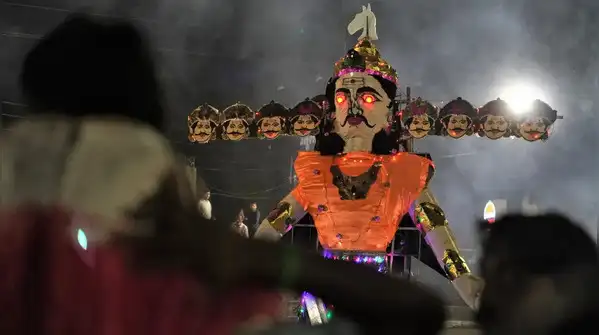
Every Dussehra, the burning of Ravana’s effigy reminds people of the victory of good over evil. The celebrations bring families together, fill the air with excitement and offer a moment to remember the values associated with Lord Rama’s victory.
Because admitting your mistake feels uncomfortable, think about whether there is a conversation you have been avoiding.
Perhaps you keep replaying the conversation, imagining what you should have said or waiting for the other person to realise they were wrong. Think about the last time someone hurt or disappointed you. Have you been carrying that anger long after the situation ended? Anger is a natural emotion, and letting go does not mean pretending that nothing happened. But sometimes, the person who hurt us has moved on while we continue to revisit the incident in our minds. Ask yourself whether holding on is helping you heal or simply keeping you tied to the experience. You can still begin by choosing not to let the hurt control every part of your day. Sometimes, we know we were wrong but struggle to say it aloud. We explain our intentions, defend our reactions or wait for the other person to apologise first. The difficult part is accepting that having good intentions does not mean we never hurt anyone. Saying sorry does not make you smaller. It allows you to take responsibility for your actions without making excuses for them. This Dussehra, consider whether there is a little room in your life for more honesty and a little less need to be right. It is easy to dislike arrogance, dishonesty, jealousy or disrespect when we encounter these qualities in others. Recognising them in ourselves is another matter. Perhaps you complain that people do not listen to you, but often interrupt others. Maybe you expect people to understand your difficult days while struggling to show the same patience when they are having one. We all have blind spots. The point is not to judge yourself harshly for every mistake, but to notice the difference between the values you talk about and the way you actually behave. Ask yourself whether your everyday actions reflect the kind of person you want to be. Someone else’s success can sometimes make you question your own progress. A friend’s career may be moving faster, a relative may seem happier, or someone your age may appear to have figured out life already.
You may not be ready to forgive someone today, and that is okay.


5 questions to ask yourself before burning your own symbolic Ravana
Because it genuinely matters to you or because you are afraid of being left behind, take a moment to ask yourself whether you are pursuing something. But what if we took a little time to look inward before watching Ravana burn? It is easy to recognise anger, ego or dishonesty in someone else’s behaviour. Looking at our own habits, however, can be much harder. We all have patterns we justify, mistakes we postpone correcting and feelings we struggle to admit. This Dussehra, here are five questions worth asking yourself as you think about the symbolic Ravana within. Images: Canva/iStock (for representative purposes only) Before you realise it, you are measuring your journey against someone else’s milestones. Ambition is not a bad thing, and another person’s happiness does not have to diminish yours. You can celebrate someone else’s progress while continuing to work towards your own goals. Your life does not have to follow another person’s timeline to have meaning. Sometimes, we know exactly what needs to change but keep putting it off. It could be a habit we have outgrown, a boundary we need to set or a conversation we know we should have.


As you celebrate this Dussehra, you might ask yourself one final question: what would I like to leave behind so that I can move forward with a little more honesty, compassion and peace? We tell ourselves that we will deal with it when life becomes less busy, when we feel more confident or when the timing is finally right. But change rarely arrives with complete certainty. Often, it begins with a small decision to do something differently, even when it feels unfamiliar. It does not have to be a dramatic resolution. A little more patience, an honest conversation or a conscious effort to break an unhelpful habit can be a meaningful start. Dussehra is a reminder of the triumph of good over evil, but personal growth is rarely as simple as one decisive victory. Old habits can return, difficult emotions can resurface and some lessons take time to learn. Perhaps the point of reflecting on your symbolic Ravana is not to expect yourself to become a perfect person overnight. It is to recognise what needs attention and make a sincere effort to do better.
Ask yourself what one thing you could begin changing today.