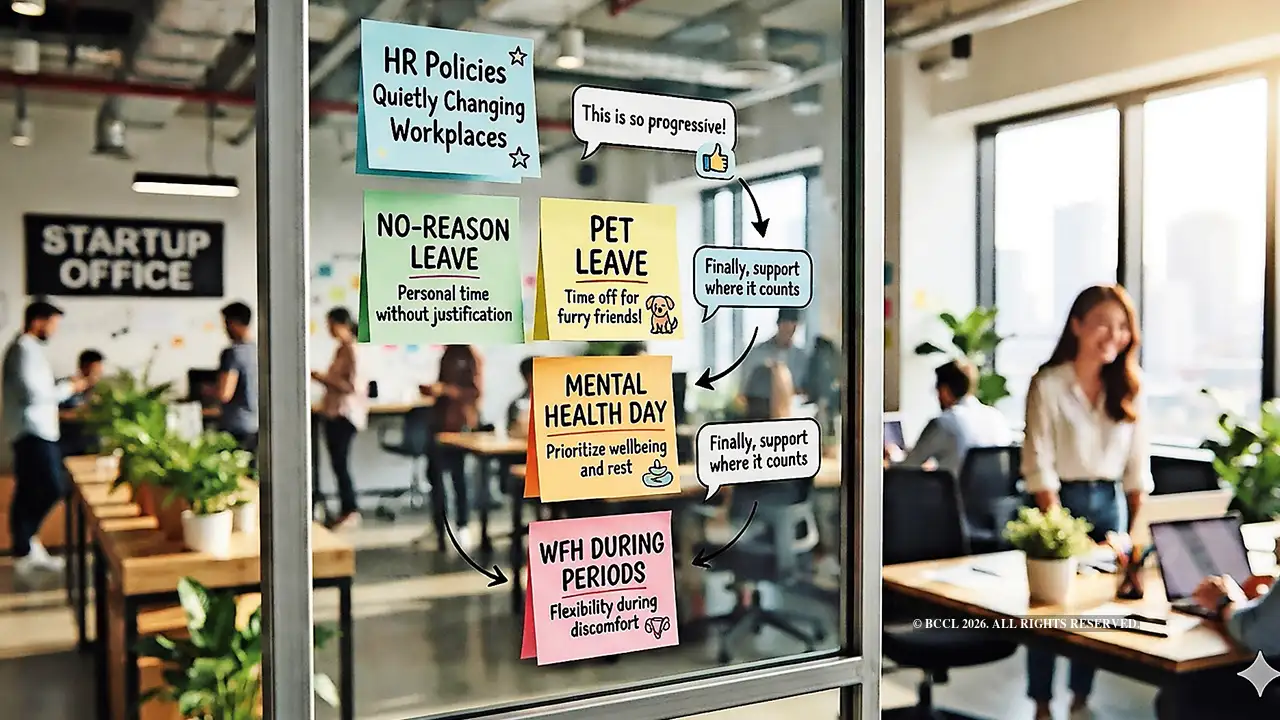
Representational image, created using AI, for illustrative purposes only (BCCL/ LT AI imagery)
“My millennial manager replies to clients at 2 AM and expects me to do the same. Shravya Sabharwal, 26, a manager at a communications firm alsofirmly believes in this philosophy. GEN Z WORK TRENDS: THE DATA 94% value on-the-job learning over climbing the corporate ladder (India) 68% won’t take management roles without clear benefits 50% quit within a year over inadequate pay (India) 32% prioritise work-life balance over salary 22% attrition rate—highest of any generation Sources: Deloitte India Gen Z Survey 2025; Randstad India 2025; Glassdoor 2024; HRKatha 2025 Representational image, created using AI, for illustrative purposes only (BCCL/ LT AI imagery) Leadership learns to adapt – The biggest change has been shorter cycles, immediate feedback loops and faster value addition Mitasha Singh, founder of a talent acquisition company, says Gen Z has fundamentally changed how organisations think about onboarding, engagement, and accountability.“The biggest change with the new generation joining the workplace has been shorter cycles, immediate feedback loops and faster value addition.
Because we didn’t have options and wore ‘making it work’ like a badge of honour, many millennials are secretly exhausted. Because gen Z stood and demanded basic work-life balance, all.
From “career minimalism” to “quiet quitting” and now “loud quitting,” these once-online buzzwords are playing out in real offices. I did it for some time but one day I said no. Mental well-being matters for us,” says Radhika, a senior client servicing executive at a Mumbai ad agency. She says, “In your early twenties, overworking is normalised, exhaustion is romanticised, and saying yes to everything is framed as ambition. Senior leaders now have to offer clarity, purpose and value much sooner, while also demanding accountability early on,’’ she says. We can either take the baton and behave the way our seniors did, or we can come out of that toxicity and create the right workplaces,” he says. We even have a policy: two leaves if your pet is sick,” says Saloni, an HR professional in Gurgaon. Once, an employee said, ‘This deck has the rizz,’ and the millennial boss went, ‘Okay, what is this word?’” Saloni laughs.
Gen Z is reshaping India’s corporate culture, and the latest proof is in how young professionals are negotiating pay, roles, and boundaries. Startup founder Anupam Mittal recently backed this shift, writing: “Let’s stop shaming Gen Z for switching jobs. If you’re not feeling it, move. This is the time to explore. His post captures a wider trend: work is no longer about silent endurance or unquestioned loyalty. Work is part of my life, it’s not my personality. But concepts like ‘act your wage’ or career minimalism aren’t about laziness, they’re a response to a system that often rewards availability over output. The time an employee spends with an organisation has reduced significantly. On Gen Z’s readiness to quit, she adds: “There’s nothing quiet about it. Gen Z, on the other hand, can walk away where their values don’t align, and that’s healthy. Those who can’t end up being entitled and unaware of their privilege, causing the most friction with peers. Lucknow-based millennial creative director Sakar Mishra urges leaders to adapt. “As leaders, we have a great responsibility. “Many of my friends have started companies allowing no-reason leave and hybrid work, some are even running companies from the mountains and beaches. They also balance freelancing with their jobs, which shows how smart they are to create backups. Representational image, created using AI, for illustrative purposes only (BCCL/ LT AI imagery) ‘Honest leave reasons were a taboo once, Gen Z normalised it’ Companies are fast-tracking once-unthinkable HR changes. “Management is more accommodating, especially towards women—providing work-from-home for menstruation issues. This shift has led offices to hire counselling psychologists and offer weekly mental health consultations—unthinkable five years ago. ” The language gap is real. “Millennials are often confused by Gen Z slang. ‘We’re not rude, we’re done romanticising silence ’
It’s not just laziness; it’s also overwhelming and a lack of resilience… The GenZs who are happy today have learnt to respect the hustle, address their FOMO, and take feedback well while maintaining boundaries and creating time for life beyond work. “Gen Z has normalised honest leave reasons… sometimes emailing, ‘I don’t feel like working today.


Loud Quitting: Being assertive about demands before leaving -Amina Ashraf Looking for trusted parenting advice? Follow TOI Parenting Circle on Instagram for expert guidance, relatable stories, and practical tips delivered every day.
Take Rochelle, 24, at a Mumbai events firm. Representational image, created using AI, for illustrative purposes only (BCCL/ LT AI imagery) ‘Mental well-being matters for us most’ For many 20-somethings, work timings are non-negotiable. We’re not challenging authority, we’re challenging inefficiency… We’re just done romanticising silence in workplaces,” says Vividha Mishra, 21, a social media and content manager in Lucknow. Shari Shirazi, 25, who manages Gen Z teams at a Mumbai media company, sees both sides.
“They switch jobs more… They won’t take a promotion if that’s not their bandwidth… However, their honesty is refreshing until deadlines are missed.
“I believe in loud quitting, being assertive about what you deserve,” she says. Often labelled “rude” for saying no to extra work, longer hours, or skipping leaves, Gen Z is pushing back against old workplace norms. I’ve seen reasons like ‘lift not working’ or ‘I have oil in my hair and there’s no water,’” she says.
Asked to take on sales duties without a raise, she walked into her director’s office with four job offers. “If you want me to do extra work, pay me. If we can’t match up, I have other options. Her stance worked, the director called back the next day, and Rochelle got the raise. For many young professionals, the message is clear: if pay or culture don’t match the workload, they’re ready to speak up, or walk away. “We don’t fear speaking up. “We will immediately call out even the most senior boss if something’s not right. We are direct and to the point, we are not rude! “Gen Z are brutally honest about leave applications. They’re not using a grandmother’s death excuse anymore. When someone emails ‘don’t feel like working’ during a client crisis, that’s not boundaries. That’s being unprofessional… But millennial bosses are learning to be more accommodating and understanding. Decoding Gen Z’s work Vocabulary Career Minimalism: Refusing to let work define your identity Act Your Wage: Effort matches pay, no free overtime Quiet Quitting: Doing your job, nothing more Bare Minimum Monday: Easing into the week slowly Lazy Girl Job: Well-paid, low-stress, remote work Career Cushioning: Building backup plans or side income Conscious Unbossing: Turning down promotions to avoid stress