
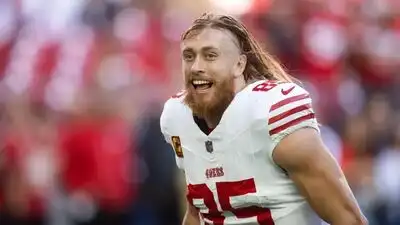
George Kittle has opened up about how his grandfather’s prostate cancer diagnosis changed his understanding of family health history. (Getty Images)
George Kittle’s grandfather received his prostate cancer diagnosis roughly 10 years ago. Novartis reports that the five-year relative survival rate for prostate cancer exceeds 99% when the disease is caught early.
I don’t know anything,” Kittle told People. He has since partnered with Novartis as an ambassador and taken part in its “Relax, It’s a Blood Test” campaign. “You go in, get blood tested and then you continue to live your life,” Kittle told People. You can deal with the needle,” Kittle said. “I try to attack everything with a violently positive mindset,” he told People.
San Francisco 49ers tight end George Kittle wants men to pay closer attention to their health, a message shaped by a personal family experience. His grandfather was diagnosed with prostate cancer around a decade ago, but Kittle admits he initially knew very little about the disease or his family’s medical history. That loss prompted Kittle to speak with his father, Bruce, about their family’s health risks and reconsider how seriously he should take his own health. He is now using his platform to encourage men to get checked. However, the seven-time Pro Bowl tight end did not fully understand what the diagnosis meant at the time. He had little knowledge of prostate cancer and had never paid much attention to the family’s medical history. Speaking to People, Kittle recalled his initial reaction to learning about the disease. “I had zero awareness. I had no idea about anything except I was just like, all right, well it’s prostate cancer. Kittle sat down with his father, Bruce, to discuss their health history and learn what he might need to watch for in the future. That conversation also changed his approach to preventive care. Rather than treating medical checks as something to consider only when a problem appears, Kittle wants men to understand the value of knowing their risks early. George Kittle’s message comes against the backdrop of prostate cancer’s impact on men’s health in the United States. Excluding skin cancer, it is the most commonly diagnosed cancer among American men. The American Cancer Society estimates that about one in eight men will develop the disease during their lifetime. Early detection can make a significant difference. Kittle believes men should not overthink the first step. Speaking about the screening process, he explained how a simple conversation with a doctor can help someone understand what comes next. “It’s not scary, it’s not intimidating, it’s pretty straightforward. He also offered a blunt reminder to men who might be avoiding the appointment. “Relax. It’s a blood test. It’s so easy. Trust me, I get IVs, I get blood tests, I get acupuncture. He was careful not to present himself as a medical expert, adding, “I’m not a doctor, but you should talk to your doctor. The message carries added weight after Kittle’s own difficult year. He tore his Achilles during the playoffs in January and returned to the field last month after rehabilitation. He credited his approach to setbacks for helping him through the recovery. “It doesn’t matter your situation, just attack it as best you can. Join conversation Share your thoughts in the comments Be respectful · TOI community guidelines His wife, Claire, his parents and the medical professionals involved in his rehabilitation also played an important role. Their support helped him maintain that outlook during a challenging recovery. For Kittle, the conversation about health now extends beyond football. His grandfather’s experience made him ask questions he had never thought to raise before. He wants other men to do the same, starting with a conversation they might otherwise keep postponing. Get the latest Sports News and Live updates. Download the TOI app.
His grandfather died of natural causes last year. His grandfather’s death last year gave him another reason to understand the family’s medical background. The initiative, which featured several NFL players earlier this year, aims to make conversations about prostate cancer screening less uncomfortable for men.