
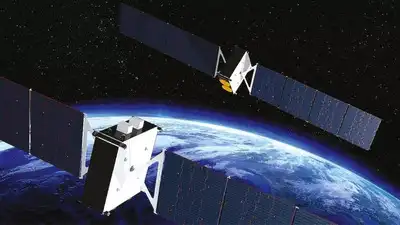
Representative Image
As of 2026, Elon Musk’s SpaceX operates more than 11,000 active Starlink satellites. The growing number of satellites and other trackable objects has made collision avoidance challenging for operators, especially as more companies and countries plan to deploy large satellite constellations. To show the scale of the problem, Starlink satellites performed more than 355,000 collision avoidance manoeuvres between May 2025 and May 2026. Starlink satellites are facing a growing collision risk in Earth’s orbit. This makes up a large share of the growing population of spacecraft orbiting Earth. SpaceX has called for international cooperation to solve this problem, saying that satellite operators sharing data on where their satellites are and where they are heading could help them predict potential collisions and steer more safely around each other in orbit.
How international cooperation can help prevent collisions
China and NASA reportedly worked together to avoid a possible satellite collision in October 2025. Countries have collaborated in the past to lower the risk of satellite collisions. But the conversation was restricted to information pertinent to that situation. Cooperation could become more important as other companies develop large satellite networks. China’s SpaceSail, for example, has plans for a constellation of thousands of satellites that could add to the number of spacecraft operating in low Earth orbit. SpaceX is also developing tools to improve orbital awareness. Its Stargaze system uses observations from Starlink satellites to help identify and track objects that could pose collision risks. Better tracking could support safer operations for multiple satellite operators and help monitor space debris. As satellite constellations continue to grow, avoiding collisions will depend not only on tracking technology but also on how effectively operators exchange information. You use AI every day. Now get your AI Quotient. Take the AIQ test.
Why some countries do not share satellite data
In 2025, NASA reported tracking over 45,000 man-made objects around the planet, including defunct spacecraft and debris. The company already publishes this information for its own Starlink satellites, but other operators do not consistently make similar data available. At the 2026 International Astronautical Congress in Turkey, Michael Nicolls, SpaceX’s vice president for Starlink and president of AI at SpaceXSI, presented information highlighting differences in data-sharing practices among satellite operators. According to the presentation, some organisations in China and Russia were reluctant to share ephemeris data. Earth’s orbit contains more than satellites. As satellite networks expand, operators need to track active satellites and objects that could threaten their missions. The challenge is particularly relevant to Starlink, which continues to expand its satellite internet network worldwide. Each additional spacecraft increases the number of objects to monitor, and repeated avoidance manoeuvres can complicate satellite operations. SpaceX has proposed sharing more ephemeris data, which describes a satellite’s position, velocity, and trajectory. Some operators in the US, Europe and Japan also did not share the information. Political tensions, national security concerns, and restrictions on sensitive data may explain these differences, although the reasons vary between organisations. Without reliable information about other satellites’ movements, operators may struggle to coordinate avoidance manoeuvres, especially when several spacecraft approach the same orbital area.