
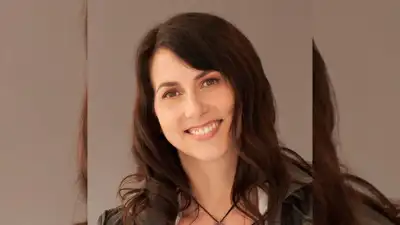
MacKenzie Scott
While Jeff Bezos’ ex-wife has donated more than $26 billion to nearly 2,700 organisations since 2019 and Bill Gates’ former wife has directed hundreds of millions of dollars towards causes including women’s health, Armstrong says many charities can end up having a negative impact on society. She donated $7.2 billion last year alone through her Yield Giving initiative, and her grants to historically Black institutions have pushed her total donations in this field past $1 billion. She has also recently donated $60 million to Global Methane Hub and $20 million to Active Minds. Forbes has ranked MacKenzie Scott as the third most generous philanthropist alive, with around 46% of her net worth already donated. Likewise, Melinda French Gates has criticised the rate at which billionaires distribute their money, but here her disappointment centres on how philanthropy works, not charity itself.
Because too little of billionaires’ wealth reached those it was meant to help, in late 2025, she said the Giving Pledge had failed in its mission. Armstrong shared his views on a recently released episode of the Katie Miller podcast.
His main concern about forming a foundation, he said, is that someone could someday hijack it for an ideology he doesn’t align with. “The biggest fear with starting a foundation is that it just gets captured by some ideology [and] that I lose control of it,” Armstrong said. He compared it to the Ford Foundation, saying that Henry Ford would be “turning over in his grave” if he knew what the organisation was doing. “The common view is that philanthropy is like this noble cause,” said Armstrong. “I guess I have sort of a contrarian view, which is like a lot of charities and philanthropies are actually net negative on the world, and they get captured.” Armstrong said it is “remarkably hard to find” a philanthropic organisation that has not been captured by ideology or produced unintended consequences. He gave the example of a hypothetical nonprofit focused on criminal justice reform that could ultimately “just increased crime.” He said he has a donor-advised fund, or DAF, that lets him set aside money for charitable giving and decide later where the funds should go. “And I just try to put money toward things that I think are helping civilisation advance,” Armstrong said, though he didn’t specify which causes he currently supports. He didn’t rule out establishing a foundation in the future, but he thinks it is “crazy” to do it now. He has said he discouraged people from signing it and encouraged existing signatories to withdraw. You use AI every day.
Coinbase CEO Brian Armstrong views billionaire philanthropy differently from MacKenzie Scott and Melinda French Gates. His desire for a DAF is part of his broader goal of retaining control over how his charitable money is spent. MacKenzie Scott has chosen another route. Other wealthy entrepreneurs have expressed concerns similar to Armstrong’s. Elon Musk has complained about the difficulty of giving money away effectively and criticised Scott’s philanthropy, arguing that it was making the world a “worse place. Peter Thiel, the PayPal cofounder and venture capitalist, has also questioned the Giving Pledge, saying it had “really run out of energy. Now get your AI Quotient. Take the AIQ test.