
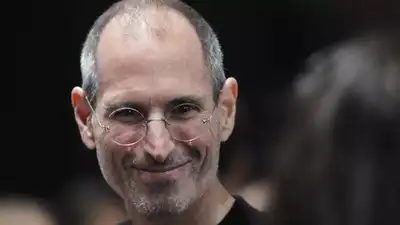
Steve Jobs (Image source: Reuters)
In a 2005 commencement speech at Stanford University, Jobs spoke about death not as an ending to fear, but as a force that can strip away the distractions that keep people from making meaningful choices. He was diagnosed with a rare form of pancreatic cancer in 2003, two years before delivering the Stanford speech. Because they genuinely value it or because they believe they are expected to, it can encourage people to question whether they are pursuing something.
He said that for much of his life, the awareness that he would eventually die helped him avoid living according to someone else’s expectations. Steve Jobs spent much of his public life talking about the future, products that did not yet exist, technologies that could change how people lived, and the need to keep moving forward. But one of his most enduring observations was about something no technology can postpone. “Death is very likely the single best invention of Life. It is Life’s change agent. It clears out the old to make way for the new” The quote is short, but the idea behind it is not. Jobs was arguing that death gives life a boundary, and that boundary can change how people decide to spend their limited time. Without an endpoint, there would be little urgency to choose one path over another. Jobs connected that idea to the way people make decisions. He argued that remembering death can help separate what genuinely matters from expectations imposed by other people. Careers, opinions, failures and the desire to please others can feel important in the moment, but they take on a different weight when viewed against the fact that time is limited. There is another idea contained in the phrase “best invention. Jobs was not describing death as good in itself. He was pointing to its role in clearing away the old. People leave, generations change and new ideas take their place. In that sense, mortality creates room for what comes next. Jobs’ comments about death were shaped by his own experience. He had already faced the possibility of dying once before, when doctors discovered a tumor that could be treated surgically. In the speech, Jobs described how thinking about death had changed his priorities. That philosophy was also closely connected to his approach to work. Jobs repeatedly emphasized making products and decisions based on what he believed was important rather than simply following established conventions. His career at Apple included both periods of success and setbacks, including his departure from the company he had helped create before returning years later. The point was not that failure or success could be avoided. It was that neither should become a reason to spend a life pursuing something that no longer feels meaningful. Jobs’ quote is ultimately less about death than it is about time. The end of life is certain, but the way a person uses the time before it is not. Remembering that limitation can clarify some choices. For Jobs, mortality was not simply something to accept at the end. It was a reminder to use the present more deliberately. Get the latest technology news and updates. Download the TOI App.