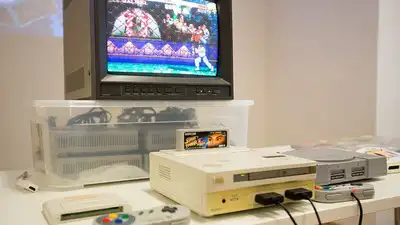
Nintendo PlayStation Prototype. Image Credits: Wikimedia Commons.
A box bought for $75 at a bankruptcy auction looked like little more than leftover office equipment. Terry Diebold bought the lot during Advanta Corporation’s 2009 bankruptcy auction, and the console remained largely unnoticed in his family’s attic until his son Dan rediscovered it in 2015. Engadget’s interview with the Diebolds documents how Terry paid just $75 for the lot and how Dan later recognised the significance of the machine. Sony’s own corporate history records that the companies had finalised an agreement in early 1990 to develop the Super NES CD-ROM system. It is estimated that about 200 prototypes were made for this console. This eventually led to Sony launching the PlayStation in 1994. When the latter went bankrupt in 2009, all of its property was auctioned. As a former Advanta employee, Diebold found several items worth bidding on and bought one lot for just $75.
The collaboration failed before the console became a product that was launched into the market.
The prototype was eventually sold by Heritage Auctions for $360,000 in March 2020 The machine was known as the “Play Station”, a name that predated Sony’s eventual PlayStation brand. Hidden among those items, however, was a machine that had never reached the public: a prototype created through the abandoned partnership between Nintendo and Sony. It was born from a partnership between Nintendo and Sony in the early 1990s, when the two companies were working on a CD-ROM system that would combine Nintendo’s Super Famicom technology with Sony’s optical-disc technology. In place of Sony, Nintendo partnered with Philips, while Sony had to go alone in developing game consoles. The prototype Diebold eventually obtained apparently belonged to Olaf Olafsson, a former Sony employee who later worked with Advanta Corporation. However, he did not know that one of the boxes contained the prototype in question.
It was only in 2015 that Dan Diebold found it in his father’s attic and began investigating what appeared to be an unusual Nintendo console with a CD drive. Heritage Auctions later described the machine as the only remaining example of the 200 or so pre-production consoles believed to have been made. Because very little physical evidence of the cancelled project was known to survive, the discovery mattered.
Examination of the hardware eventually confirmed that it was a legitimate prototype, complete with Sony components and a Super Nintendo cartridge slot. For years, the machine remained largely forgotten. Images and videos of the machine spread online, prompting questions about whether it was genuine. It could play Super Nintendo cartridges, and its CD drive reflected the technology Nintendo and Sony had once planned to develop together. Olaf Olafsson, the prototype eventually obtained by Diebold, apparently belonged to him; he was a former Sony employee who later worked at Advanta Corporation. Image Credits: Wikimedia Commons.