
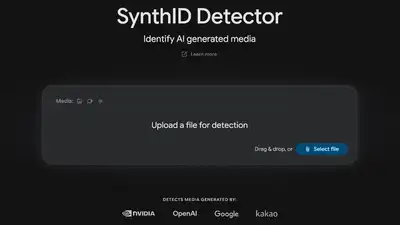
The website, which initially debuted in 2025 as a restricted testing environment for journalists and media professionals, is now broadly available to everyday users to verify images, audio clips and video files.
Beyond identifying media produced by Google’s internal systems, the expanded detector supports watermarked outputs from industry partners including OpenAI, NVIDIA, and Kakao, with integration for Apple slated to arrive soon, according to the company. Google has opened public access to its dedicated SynthID Detector website, launching a web-based verification portal that allows anyone to identify whether digital media has been generated or modified using artificial intelligence (AI).
As generative AI tools make synthetic media increasingly difficult to distinguish from genuine material, Google developed SynthID to embed tamper-resistant digital watermarks directly into AI outputs. SynthID essentially integrates invisible digital signatures across AI-generated text, images, audio and video at the exact moment of creation. These markers cannot be seen or heard by humans, but remain readable to detection algorithms.
SynthID Detector available in various Google apps
In addition to the standalone detector website, Google has integrated verification capabilities directly into its broader consumer ecosystem, including Gemini, Google Search and the Chrome browser. Gemini, Search, or Chrome will scan the file for embedded SynthID signatures and confirm whether a matching watermark is present.