
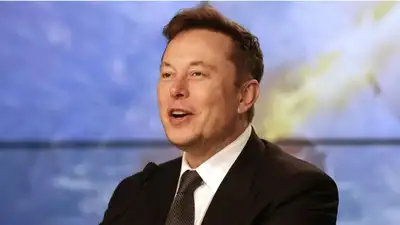
In 2021, the Musk Foundation put up $100 million for a global competition aimed at finding ways to remove carbon dioxide from the atmosphere and oceans and store it durably. The XPRIZE Carbon Removal competition ran for four years, drew 1,334 registered teams from more than 88 countries and helped turn carbon removal into a credible, investable sector. Released in April 2026, the 136 Distinguished Teams collectively removed 243,552 tonnes of CO₂ over the course of the competition, and participating companies raised more than $3.3 billion in capital during and after the prize period, according to XPRIZE’s Post-Prize Impact Report. The report also points to hundreds of companies created, thousands of skilled jobs generated and 875 patents filed.
XPRIZE announced the $100 million competition on February 8, 2021, with funding from Elon Musk and the Musk Foundation. It officially launched on Earth Day, April 22, 2021, when team registration opened. XPRIZE announced the winners on April 23, 2025, selecting them from 20 finalists across 11 countries. Each winning team removed more than 1,000 net tonnes of CO₂ in the competition’s final year. The $50 million grand prize went to Mati Carbon, which spreads finely crushed basalt on agricultural land in India to accelerate a natural weathering process that permanently removes atmospheric CO₂.
XPRIZE says the approach also benefits smallholder farmers through improved soil health, reduced agricultural inputs and increased income. The challenge asked teams worldwide to develop technologies that remove CO₂ from the atmosphere or oceans and store it durably and sustainably, while showing a credible path to gigatonne-scale removal.
875 patents filed during the competition
The competition ran through Earth Week 2025, and XPRIZE describes it as the largest incentive competition in history. The 136 Distinguished Teams collectively removed 243,552 tonnes of CO₂ over the course of the competition, according to the impact report. They also sold 9,475,438 tonnes of carbon credits, a figure that includes future deliveries of tonnes removed. The 243,552 tonnes were actually removed during the competition, while the larger credit figure also counts tonnes sold for delivery in the future. Global CO₂ emissions run at roughly 37 billion tonnes a year, so the tonnes removed during the competition amount to far less than 0.001% of one year’s emissions. It also acknowledges that carbon markets face headwinds in 2026. Participating companies raised more than $3.3 billion in capital during and following the prize period, which XPRIZE describes as a 33-fold return relative to the $100 million purse. XPRIZE says the competition’s structured milestones and third-party validation led to a 464% increase in average deal size and a 176% increase in the number of unique investors backing competing teams. More than half of the 1,334 registered teams were founded after the prize launched, and dozens are now running pilot projects or commercial deployments across six continents. Teams filed 875 patents during the four-year prize period from 2021 to 2025, which XPRIZE says is a 958% increase in the annual rate of patent filings. XPRIZE also estimates that the $100 million purse helped catalyse more than $300 million in research and development that might not otherwise have happened. NetZero, a French biochar company operating in Brazil, received $15 million as first runner-up. Vaulted Deep, a US waste-management company that stores unusable organic waste deep underground, received $8 million. UNDO Carbon, which uses enhanced rock weathering in Scotland and Canada, received $5 million. XFACTOR awards of $1 million each went to Planetary, for ocean alkalinity enhancement, and Project Hajar, a partnership between Aircapture and 44.01 that captures CO₂ from the air and mineralises it underground in the United Arab Emirates. Across the competition, $5 million also went to student teams and $15 million to milestone awards for early-stage demonstrations.
With the competition over, XPRIZE says the field has moved beyond technical validation and early demonstrations towards commercial readiness. Teams worked across four removal pathways: air, rocks, ocean and land. Buyers included Microsoft, Google, Salesforce, Stripe, Shopify, Meta, McKinsey, BCG and JPMorgan. The two figures measure different things. The removal total remains small against the problem it targets. XPRIZE’s argument is that the competition built a pipeline of demonstrated solutions that can now move from pilots towards commercial deployment. The money is capital raised by the companies themselves, not money returned to Musk or the XPRIZE Foundation, and XPRIZE’s report does not specify which participating companies the figure covers. The technologies ranged from engineered systems that capture carbon directly from air or oceans to approaches that use natural processes involving rocks, soil and organic waste. The next test is whether stronger demand for carbon removal emerges to scale these technologies to the level scientists say will be needed. You use AI every day. Now get your AI Quotient. Take the AIQ test.