
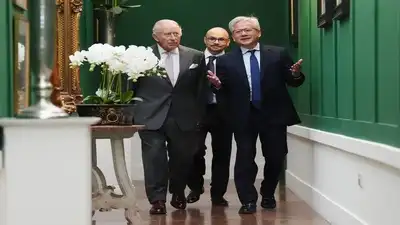
17, 2026. (Jonathan Brady/PA via AP, Pool) Britain’s King Charles III, left, walks with Nvidia chief executive Jensen Huang, right, and Sir Demis Hassabis to a meeting for leaders from the artificial intelligence (AI) sector, government, and thought leaders to discuss how AI can be developed and deployed in ways that benefit society, at Dumfries House in Cumnock, Scotland, Thursday Sept.
Britain’s King Charles has cautioned prominent figures across the artificial intelligence (AI) sector about the existential threat posed by machine learning tools falling into hostile hands, arguing that robust defenses must be established before control slips away entirely. He hosted top corporate leadership from Silicon Valley and global research hubs at his Dumfries House estate in Scotland. His comments came at a time when public anxiety intensifies over whether internal company safety initiatives are falling dangerously behind the breakneck expansion of frontier computing systems. The dialogue forms part of a broader, high-stakes international debate over whether technology companies can realistically police themselves. Speaking to assembled tech executives, Charles acknowledged the immense upside of machine learning, pointing out its capacity to enrich and preserve human life, especially across medical treatments and biological sciences.
Addressing the room, Charles pressed the leaders on the pressing necessity of instituting checks: Jensen Huang: Founder and chief executive officer (CEO) of semiconductor giant Nvidia Demis Hassabis: Founder and chairman of Google DeepMind Sarah Friar: Chief Financial Officer (CFO) of ChatGPT creator OpenAI Reacting to the safety discussions, Nvidia’s Jensen Huang insisted that software progress must be guided by “responsible optimism,” placing the burden of oversight directly onto private developers rather than state regulators. However, the British head of state warned that the very minds engineering the software are sounding alarms that the technology could cultivate destructive tendencies. Speaking to television reporters, Huang urged AI companies to adopt far more demanding testing standards before rolling models out to the public.