
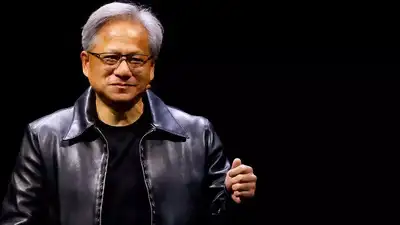
Nvidia CEO Jensen Huang
Speaking at Salesforce’s Dreamforce conference, Huang said new laws are not needed to govern artificial intelligence, arguing that AI safety should be handled through engineering and existing rules. “Safety is an engineering problem, not a legal one,” Huang said. Huang called it a false choice and said firms could have both at the same time. He said companies should not release products if they are not confident in their functionality, capability or safety.
His advice was to push ahead at full pace, but if a company ever feels out of control or unsure a product is safe, to “take a pause and make sure you get it right. Nvidia CEO Jensen Huang has a pointed message for the engineers building today’s AI systems: keeping those systems safe falls on them first.
Recent examples include the 2024 CrowdStrike outage that disrupted thousands of flights, along with an OpenAI model’s breach of Hugging Face and lawsuits against OpenAI linked to user deaths following extended chatbot conversations. To him, it is just hardware and software built by humans, which means it can be controlled by humans and existing laws.
The Nvidia chief also brushed aside the idea that AI is some new form of “alien mind,” as at least one OpenAI safety researcher has described it. “It’s a complicated computing system, but it’s ultimately a computing system,” he said. He said market pressure should be enough to stop companies from releasing unsafe AI products, so there is little reason for governments to step in. We don’t need new regulations,” Huang said. Other labs, he said, can make the same call.
He has been building the hardware behind AI since well before ChatGPT existed, and he sees the technology in plain terms. Huang’s argument leans on the market. “We don’t need any new laws. He also rejected the popular framing that companies must pick between speed and safety. His reasoning is commercial. People will not use AI agents that ignore their instructions or work against them, so alignment is fast becoming a feature that separates one model from another. Labs that neglect it, he wrote, will fall behind. He also flagged legal liability as a strong reason for companies to avoid shipping harmful models. Zuckerberg pointed to Meta’s own record. The company delayed its Muse model by several months to focus on safety and security, without first asking rivals to do the same. He added that Meta Superintelligence Labs already brings in independent evaluators, and that Meta has committed most of its compute to serving people rather than racing towards recursive self-improvement. Not everyone is convinced. Existing product liability laws could cover AI, but testing that theory depends on enough cases making their way through the courts. That means limits may get drawn only after something breaks.
“I’m more ambitious than ever,” he said, adding that there is no ceiling for Nvidia, for every industry and for every country. Huang made no secret of his appetite for growth either. Huang is not the only tech chief putting the burden on companies. Meta CEO Mark Zuckerberg laid out a comparable view in a recent post, arguing that every AI lab has both the responsibility and the incentive to train its models safely.
Huang also did not address industry self-regulation, a path he has instead pursued by backing open-weight models as a competitive counterweight to proprietary AI labs. That puts the weight of Huang’s argument squarely on engineering teams. It holds up only if companies actually hit pause when their own engineers raise a flag, even when growth targets point the other way. Get the latest technology news and updates. Download the TOI App.
Meanwhile, Microsoft CEO Satya Nadella, speaking at the All-In Summit on Monday, said China should share the same AI safety concerns as the US, since it faces the same hacking risks.