
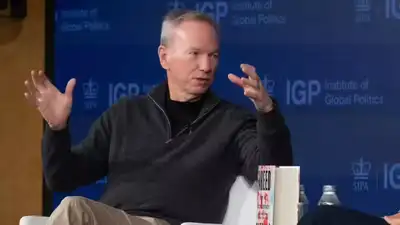
Google’s former CEO Eric Schmidt
In the next five years, Schmidt expects AI systems could potentially handle 1,000-step recipes for solving problems in areas such as science, medicine, materials and climate research. “Within 5 years, AI could handle infinite context, chain-of-thought reasoning for 1000-step solutions, and millions of agents working together. Schmidt said this type of reasoning could eventually allow AI to work through 1,000-step processes to tackle difficult scientific problems.
Eventually, they’ll develop their own language… and we won’t understand what they’re doing,” he said.
Eric Schmidt said three developments are already changing AI: much longer context windows, AI agents and systems that can turn simple text instructions into working software. The next major change, according to Schmidt, will be the growth of AI agents. Schmidt’s third development is what he calls “text action”. Eric Schmidt said the combination of long context windows, AI agents and AI-powered programming could eventually allow different AI systems to work together. “But at some point, these systems will get powerful enough that you’ll be able to take the agents, and they’ll start to work together,” he said.
“Pull the plug. That was Google ’s former CEO Eric Schmidt’s blunt response when he discussed a future where AI systems could become so advanced that people may no longer understand what they are doing. Together, he believes they could take AI far beyond answering questions and allow it to work through extremely complex tasks. Eric Schmidt’s concern comes from what could happen when these technologies start working together. He explained that AI systems are getting better at remembering large amounts of information and using the results of one task as the starting point for another. He used the example of a recipe to explain the idea. An AI could provide one step, receive information that the step has been completed, and then work out what needs to happen next. He described these as specialised AI systems that can learn about a particular subject, develop ideas and potentially test those ideas. For example, an AI agent could study chemistry, develop hypotheses, conduct laboratory tests and use the results to improve its knowledge. Eric Schmidt expects there could eventually be millions of such agents, with platforms allowing people to find and use them for different tasks. The idea is that people could simply tell an AI what they want a piece of software to do, rather than writing the code themselves. He pointed to programming languages such as Python as examples of where AI systems are already becoming capable. The bigger change, he suggested, could come when these systems are able to keep working on software tasks continuously. He then raised a more speculative possibility: that AI agents could develop their own language. That, Schmidt suggested, could become the point where humans no longer understand what the systems are doing. Get the latest technology news and updates. Download the TOI App.
And that is where his earlier warning comes back into focus: “You know what we should do?