
China has warned the US that it could retaliate if Washington significantly expands secondary sanctions on Chinese companies doing business with Iran
Because of its dependence on Middle Eastern oil supplies, zhu said continued restrictions on shipping through the Strait of Hormuz were putting additional pressure on the global economy and could pose a greater risk to China.
The measures, however, did not target major Chinese financial institutions, FT reported.
China has warned that it could take retaliatory measures if the United States significantly expands secondary sanctions targeting Chinese companies doing business with Iran, according to reporting by the Financial Times. A Chinese foreign ministry spokesperson said on Tuesday that Beijing would take “all necessary measures” to safeguard its rights and interests, while reiterating China’s opposition to what it described as unilateral sanctions lacking a basis in international law or United Nations Security Council authorisation. President Xi Jinping recently met Jordan’s King Abdullah II, while Foreign Minister Wang Yi held talks with his Kuwaiti counterpart, with Iran and the Gaza war among the issues discussed, according to the Financial Times. Zhu said China’s message to Tehran was that Beijing wanted peace talks to continue.
Chinese officials have also stepped up diplomatic contacts in the Middle East. The warning came after the Trump administration on Monday announced new sanctions targeting companies in Hong Kong and mainland China as part of a broader crackdown on Iran’s oil trade.
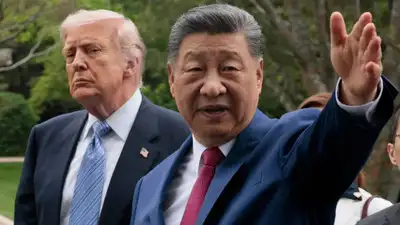
Wang Dong, a senior scholar at Peking University, told FT that Beijing would defend its national interests if Washington moved ahead with broader sanctions, though he said it remained unclear whether the US threat was serious or a negotiating tactic. The prospect of broader US secondary sanctions comes at a sensitive point in US-China relations. US President Donald Trump and Chinese President Xi Jinping are expected to meet in Washington next month, with the leaders expected to discuss extending a one-year truce in their trade dispute.