
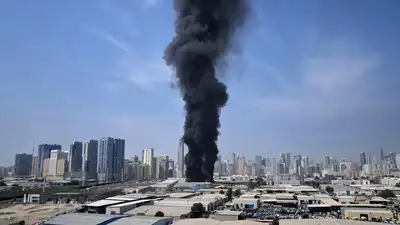
Iraq says Saudi pipeline attacks originated from its territory (AP Image)
Iraq has said attacks on a key Saudi oil pipeline were launched from its territory, while US President Donald Trump indicated that Iran was “probably” behind the strikes as tensions continued to escalate across the Middle East. Asked whether he believed Iran was behind the attack that forced the closure of the East-West pipeline, Trump told reporters: “Well, I think they are. Trump also said his administration had “had discussions” with the Iran-backed Houthis, although he did not specify when the talks took place. “The Houthis called us, and they don’t want to fight with us,” Trump said. Asked about his recent conversation with Saudi Crown Prince Mohammed bin Salman, Trump said: “He’s a good friend of mine, and I can just say everything’s going to work out fine and dandy.
The developments came as fighting in Yemen displaced tens of thousands of people, while Lebanon and Israel prepared for another round of US-brokered direct talks. Separately, Iranian President Masoud Pezeshkian and UAE President Sheikh Mohamed bin Zayed Al Nahyan met on the sidelines of the Brics Summit in New Delhi amid the wider regional crisis. Probably they are. “They would much prefer not having us involved, and they’re letting most ships go through. It’s going to be very good. Iraq’s Prime Minister Ali al-Zaidi ordered an investigation into the operations command in Maysan province, which borders Iran, after authorities determined that the attacks on the Saudi pipeline originated from the province.
At least 76,000 people have fled their homes in Yemen since July as fighting has intensified, according to the International Organization for Migration. The figure had risen sharply from 46,000 just days earlier. The escalation has raised fears of a return to the country’s civil war, which killed about 150,000 people before a 2022 ceasefire. The Bab el-Mandeb is an important alternative route to the Strait of Hormuz, and further disruption could add pressure to global oil markets, which have already moved above $100 a barrel.
Saudi Arabia said the attacks were carried out by several drones launched from Iraq. The Houthis’ reported seizure of the port city of Mokha and an island near the Bab el-Mandeb has also raised concerns over another critical shipping route.
Riyadh said it would not retaliate, giving the Iraqi government “an opportunity to take the necessary measures. Regional officials have also said the Houthis and Iraqi militias recently coordinated attacks on Saudi oil facilities. “From clashing at the BRICS foreign ministers meeting not so long ago to engaging on the sidelines at BRICS summit, Iran and UAE have shown diplomatic sagacity to make use of this rare opportunity for a direct meeting,” said Praveen Donthi, senior analyst with the International Crisis Group.
The government also dismissed the commander of the operations command in Maysan. The East-West pipeline has become increasingly important to Saudi oil exports since the war involving Iran disrupted shipping through the Strait of Hormuz. Oil exports through the Red Sea port at the pipeline’s end have more than doubled since the conflict began. Fighting has intensified between the Houthis and forces aligned with Yemen’s Saudi-backed, internationally recognised government. Iranian President Masoud Pezeshkian and UAE President Sheikh Mohamed bin Zayed Al Nahyan held talks on the sidelines of the Brics Summit in New Delhi. The meeting came despite differences between Tehran and Abu Dhabi over regional security and the UAE’s security partnerships with Western countries. Lebanese and Israeli negotiators are scheduled to meet in Rome in October for another round of US-brokered talks. A planned meeting this month was postponed without explanation. The incident comes amid increased settler violence in the West Bank under Israeli Prime Minister Benjamin Netanyahu’s government. Catch the latest World News and Live updates. Download the TOI app.
The visible area of pollution measured about 400 square kilometres on Thursday, with satellite imagery showing the spill stretching almost 70 kilometres. At least 14 shots were heard in the video, while several men later carried the wounded man to safety and applied a tourniquet to his leg. Israel’s military confirmed the authenticity of the video and said its forces had fired towards the Palestinians, wounding one man.
The US State Department also said the Lebanese and Israeli ambassadors to the US would meet in Washington next week to discuss developments and implementation of a framework agreement reached in June. “The current situation in the Strait of Hormuz, together with our experience of oil spills since the beginning of the war, unfortunately suggests that an effective response is unlikely,” said Nina Noelle of Greenpeace Germany. Israeli troops opened fire at a group of Palestinians in the occupied West Bank, wounding one man, according to video obtained by The Associated Press. A local resident said the Palestinians had gathered after reports that Israeli settlers had arrived with sheep. It said commanders would review the incident.
The two sides have held seven rounds of talks in Washington and Rome aimed at reducing tensions linked to fighting between Israeli forces and Hezbollah. An oil spill in the Gulf of Oman has nearly doubled in size, raising concerns for protected marine areas off Oman and Iran. The spill is believed to have originated from a tanker struck by the US military. The pollution is located between Oman’s Musandam protected area and Iran’s Hara-e Roud-e Gaz Protected Area, which includes mangrove forests. The footage showed the man falling near the Palestinian village of Faqqua as troops fired at the group.
The tanker RIESCO was among four vessels attacked on Tuesday in the Gulf of Oman, while another vessel was destroyed in the Strait of Hormuz near Iran’s Kharg Island.