
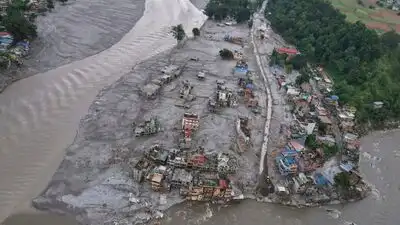
An update issued said only 29 of the 650-plus bodies had been identified.
Nepal Police spokesperson DIG Abi Narayan Kafle told TOI that 211 of the first 669 recovered remains were mutilated, partial or severed. More than 1,000 relatives reached Pokhara on Saturday to examine photographs of 102 bodies brought from downstream districts.
“Many remains were buried under thick mud and water for two to three days,” he said. Police said families recognised loved ones through tattoos, necklaces, earrings and even school uniforms. “Where faces are no longer recognisable, relatives are identifying bodies through other things on their person,” police inspector Deepak Rijal said. “More relatives are continuing to arrive.”
Bodies swept dozens of km from Rasuwa were recovered in Nuwakot, Chitwan, Gorkha, Tanahun and Nawalparasi, often far from where victims disappeared. For families, identification increasingly depended on small personal details.
“If family members come forward in the future to claim a missing relative, these scientific and legal records will allow us to confirm identity and locate the exact burial plot,” Kafle said. The process was designed so burial does not end a family’s search for closure — every body was assigned an identification number; photographs, physical features, clothes, jewellery and other belongings were recorded, while DNA, fingerprints and other forensic samples were preserved.