
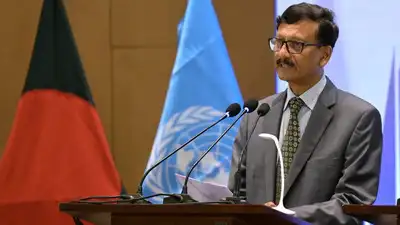
Bangladesh’s consul general in Jeddah, Md Sakhawat Hossain, raised the issue with Farid bin Saad Al Shehri, director general of Saudi Arabia’s Ministry of Foreign Affairs. Bangladesh also sent another diplomatic note seeking detailed information about the cases.
Bangladesh has expressed anger and sought a detailed explanation from Saudi Arabia after two of its citizens, Nazrul Islam and Sweety Akhter, were executed in Mecca on October 14 without prior notification to Dhaka. The government has questioned why their death sentences were missing from a list of convicted nationals sent by Saudi authorities on September 30, saying timely information could have allowed its diplomatic mission to explore possible intervention. The list, sent on September 30, included the names of Nazrul and Sweety, along with details of the offences they were accused of committing. On October 15, the Bangladesh Consulate in Jeddah sent a note to Saudi Arabia seeking information. On October 18, Dhaka raised the matter with Saudi Ambassador Abdullah Zafer bin Abiyah.
Bangladesh’s Consul General confirmed that the meeting had taken place and another diplomatic note had been sent.
The Saudi official was unable to provide a satisfactory explanation for why the sentences had not been disclosed in the list supplied to Dhaka, according to officials at Bangladesh’s ministry of foreign affairs. A senior Bangladeshi official said that the latest diplomatic note sought detailed accounts of the cases, the steps taken during the judicial proceedings and whether the two had been given an opportunity to defend themselves, according to Prothom Alo. State minister for foreign affairs Humaiun Kobir on Monday described the executions as “very disappointing” and said Bangladesh had sought an explanation from its Saudi counterpart over the apparent gap in information-sharing. We have sought an explanation from Saudi Arabia to find out why this gap occurred,” Kobir said. He said Bangladesh expected other countries to inform it when its citizens were detained or faced criminal proceedings, allowing its diplomatic missions to provide consular assistance. State Minister for Foreign Affairs Shama Obaed Islam said the government was still awaiting copies of the verdicts to understand the cases and determine what further steps could be taken. “Please wait until we know what the verdict says. After that, we will discuss the matter with the Saudi authorities and explore what can be done,” she said. The country’s Ministry of Interior said the two Bangladeshis were convicted of committing what it described as immoral acts inside a mosque in Mecca, according to the Saudi Press Agency. The ministry said the pair were arrested and investigated before being referred to a competent court.
As per reports by Bangladeshi outlet Prothom Alo, Dhaka is seeking copies of the verdicts, details of the judicial proceedings and confirmation of whether the two were allowed to defend themselves. The executions have raised concerns over a possible lapse in consular communication between the two countries. Bangladesh also sent another diplomatic note seeking detailed information about the cases. However, it did not specify their sentences. He declined to disclose details of the discussions. “Bangladesh has a good and deep relationship with Saudi Arabia, particularly at the level of our Prime Minister. Bangladesh and Saudi Arabia are both signatories to the Geneva Conventions. There was a gap in information-sharing in this incident. Kobir added that Bangladesh would similarly inform Saudi Arabia if a Saudi national were arrested in the country. She added that Bangladesh had not received detailed information about the individuals and was awaiting a formal response from Saudi Arabia. They were sentenced to death under ta’zir, a category of punishment under Islamic law left to judicial discretion.
The development follows earlier diplomatic exchanges over the executions. On Monday, Bangladesh’s consul general in Jeddah, Md Sakhawat Hossain, raised the issue with Farid bin Saad Al Shehri, director general of Saudi Arabia’s Ministry of Foreign Affairs.
Nazrul Islam’s family seeks his body
His parents say they were not informed in advance of his execution and learnt of his death through a telephone call from Saudi Arabia on October 14. Nazrul, who was from Brahmanbaria district, travelled to Saudi Arabia in November 2022 in the hope of improving his family’s financial circumstances. His father, Abdul Basir, borrowed around Tk 6 lakh from relatives to send his eldest son abroad. Nazrul sent home about Tk 1.5 lakh during his first seven to eight months in Saudi Arabia, according to the family. Saudi authorities detained him on August 1, 2023. The family said their last telephone conversation with Nazrul took place on October 11 and lasted around two minutes. The September 30 list reportedly identified Nazrul as having been convicted of cybercrime or an offence related to information technology.
If he was executed without just cause, I want justice,” Basir said. Relatives said his paternal aunt, Abeda Begum, collapsed after hearing of his death and died later that night. Bangladesh has said it will consider further steps after receiving the verdicts and a detailed response from Saudi Arabia. Shama Obaed said the government would explore the repatriation of the bodies once the requested information was received. Brahmanbaria deputy commissioner Md Abu Sayeed said the district administration would act in accordance with government instructions and applicable rules.
The diplomatic dispute has also drawn attention to the plight of Nazrul Islam’s family in Bangladesh. He worked as a cleaner in the kingdom. He remained in custody until his execution, more than three years later. They received no advance notice that his death sentence was about to be carried out. “The creditors are now pressuring me to repay the debt. I want my son’s body brought back home. Nazrul’s mother, Rahima Begum, has also appealed for his body to be returned so the family can see him one last time. The family has urged the Bangladeshi government to investigate the circumstances of the execution and arrange for the repatriation of his body at state expense. The information provided by Saudi Arabia to Bangladesh has raised further questions about the cases. Sweety’s entry mentioned adultery. Neither entry specified the sentence imposed. This differed from the Saudi Interior Ministry’s public account, which described the offence as an immoral act inside a mosque. Bangladeshi officials have sought detailed records to clarify the charges, the judicial proceedings and the opportunity available to the defendants to defend themselves. The government has also questioned why its diplomatic mission was not informed of the death sentences in time to consider possible intervention. The precise circumstances of the cases and the legal assistance provided to the two defendants remain unclear from the information available to Bangladesh. He added that it had not received an application from Nazrul’s family or specific instructions on the matter.
The executions were carried out separately in the Mecca region on October 14. During Monday’s meeting in Jeddah, the Saudi side reportedly told Bangladeshi officials that the two had been sentenced by a lower court and that an appellate panel comprising 13 judges had upheld the verdicts. Because of the seriousness of the offence, the violation of the mosque’s sanctity and the circumstances in which the acts were committed, saudi authorities said the sentences were imposed.
Kobir said discussions were under way to establish why the communication gap occurred. The verdicts were upheld by the relevant judicial authority, and a royal order authorised their implementation. However, the list supplied to Bangladesh did not mention the sentences. The Saudi official was unable to provide a satisfactory answer when asked why this information had been omitted if the cases had followed due judicial process. Despite its concerns, Dhaka has stressed the importance of maintaining its close relationship with Riyadh. The central question for Bangladesh remains why the names of two citizens appeared on an official list of convicted nationals, while the death sentences that led to their executions were not disclosed. You use AI every day. Now get your AI Quotient. Take the AIQ test.