Representative image of a metal detector uncovering a collection of ancient buried treasures in a grassy field. Image Credits: ChatGPT.
The discovery would eventually lead to a reward of almost £2 million for the detectorist. Derek McLennan discovered the Galloway Hoard in September 2014 at Balmaghie in Kirkcudbrightshire, Dumfries and Galloway, after receiving permission to metal-detect on the land, according to National Museums Scotland . The hoard contained more than 100 objects and was buried around AD 900. In 2017, the hoard was allocated to National Museums Scotland after the museum raised £1.98 million to acquire it for the nation.
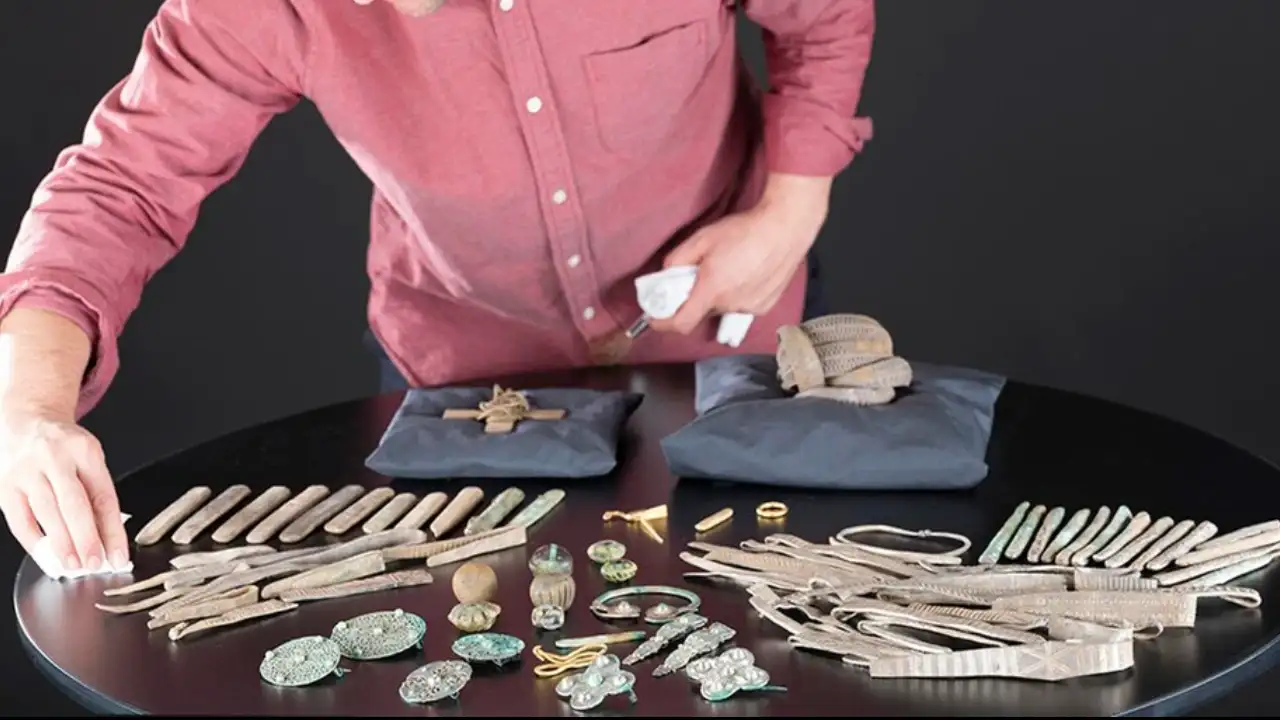
A routine afternoon of metal detecting in a Scottish field turned into a major archaeological discovery when a retired businessman uncovered a buried collection of Viking-age treasures. What first looked like an old spoon turned out to be part of a hoard of gold, silver, jewellery, religious objects and rare textiles buried for more than a millennium. It included more than 5kg of silver, gold and other materials, with objects originating from Ireland, Anglo-Saxon kingdoms and areas as far away as Asia.
Nearly £2 million for the discovery According to the National Heritage Memorial Fund , the Galloway Hoard was valued at £1.98 million in 2017, with the Queen’s and Lord Treasurer’s Remembrancer allocating it to National Museums Scotland on the condition that the museum raised the required amount. Because organic artefacts rarely survive for long in archaeological hoards, these finds matter.
A runic inscription on one of the silver arm-rings has been interpreted as meaning “This is the community’s property”, although researchers stress that the reading contains uncertainties. The way the objects were buried added important context to the discovery. Researchers found separate bundles and caches, with objects wrapped in materials including leather and textiles. Some of these organic materials survived remarkably well, providing archaeologists with evidence about how the objects were prepared before burial. Research published in the Journal of Archaeological Science examined traces of textiles preserved in corrosion products on metal objects from the hoard. The work demonstrated how even tiny remnants of fabric can reveal information about how artefacts were wrapped and deposited. An additional unique find is the presence of silk. The National Museums Scotland also states that the hoard included the earliest examples of Scottish silk along with wool and linen. This evidence cannot be gained from studying only gold and silver. The hoard also includes unusual items that complicate ideas about Viking wealth. Alongside precious metals, glass beads, crystal stones, peculiar pendants, and even soil balls with traces of gold have been found. A recent interpretation has added another clue. Researchers say the inscription may indicate that at least part of the hoard belonged to a community rather than a single individual. The acquisition was funded by the National Heritage Memorial Fund, the Art Fund, the Scottish Government, charitable trusts and members of the public. McLennan’s discovery has since become part of a much larger research story. The objects are being examined using conservation, scientific analysis, X-rays, CT scanning and other techniques to reconstruct their individual histories and understand why they were brought together.