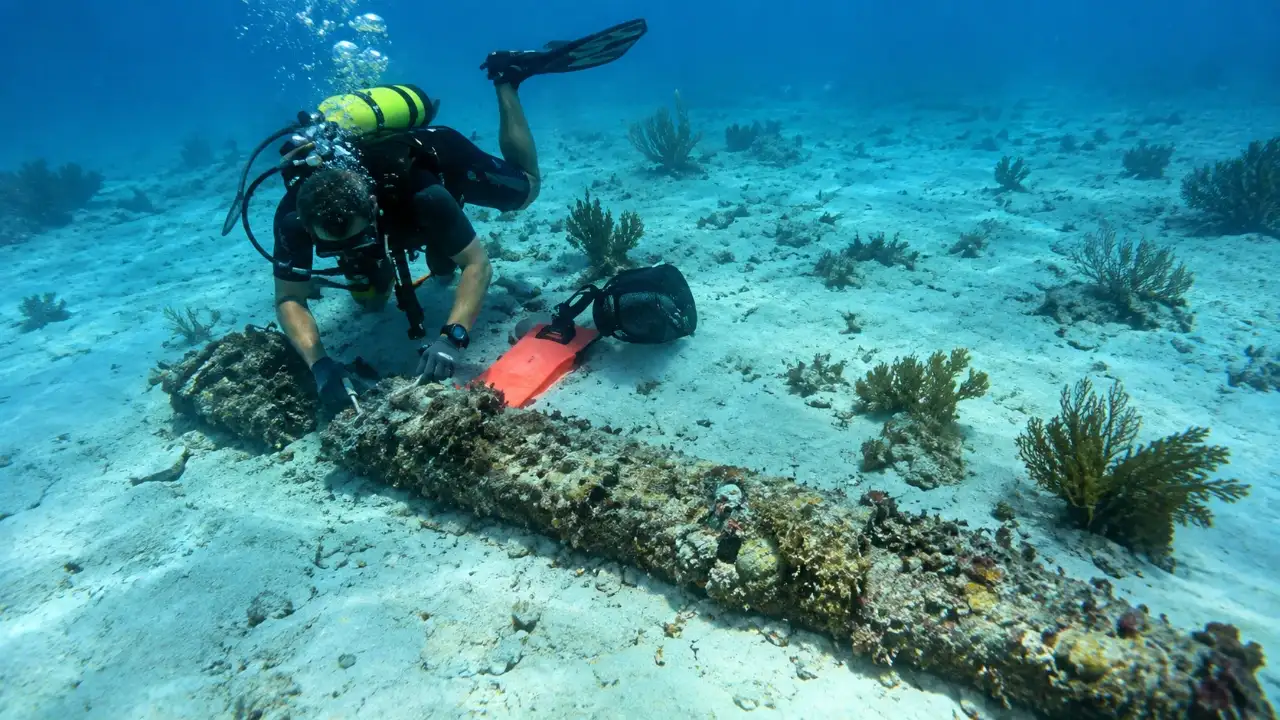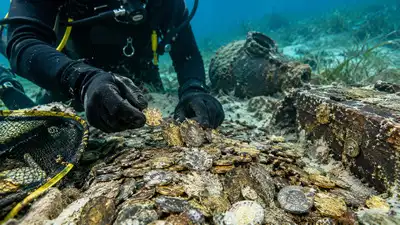
Representative image of salvagers recovering gold and silver coins from a centuries-old shipwreck beneath the ocean. Image Credits: ChatGPT.
In 2025, divers returned to that underwater landscape and recovered a remarkable cache of more than 1,000 gold and silver coins. The discovery, made during the summer salvage season, was estimated by the salvage company at about $1 million, adding another chapter to one of Florida’s most famous shipwreck stories. For more than three centuries, the Atlantic waters off Florida have held reminders of a Spanish fleet that met disaster on its journey home.
The discovery made in 2025 seems to have been very localised in its nature. Reports about the discovery say some of the coins date from the late 17th century to 1714, reflecting the range of currency that could have been in circulation when the 1715 fleet set sail. The 1715 Fleet–Queens Jewels project carries out its operations through authorised salvage agreements. More than 300 years after the fleet sank, changing sea floors, weather, and shifting sands continue to uncover artefacts that were hidden for centuries. But for historians and archaeologists, the importance of the find is that the 1,000-plus coins might be able to tell them much about the people who went on the journey in 1715.
Shipwreck sites can provide valuable archaeological evidence about maritime trade and past societies, making the location and relationship of artefacts important beyond their monetary value, according to the National Park Service . Many of the coins were found in one place, and the salvagers think they may originally have been stored in a bag or bundle that broke apart when the ship sank. Some of the coins reportedly had marks suggesting they had been inside a burlap bag. The dates found on the coins also give us some idea of the money that may have been carried aboard the ship shortly before its sinking. A coin recovered from its original archaeological setting can provide information about its date, mint and movement, while its position alongside other objects can help researchers reconstruct patterns of trade and exchange across the Spanish Empire. It is especially significant in Florida, where the practice of treasure recovery is long intertwined with archaeology. Underwater cultural resources in Florida are regulated, and removing historic artefacts from state-owned waters without proper authorisation is illegal. Under Florida’s system, the state may keep some of the recovered archaeology for study and exhibition. The rest is split up in accordance with the salvage contracts and judicial supervision involved. This suggests that more artefacts may still be buried under the sand. For treasure hunters, the discovery is a major find.