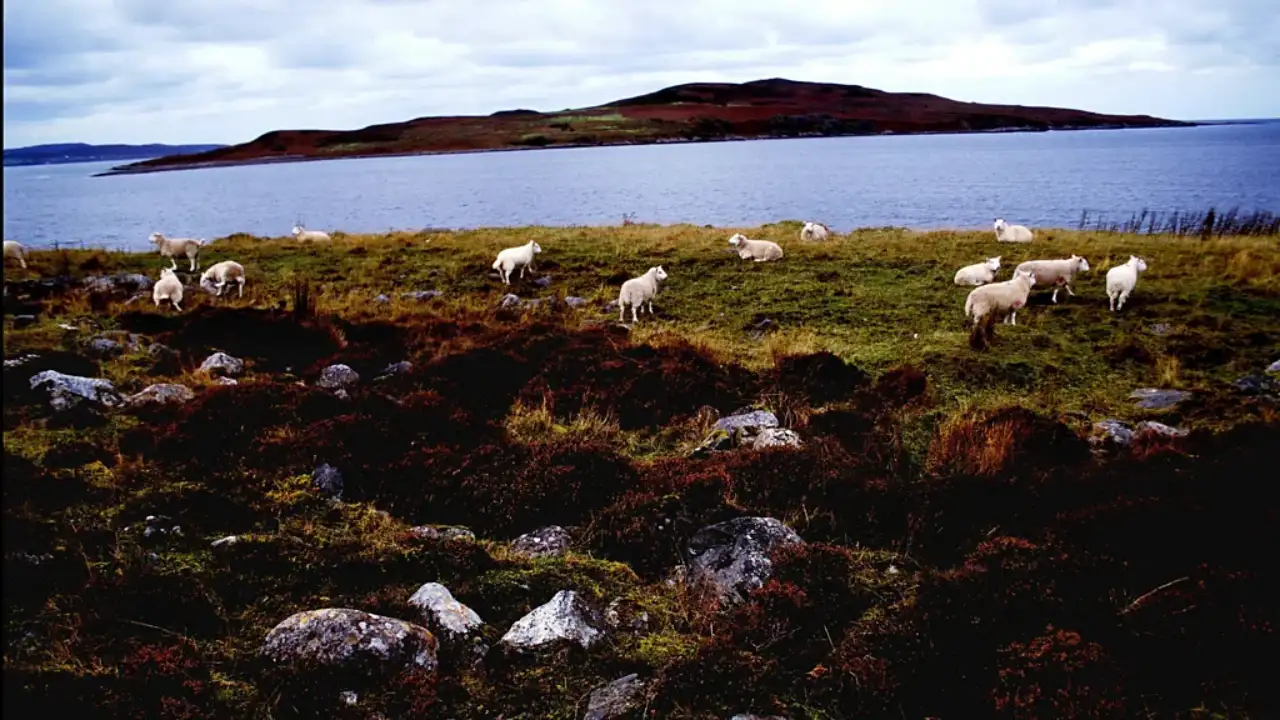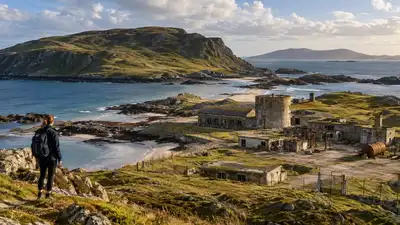
The contamination proved remarkably persistent, leaving the island under quarantine for almost half a century before it was officially declared safe in 1990. For decades, Gruinard Island was a place most people were better off avoiding. The small, uninhabited island off Scotland’s north-west coast had acquired an unusual reputation during and after the Second World War, when stories circulated locally about dead animals, strange military activity and something dangerous left behind. The government eventually put up warning signs and kept people away. What had happened there was not fully understood by the public for years. Gruinard had been used for secret experiments involving anthrax, part of a British wartime effort to investigate biological weapons.
Gruinard was declared safe in 1990
As reported by the BBC, on 24 April 1990, almost 48 years after the wartime experiments began, the British government announced that Gruinard Island was free of anthrax contamination. Because of experiments that had taken place there during the Second World War, the island had spent nearly five decades under restrictions. The declaration ended one of the longest-running environmental consequences of Britain’s wartime biological weapons research. The episode also formed part of a much wider British biological weapons programme. Gruinard was the first site used for this type of testing, but it was not the only location associated with Britain’s wartime biological warfare research.
As reported by the BBC, in 1942, the British government acquired the 522-acre island and restricted access. The work continued into 1943. In 1981, members of the Dark Harvest Commandos travelled to Gruinard, collected soil samples and delivered some of the material to the area around Porton Down.
The work was linked to Porton Down, the military research establishment in Wiltshire, where scientists were studying chemical and biological agents. By then, the tests had provided the military with evidence that anthrax could be used in the way scientists had feared. Millions of contaminated linseed cakes were subsequently produced as part of the wider Operation Vegetarian programme. The researchers left Gruinard, but the island did not simply return to normal. Anthrax spores can survive in soil for long periods, and the experimental area remained contaminated after the wartime work ended. There were reports of animals dying on the mainland near Gruinard Bay in the months after the experiments. The British government paid compensation to some affected people, while the public explanation for the deaths attributed them to a diseased sheep that had supposedly fallen from a passing ship. The issue eventually drew the attention of campaigners. The action was intended to draw attention to the continuing contamination and put pressure on the government to resolve it.