
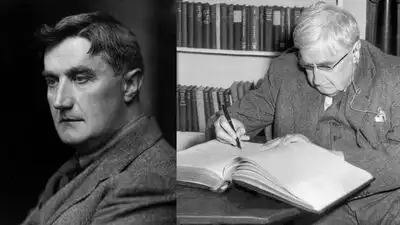
(Left) Portrait of the composer Ralph Vaughan Williams. Credit: Wikipedia; (Right) Ralph Vaughan Williams late in life. Credit: Wikimedia Commons
In 2026, four students received £8,000 each from the Vaughan Williams Foundation to help finance their advanced studies in composition. The charity was established in 2022, 150 years after Vaughan Williams’ birth, by bringing together two trusts originally founded by the composer and his wife, Ursula Vaughan Williams, according to the Foundation’s official website. The music of British composer Ralph Vaughan Williams continues to support the next generation of musical talent through royalties that fund postgraduate scholarships. The awards support aspiring composers who intend to build professional careers in music, continuing a tradition of backing emerging talent that has lasted for more than four decades. Through this initiative, the legacy of Vaughan Williams extends beyond his compositions. The Vaughan Williams Foundation uses royalties earned from the composer’s music to support projects that benefit British musical life. The Foundation’s work reflects Ralph Vaughan Williams’ interest in supporting fellow composers and making his own music accessible to the public. Its activities include funding performances, recordings and commissions, alongside educational and developmental opportunities for musicians. The Foundation’s postgraduate scholarship programme is an important part of this work. Rather than focusing only on preserving the achievements of an established composer, the funding also helps students develop the skills needed to contribute to contemporary music. The selected students are Patrick Gorry, who is studying at the Royal Northern College of Music, and Scarlett Henderson, who attends the Guildhall School of Music and Drama. The other recipients are Donnchadh Mac Aodha, a student at the Royal College of Music, and Dominic Wright, who is also studying at the Guildhall School of Music and Drama. These conditions allow the programme to support composers at different stages of their postgraduate education, provided they meet the eligibility requirements. However, the awards are designed for students pursuing composition as their main professional direction, rather than for musicians studying performance or other areas of music.