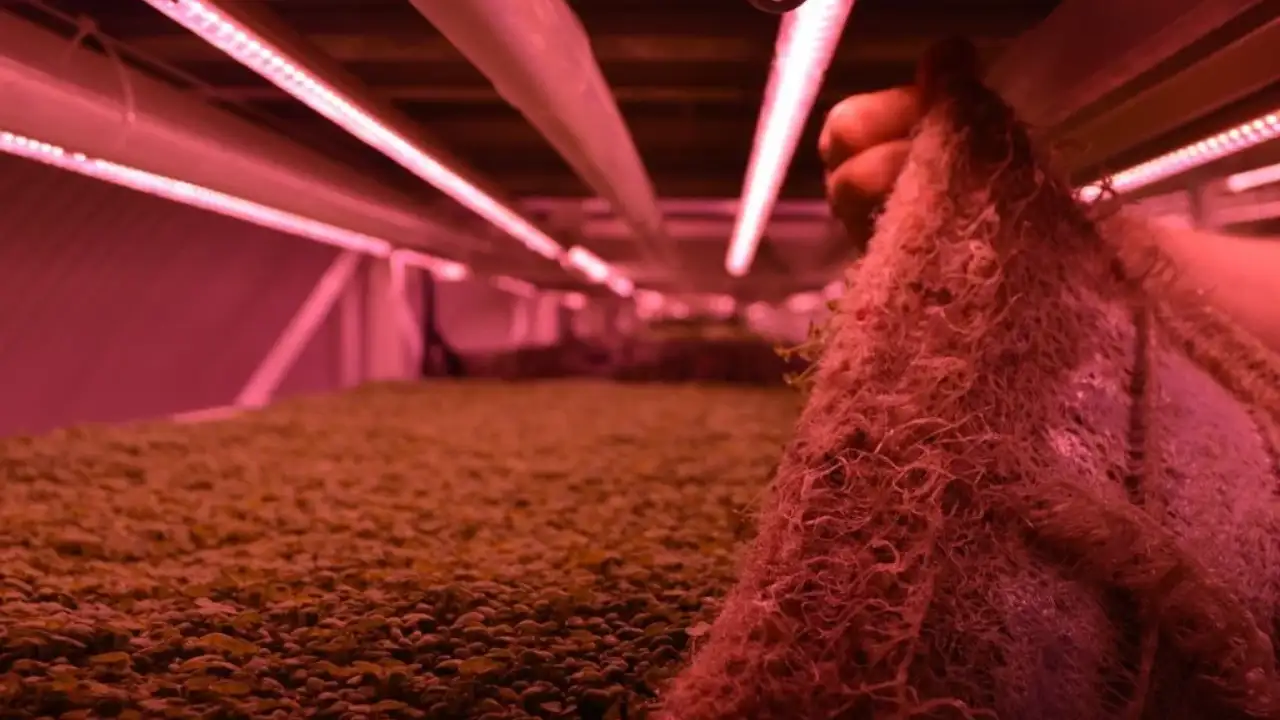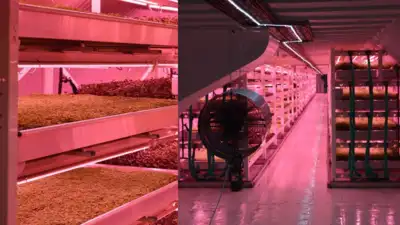
Growing trays inside the former Clapham Common deep-level shelter | Wikimedia Commons
Cambridge reported that some crops could be harvested roughly every 10 days, while the system used less water and space than conventional greenhouse production. Their work found that optimisation reduced the time needed to grow some crops by as much as 50%, while average growing time fell by 7% and yields increased by 24%. A 2016 report by The Guardian described the tunnels as being about 120 feet underground and said the farm could produce up to 2,000 packs of herbs a day at that stage, which included pea shoots, rocket, red basil, radish, fennel and coriander.
Because it used infrastructure that had already existed rather than constructing a purpose-built underground facility, the project eventually became a case study in controlled-environment agriculture, particularly. The tunnels were built during World War II as part of London’s network of deep-level air-raid shelters, and the Clapham site was large enough to accommodate thousands of people during bombing raids, but it later remained largely unused. Ballard encountered the tunnels while working on a film project and began considering whether the underground space could be used for food production. He and Dring eventually developed the Growing Underground concept and began testing the idea. The farm’s hydroponic setup used recycled materials, including wool carpet offcuts as growing mats. Cambridge researchers developed a digital twin of the farm to study the relationship between lighting, temperature, humidity, carbon dioxide and plant growth.