
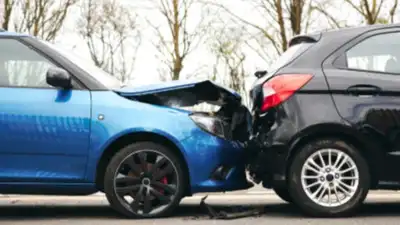
Tennessee court upholds $575,000 award to injured UPS driver (Representational image)
A Tennessee appeals court has upheld a $575,000 compensation award to a UPS driver injured in a 2022 collision. The court ruled on November 9 that the evidence supported the jury’s findings that the crash caused permanent shoulder damage and affected the driver’s future earning capacity.
Dispute over future earnings
Dr David Strauser, a rehabilitation psychology expert, estimated that Gooden could lose $74,000 to $84,000 in annual earning capacity if he could no longer work as a UPS driver or needed surgery. Gooden earned between $105,000 and $115,000 a year, including overtime, while another delivery job could pay about $30,000. They further cited a medical form Gooden completed in April 2023, in which he listed high blood pressure as his only physical ailment and did not report shoulder, arm, neck or back limitations. The court found that the $225,000 awarded for lost earning capacity was within a reasonable range. The total award included $250,000 for permanent injury, $225,000 for lost earning capacity, $40,000 each for past and future pain and suffering, and $10,000 each for past and future loss of enjoyment of life.
Because he needed to support his family, gooden told the trial that he continued working. Because he feared losing his job, he did not disclose his medical restrictions to UPS. Because he was still employed, the court also rejected the argument that Gooden could not be compensated for future lost earnings.
Strauser said people who continue physically demanding work beyond medical restrictions may be unable to sustain it after five or six years. It said the jury was entitled to accept Dalal’s opinion despite the defence expert’s different assessment. The defendants questioned this estimate, pointing out that Gooden had not suffered a wage reduction and UPS had not indicated that it planned to end his employment. There was also no medical evidence that surgery would be necessary. The appeals court found sufficient evidence to support the jury’s findings on permanent injury and future earning capacity. It considered his evidence that he was working beyond the doctor’s restrictions and Strauser’s assessment of how long he might be able to continue. Join conversation Share your thoughts in the comments Be respectful · TOI community guidelines The jury could reasonably conclude that Gooden might lose two to four years of the employment he had expected to continue.
The case involved Randy Gooden, whose vehicle was hit from behind by Bryant Johnson on January 13, 2022. Gooden sued both, seeking $1.5 million in damages. He sometimes needed customers to help him complete his duties and was unsure whether he could continue working until the age of 52 or 53, as he had planned. A jury found Johnson and Serra Chevrolet fully responsible for the accident and awarded Gooden $575,000 after a trial in February 2025. Physiotherapy began on January 31, 2022. Dalal allowed him to return to work without restrictions in May 2022. He advised Gooden to avoid repetitive shoulder movements, strenuous overhead activity and lifting more than 25 pounds. However, he believed the accident-related injuries had resolved by June 2022 and attributed the continuing problems to pre-existing conditions.
Gooden returned to his UPS delivery job but said shoulder pain made his work difficult, according to the judgement . At a June appointment, Gooden said his shoulder sometimes locked, but the doctor found full movement during the examination. He said the earlier improvement may have followed the steroid injection, which temporarily reduced inflammation.
Johnson worked for Serra Chevrolet LLC. The defendants challenged the verdict, but the trial court rejected their request to overturn or reduce it. They then appealed. Gooden sought treatment soon after the crash for back and right shoulder pain. The assessment found limited shoulder movement and reduced grip strength in his right hand. Orthopaedic surgeon Dr Apurva Dalal began treating him in February. He diagnosed rotator cuff inflammation, shoulder impingement, arthritis and small partial tears in the rotator cuff. Treatment included medication, a steroid injection and physiotherapy. he continued to report pain and difficulty sleeping, lifting, pushing and pulling Although Gooden’s movement improved. When Dalal examined him again in September, he found reduced shoulder mobility. A congenital shoulder condition could also have contributed to the deterioration. Dalal could not identify the exact reason for the change but maintained that the collision had caused a permanent injury. Surgery remained an option if physiotherapy failed, though it was not guaranteed to help. The defence’s medical expert, Dr Claiborne Christian, agreed that Gooden had shoulder impingement and that a collision could cause it. Christian had reviewed the medical records but had not examined Gooden. The appeals court affirmed the Shelby County Circuit Court’s judgment and remanded the case for any further proceedings required. You use AI every day. Now get your AI Quotient. Take the AIQ test.