
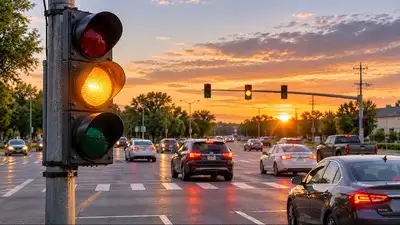
One yellow light, one split-second choice (representative image). Image Credits: ChatGPT
Crashes were down by 9%, but that number needs a careful reading. It also notes that over several years, about 21% of road deaths in the US occurred at the intersections. About 50% of severe injuries have also been recorded at intersections. However, a 2002 Texas Transportation Institute (TTI) report found a problem.
The study found 73% fewer vehicles caught in the intersection’s “dilemma zone” and 82% fewer red-light violations. The problem is discussed in the FHWA report, which says this doubt can cause rear-end, left-turn, and sideswipe crashes. You see the light turn yellow and have a split second to decide: brake hard or keep going. Most drivers know that doubt well. The Federal Highway Administration report, ‘ Field Evaluation of Detection Control System ,’ tested a smarter signal in a five-city field test. The test didn’t just cover one intersection; it was eight sites in four states. Here, drivers are usually unsure if they should stop or proceed when the signal changes to yellow. Older signals tried to help. They held the light green until the road ahead was clear. On busy roads, a clear gap rarely comes. Then the green runs for its maximum time and ends anyway, which can increase the risk of a rear-end crash. Representative image of vehicles approaching a high-speed junction as the signal prepares to change from green to yellow. Image Credits: ChatGPT How the smarter signal decides
Why the yellow light is a problem The dilemma zone is the stretch of road right before the intersection.
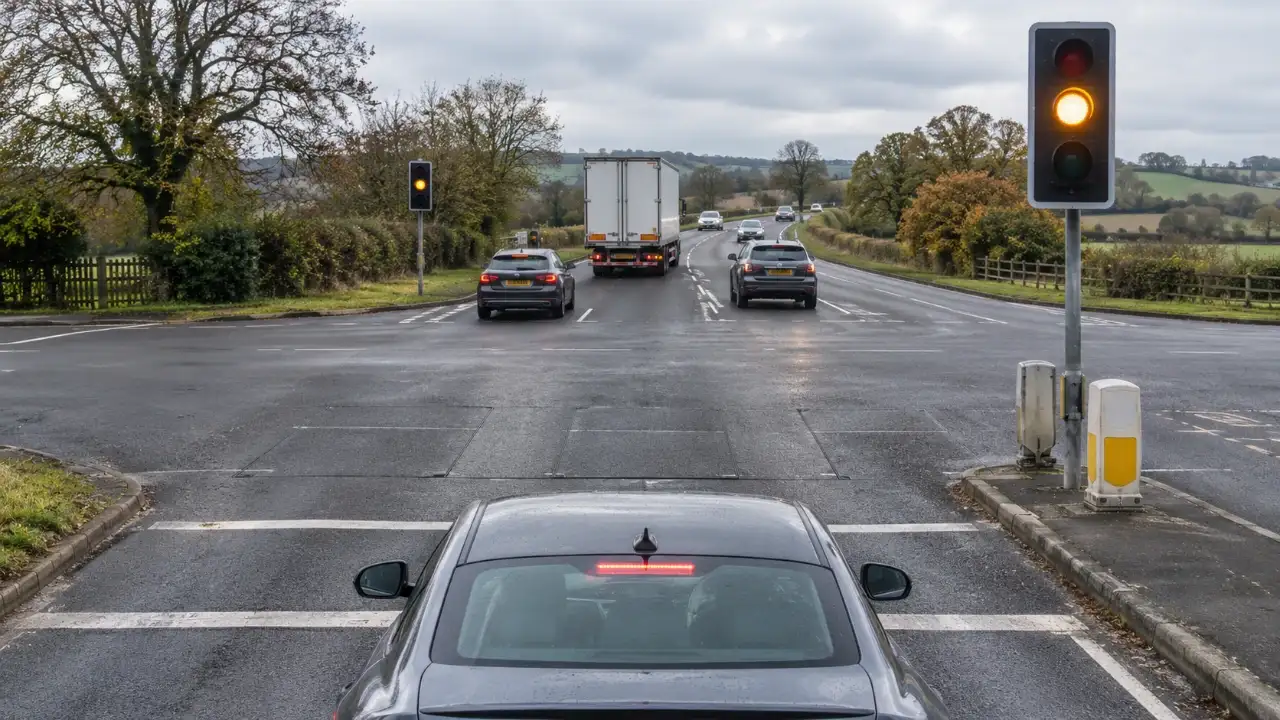
The FHWA specifies that D-CS is intended for isolated intersections on high-speed roads of 45 mph or higher. What the five-city test found The study was conducted by researchers from the Texas Transportation Institute from 2008 through 2012. They used 8 locations in Florida, Illinois, Louisiana, and Texas. The one-hour data showed that there were 82% fewer red-light running violations and 73% fewer vehicles in the dilemma zone. There were also 51% fewer max-outs. Together, they fell by 9%. The 9% drop in crashes is smaller and less certain. By the report’s own measure, it was not statistically significant at the 95% level.
The system in the test is a detection control system (D-CS). The road has sensors that measure the vehicle’s speed and length as it arrives, lane by lane. It responds to real traffic, one vehicle at a time. It treats the dilemma zone as part of the road between six and two seconds of travel time from the stop line. The software then predicts when each car or truck will enter and exit that zone. It waits for the best time to kill the green and rechecks its plan every half second. It factors in how many vehicles are in the zone and how many are queued up on the crossing road. It also tries to avoid changing the light while a truck is in the zone. These locations were near Fort Lauderdale, Peoria, New Orleans, San Antonio, and Waco. The researchers compared traffic data before and after the activation of D-CS. A max-out is basically when the green light runs to its full limit. As for crashes, the team used state records for approximately five years before and two years after the installation. For comparison, similar intersections without D-CS were used. The number of cases was small, so angle and rear-end crashes were combined. What the numbers do and do not show The biggest differences were seen in the red light and dilemma zone results. They record risky moments, not actual crashes. That means some of it could be down to luck. However, the authors found supporting evidence for D-CS improving safety. The government was also looking for ways to encourage signal makers to add the system. However, D-CS was built for isolated high-speed junctions. The results should not be stretched to every crossing in a busy city around the world. You use AI every day. Now get your AI Quotient. Take the AIQ test.
Earlier TTI work showed equal or fewer delays and fewer red-light runners at two Texas intersections.