
(Ai image)
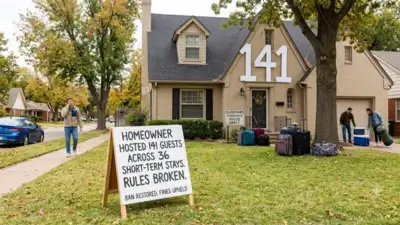
An Oklahoma homeowner has been ordered to pay more than $8,000 after the state Supreme Court restored a neighbourhood ban on short-term property rentals. The homeowner, identified as Adewale Eniola Tawose in the Oklahoma Supreme Court’s final ruling in case 122129, hosted 141 guests across 36 short-term stays at his property in the Silverhawk subdivision between late 2021 and late 2023. The case reached its conclusion on November 10, 2026, when the Oklahoma Supreme Court overturned an earlier decision by the Court of Civil Appeals and restored the neighbourhood’s restrictions. The 141 guests who stayed at the property over 36 separate visits also made the arrangement different from a traditional long-term rental, even though guests lived in the home during their stays. It reinstated the ban on Tawose’s short-term rental business and upheld the $8,528 in fines and assessments imposed against him.
As a result, the Supreme Court restored the original District Court decision.
The case of Silverhawk Homeowners Association, Inc. v, according to the court’s decision published by Justia. Silverhawk Homeowners Association argued that regularly renting out a property for short stays, often just a few days, was a violation of these rules, according to Justia’s report on the case. The ruling ends a lengthy legal dispute over rules governing how homes can be used in a residential community. Tawose focused on whether neighbourhood rules designed to protect residential areas could prevent homeowners from running businesses similar to hotels. The exact location of the subdivision was not clearly identified in the court’s case summary. However, the dispute reflects wider efforts by homeowners associations to enforce rules against short-term rental businesses. The main disagreement involved the meaning of the neighbourhood’s Declaration of Covenants, Conditions, and Restrictions. Homeowners associations such as Silverhawk HOA create these rules to control how properties are used, protect home values and maintain a peaceful living environment. These private agreements often require properties to be used only as homes and may restrict business activities within the neighbourhood. The Supreme Court’s opinion explains how the association tried to enforce its restrictions. The HOA Board contacted several homeowners it believed were breaking the short-term rental rules and asked them to stop. Two owners agreed and changed their properties to long-term rentals. Tawose refused, arguing that he had the right to use his property as he wished. Be respectful · TOI community guidelines The final ruling concluded that regularly renting the property for profit in a hotel-like manner went against the purpose of the neighbourhood’s residential rules.