

Representative image of Lycopodium clavatum. (Image Credits: Wikimedia Commons)
An efficiency of 93.02 ± 3.71% through vacuum encapsulation was achieved, making it the most effective of the methods examined. At a temperature of up to 204°C, the resulting microcapsules remained stable, while in a fluorescence-based experiment, it took only 50 minutes to heal the cracks in an aged bitumen sample. However, it would be remiss not to mention that the experiment in 2022 and the later development reported in 2025 cannot be treated as identical tests. The researchers believed the material could be scaled up for British roads within a couple of years, but that was a forecast made in February 2025, and with October 2026 now here, that window runs only into 2027, and no large-scale deployment has been confirmed yet, according to The Guardian. The AA reported that £579 million was spent by UK motorists to repair vehicles damaged by potholes in 2024, compared to £474 million in 2023.
The researchers used sunflower oil and tested different techniques for loading it into the spores. The research team also used Machine learning to investigate how organic molecules moved within the bitumen, as well as its response when cracks appeared. The effectiveness of self-healing is contingent on the rejuvenating oil’s movement and the bitumen’s ability to close the damaged area, so understanding these interactions was paramount. National Highways has also identified self-repairing road surfaces among the technologies being considered to improve road maintenance. However, if the technology performs as expected, then there are financial implications to be considered. There is, however, a caveat: whether laboratory healing can actually be translated into real-world durability under real traffic and weather conditions. Only field testing could determine its consistency in repairing cracks or its potency in terms of longevity.
The earlier study investigated how the microcapsules were prepared and their performance, whereas the later report described a developing road material and its potential application.
Laboratory tests showed that it would take only an hour to repair small fractures, while Dr Jose Norambuena-Contreras of Swansea University added that the lifespan of road surfaces could increase by 30% if the technology is used. The approach builds on earlier research published in ACS Applied Materials & Interfaces in 2022 , when researchers investigated microcapsules made from Lycopodium clavatum, a plant whose spores can serve as protective containers for rejuvenating oils.
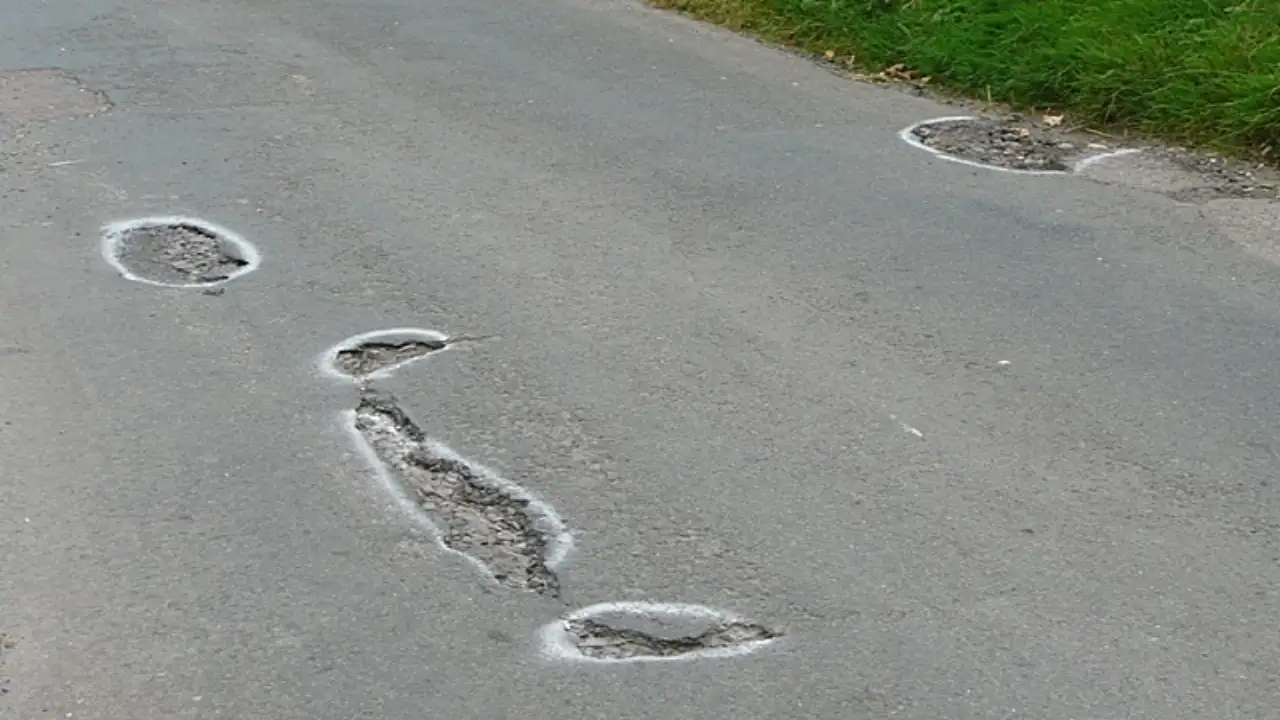
The research involved a collaboration of scientists with Swansea University and King’s College London, alongside Google Cloud, according to the Guardian. The research addressed the problem of potholes that affect road maintenance across the UK by damaging vehicles, consequently leading to an increase in repair costs and creating hazards for road users. The material stops cracks before they can fully form and provides a solution to minimise the need for conventional repairs. To address this, the researchers incorporated porous spores containing recycled oils into the bitumen to slow the damage.