
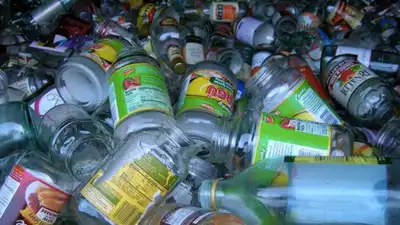
Workers used special concrete containing ground recycled glass in the foundation and floor slabs of JPMorgan Chase’s new 60-storey headquarters at 270 Park Avenue. By replacing 40 per cent of traditional Portland cement with ground-glass pozzolan, the project kept 29 million discarded bottles out of landfills while also strengthening the concrete. The change saved more than 5,000 tons of carbon dioxide emissions during construction. The project used the processed glass mixture across the 2.2 million-square-foot tower to meet environmental goals while also meeting strict structural performance requirements, according to technical coverage in Concrete Products magazine.
A massive skyscraper rising in Midtown Manhattan has turned tens of millions of used waste bottles into part of its structural support. The project shows how city waste can replace carbon-heavy building materials on a large commercial scale. Traditional cement production uses energy-intensive kilns that release large amounts of greenhouse gases, making concrete one of the main sources of industrial emissions worldwide.
The use of recycled-glass pozzolan at 270 Park Avenue is one of the largest single applications of the material in commercial real estate. After the structural work at 270 Park Avenue was completed, transportation authorities in Connecticut and New York began specifying ground-glass pozzolans for public rail infrastructure and highway projects.
“Pozzotive was the centerpiece of a much larger strategy to deliver the greenest skyscraper in America, if not the world,” said Max Driscoll, Vice President of Sustainability at AECOM Construction Management, while discussing the project’s material supply chain. Construction managers from AECOM oversaw the work at the site, working with ready-mix concrete supplier Smyrna Ready Mix to deliver thousands of truckloads of the custom glass-based mixture into central Manhattan. “We are extremely proud to have facilitated a market transformation for ground glass pozzolan as a leading decarbonization strategy for construction. Beyond the carbon savings during construction, the lighter colour of the glass-based concrete reflects more light than standard grey concrete. Developers expect this quality to reduce heat absorption on exposed surfaces, lowering cooling needs inside the building and helping reduce the urban heat island effect around the base of the tower. The successful project in Midtown Manhattan has also encouraged wider use of the material in the region. This helped establish a permanent industrial market for municipal waste glass across the North American Northeast.