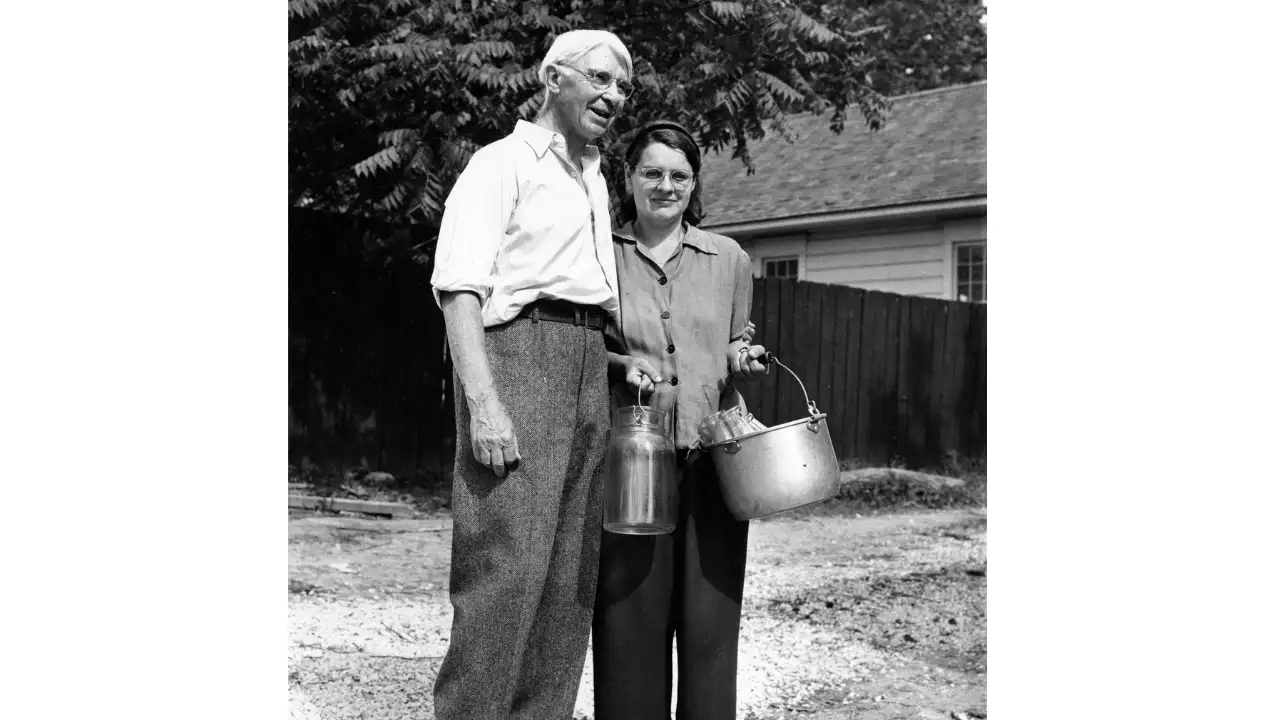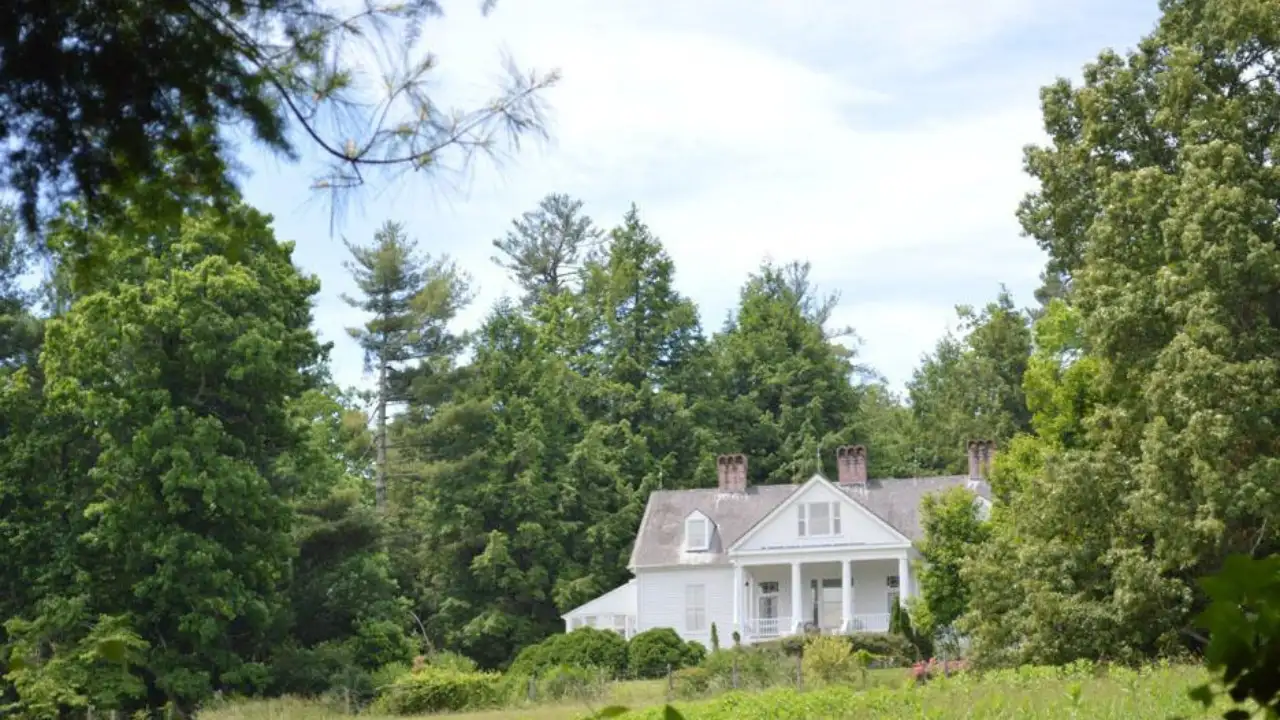
More than 30 acres were available as pasture for Paula’s champion goats, while the surrounding landscape gave Sandburg the solitude he wanted. The couple and their three daughters lived there for 22 years. After Sandburg died in 1967, Paula sold the estate to the National Park Service, and Congress had already authorised it as the first NPS unit to honour a poet.
In 1945, Pulitzer Prize-winning writer Carl Sandburg and his wife, Lilian “Paula” Sandburg, left Michigan for a 245-acre estate near Flat Rock, North Carolina. The move was driven in large part by Paula’s expanding dairy-goat operation, which needed more pasture and suitable farm buildings. Carl also wanted a warmer climate and a quieter place to write. The property, known as Connemara, offered both.
NPS records that she visited Connemara in 1945 and was impressed by its pastureland, farm buildings and setting. The property therefore solved two very different problems at once. The move was not simply a literary decision. Paula’s dairy-goat herd on the shores of Lake Michigan had been growing rapidly, and she needed a property better suited to running the farm. Carl later visited and agreed to the purchase. The estate also offered a warmer climate and a more peaceful environment for his writing. It gave Paula room for her goats while giving Carl the landscape and solitude he wanted for his work.
The estate already had a long history
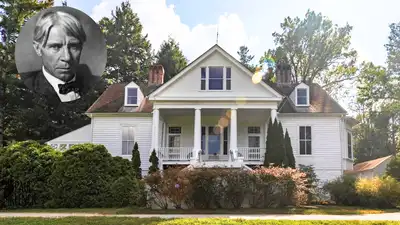
Connemara gave her more than 30 acres of pasture and the farm infrastructure she needed. The main house was built in 1838 by Christopher Memminger, a South Carolina lawyer and later Confederate secretary of the treasury. Smythe purchased the estate in 1900 and renamed it Connemara in reference to his family’s Irish ancestry. Smythe remained there until his death in 1942, after which the property sat unused for about three years before the Sandburgs bought it. He and Paula, along with their three daughters, remained there until his death in 1967. During those 22 years, Sandburg published more than one-third of his works. He also produced Complete Poems, which earned him his second Pulitzer Prize for poetry in 1951. He delivered the Lincoln Day address to a joint session of Congress in 1959 and worked as a Hollywood film consultant. In 1964, President Lyndon Johnson awarded him the Presidential Medal of Freedom. Sandburg remained at the estate until his death on July 22, 1967, aged 89. After Sandburg’s death, Paula sold Connemara to the National Park Service in 1968. The site eventually opened to the public in 1974. It reflects the property’s origins before the Civil War, its later agricultural development, Paula Sandburg’s celebrated goat-breeding work and Carl Sandburg’s final 22 years as a writer.
She also donated the family’s belongings so that her husband’s life and work could be preserved. What began as a family decision to find better land for a dairy-goat operation had therefore become a nationally significant literary landmark. Because of goats, yet it ultimately became a national memorial to the man who wrote there, the unusual part of the story is that the property entered the Sandburg family’s life largely.
The 245-acre estate that once gave Paula room to expand her herd eventually became a place where visitors could trace the life and work of the “Poet of the People”. Her prize-winning Chikaming Goat Herd was expanding rapidly in Michigan, prompting her to look for a larger and more suitable home. Her herd became an important part of life at the estate, while her breeding work earned recognition beyond the property. The goats were not simply an unusual feature of a famous writer’s home. They were one of the main reasons the Sandburg family moved to North Carolina in the first place. The Sandburgs were not the first family to shape the property. He established the estate as a summer retreat and called it Rock Hill. The property later passed to Ellison Adger Smythe, a wealthy textile industrialist and Confederate veteran. He expanded its agricultural character, adding pastures, gardens, walking trails and livestock facilities. The estate became a full-time residence rather than simply a seasonal retreat. Connemara quickly became an important part of Sandburg’s literary life. The estate gave him the privacy to write, but it did not isolate him completely from the surrounding community. He hiked its trails, visited local schools and read his poetry to students. Sandburg’s years at the estate coincided with several important moments in his later career. The following year, he received the NAACP lifetime achievement award for his work on racial issues and social justice. By then, his reputation extended well beyond poetry. He was also known as a historian, journalist, biographer, lecturer and folksinger. The property had by then become closely associated with both his private life and his public legacy. It was where he wrote, raised his family, walked the surrounding landscape and remained connected with the local community. It had become the home of one of America’s best-known poets. That same year, Congress authorised the Carl Sandburg Home National Historic Site. NPS describes it as the first unit of the National Park Service to honour a poet. Catch the latest World News and Live updates. Download the TOI app.
Paula had developed a serious dairy-goat breeding operation before the family ever reached North Carolina. The property included the main house, a kitchen and two slave quarters before the Civil War. NPS records that Memminger enslaved people on the property, making slavery an important part of its earlier history. His life at Connemara also gave the property a significance beyond its earlier history as a plantation and later agricultural estate.
Today, Connemara preserves several layers of American history in one landscape.