
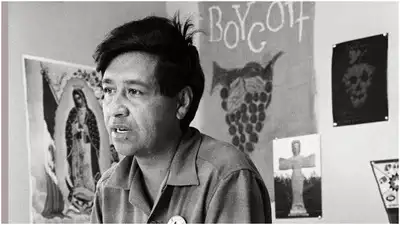
The name and likeness of Cesar Chavez were swiftly removed from buildings, roads, parks and schools after allegations surfaced accusing the farmworker rights icon of sexually assaulting minors and fellow labour leader Dolores Huerta.
Araceli Molar de Barrios, who laboured in the fields for nearly 30 years after arriving in the US in 1995, two years after Chavez’s death, said the news that Chavez had sexually abused young teens and Huerta sent a shock wave through the community she worked with daily as they struggled for improved working conditions and protections. Chavez’s name had been steadily honoured since his death in 1993, including the renaming of old Brooklyn Avenue on LA’s Eastside for Chavez. In 2020, the murder of George Floyd ignited a nationwide reckoning on race, prompting communities and institutions, including in California, to remove public monuments of former slaveholders or prominent Confederate figures. Consideration was then given to toppling statues of Father Junípero Serra, described as the architect of California’s Roman Catholic missions, whose work during Spanish colonisation marked the beginning of exploitation and decimation for Native Californians since his arrival in 1769. The debate intensified as many still held a high regard for the Franciscan priest canonised in 2015, but statues, including one in downtown Los Angeles south of Olvera Street, were taken down.
The speed of the response was described as unprecedented, especially in a state where Chavez’s legacy in the fight for agricultural workers’ rights is deeply embedded, Los Angeles Times reported.
Many said they were shocked by the allegations and felt immediate action was necessary. “I appreciate that my community has the integrity and the strength to reckon with these new revelations in a very expedient way, and as we do in Los Angeles,” said Los Angeles City Councilmember Monica Rodriguez, who added that the effort to rename the holiday was immediate. She said she had been sexually harassed by supervisors and had seen other women experience harassment. Molar de Barrios said she would like to see Huerta honoured through the renaming of streets and parks for her sacrifices in fighting for farmworker rights and for bearing her secret, “for everything that fell on her”. The allegations, she said, were a reminder that they had power in speaking out. Historians and educators, including Gudis, said that instead of focusing on one person to represent a historical movement or event, there should be greater effort to uplift lesser-known figures in the community who contributed to a broader cause and whom the community could resonate and connect with.
Within just two days of a New York Times investigation bringing the claims to light, officials and activists across California moved rapidly to erase Chavez’s presence from public spaces. That move faced controversy from residents who argued the city was erasing their history and burdening them with the cost of changing stationery, but over time naming things after Chavez became shorthand for honouring Latino civil rights and activism. As controversial legacies of historical figures became mainstream, so did removing their presence from public view. Removing Father Junípero Serra took months and also sparked debate within the Latino community about Serra’s place in history. She argued that the real issue was who got to declare a hero.