
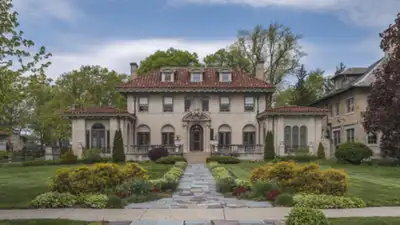
Known as the Motown Mansion, the 10,500-square-foot residence at 918 W. Boston Blvd. was built in 1916-17 for lumberman Nels Michelson (Image Credit: Historic Detroit)
A century-old Detroit mansion with deep ties to the city’s music and industrial history once changed hands for just $250,000 before a painstaking restoration helped it sell for $1.65 million. Known as the Motown Mansion, the 10,500-square-foot residence at 918 W. Boston Blvd. was built in 1916-17 for lumberman Nels Michelson and later became the home of Motown Records founder Berry Gordy Jr. Gordy bought the house in 1967 and lived there during a pivotal period for Motown before eventually selling it to Detroit attorney Cynthia F. Reaves, who restored the landmark and later sold it in 2017. Berry Gordy Jr., the founder of Motown Records, purchased the mansion in 1967. He lived there from 1967 to 1969, during a period when Motown was producing music from artists including The Supremes, The Four Tops, Smokey Robinson and Stevie Wonder . The Jackson 5 also had connections to the property during its Motown years.
The Washington Post reported that Diana Ross and Aretha Franklin sang at Gordy’s parties, while Stevie Wonder played the grand piano. The Washington Post reported that Reaves retained as much of the mansion’s original architecture as possible while bringing the property back into use.
A Michigan State Historic Preservation Office record says Reaves used state historic-preservation tax credits and spent four years rehabilitating the house. Historic Detroit identifies the property as the Nels Michelson Mansion and documents its origins, architecture and notable owners. The mansion became a setting for parties and gatherings connected with the Motown world. Gordy eventually moved his music operation to Los Angeles but retained ownership of the Detroit mansion for decades. The property continued to carry the Motown association long after he stopped living there. The work included restoring wood surfaces, decorative painting and plaster, updating mechanical systems, restoring the landscape and rehabilitating much of the carriage house and Athletic Building. The restoration later received a Michigan historic-preservation award.