
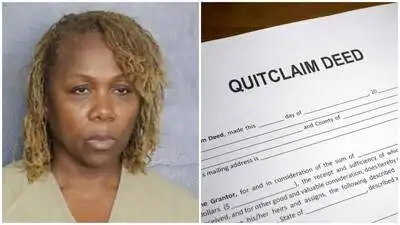
Sharon Joy Barnett faces a felony identity-fraud charge over the alleged use of her former husband’s personal information. (Photo: Margate Police Department)
A Florida man preparing to sell his house, which he estimated was worth approximately $500,000, made an unexpected discovery when he learned that a quitclaim deed listing just $10 in consideration had been recorded against the property. His former wife, Sharon Joy Barnett, 56, of Margate, is now facing a first-degree felony charge involving the alleged fraudulent use of personal identification information. The disputed deed was recorded in March 2024, according to a Margate Police Department probable-cause affidavit. The $10 mentioned in the deed was its stated consideration and not the actual market value or confirmed sale price of the house. The former couple purchased the Margate residence in October 2006 for approximately $265,000, according to the police affidavit. They lived there for around 11 years before filing for divorce in July 2017. Their agreement reportedly stated that the house would be sold after their daughter turned 18, with the proceeds divided between them. However, when the man later contacted a real estate agent about listing the property, he discovered that a quitclaim deed affecting his ownership interest had been recorded in March 2024. He estimated the house’s current market value at approximately $500,000 and told investigators that the disputed filing had prevented him from proceeding with the sale. Barnett was arrested on October 26, 2026, after a Margate police officer stopped her vehicle and discovered an outstanding warrant connected to the identity-fraud case. A Broward County magistrate found probable cause the following day, and a $5,000 surety appearance bond was filed.
The document allegedly affected his ownership interest, despite his claim that he had never signed it or authorised anyone to transfer his share. In his statement to police, he said he had neither signed the document nor authorised anyone to sign it on his behalf or transfer his ownership interest. Investigators allege that Barnett used her former husband’s identifying information without his consent in connection with the document. During the divorce proceedings, the husband moved out of the property. The allegations have not been proven in court. Barnett is presumed innocent unless and until proven guilty.
Notary’s account reportedly changed during investigation
The Broward County State Attorney’s Office filed one count of criminal use of personal identification information against Barnett on October 6, 2026. The criminal information, filed in case 26-011939-CF10A, alleges that she fraudulently used another person’s identifying information without consent between March 2 and October 14, 2024. The charge invokes Florida Statute 817.568(2)(c), which covers the alleged fraudulent use of personal identification information involving a financial value of at least $100,000.
However, during further questioning, she reportedly said she could not independently remember whether the former husband had been present when the document was purportedly signed.
The notary initially recalled notarising the document and told investigators that she had known Barnett personally for several years, according to the affidavit. Detectives also questioned the notary whose details appeared on the disputed quitclaim deed. The affidavit also states that the notary did not have a journal or other contemporaneous record establishing the circumstances of the signing. Detectives noted that her accounts changed during a recorded interview conducted using body-camera footage. The circumstances surrounding the alleged signing are part of the investigation into the disputed property document. Prosecutors allege that the relevant benefit, avoided payment, injury or fraud met that threshold. The charge is classified as a first-degree felony. The case also highlights the importance of monitoring property records. The Broward County Property Appraiser offers a free Owner Alert service that notifies registered users when its office processes a recorded document changing a property’s ownership. The service provides owners with a link to the document, allowing them to review changes and identify transactions they may not have authorised. The property appraiser advises anyone who suspects deed fraud to notify local law enforcement and seek legal advice. Its office cannot determine which competing ownership claim is legally valid, a matter that may ultimately require a court ruling. You use AI every day. Now get your AI Quotient. Take the AIQ test.