
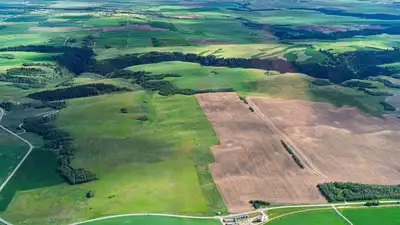
Pic credit: Eco Flight
The agreement safeguards 1,686 acres of Flying A Ranch while allowing the Atchley family to continue farming and ranching. He spent years arguing for the protection of eastern Idaho farmland and died in 2024, partway through the project. Because they’re developing a lot of it, “We realize in watching what’s happening in this county and Teton County that this land is getting to be more valuable, and it’s starting to disappear.
A family ranch near Ashton, Idaho, is now permanently protected by a conservation easement that limits how the land can be developed. The move also protects an important wildlife migration corridor used by mule deer travelling from Wyoming into Idaho, along with habitat for several other species. And we don’t want to see this developed. His daughter, Laura Pickard, and her husband, Clay, now run the ranch day to day. They wanted to honour the family’s legacy and fulfil both Clen’s and James’s wishes. Clen’s widow, Emma Atchley, continued working in the seed potato greenhouse, while the Pickards managed the ranch.
In an earlier interview with the Wyoming Migration Initiative, Clen explained his reasons.
The Atchley family has worked this land since 1901, when James Arthur Atchley moved from Tennessee and claimed it. He founded Atchley Farms in 1906. In 1923, James won a blue ribbon at the Eastern Idaho State Fair.
The family’s potato-growing history goes back even further, Teton Valley News reported, according to earlier records.
Once they cross the border, they depend almost entirely on private land to complete their journey, according to TRLT. Through this easement, the Atchley family is protecting not only the ranch but also a deer migration route. Mule deer travel through this landscape from Wyoming and cross into Idaho. Protecting working ranches like this one keeps the route open as development expands elsewhere. With this easement, the land is protected while remaining in the family’s ownership. The family can continue farming and ranching, as the easement limits development without taking the property away from them. This means the land will not be turned into data centres, residential buildings or similar developments. The project was funded through the family’s donation of the easement, along with support from federal and state programmes and private organisations, including the Knobloch Family Foundation and The Nature Conservancy in Idaho.