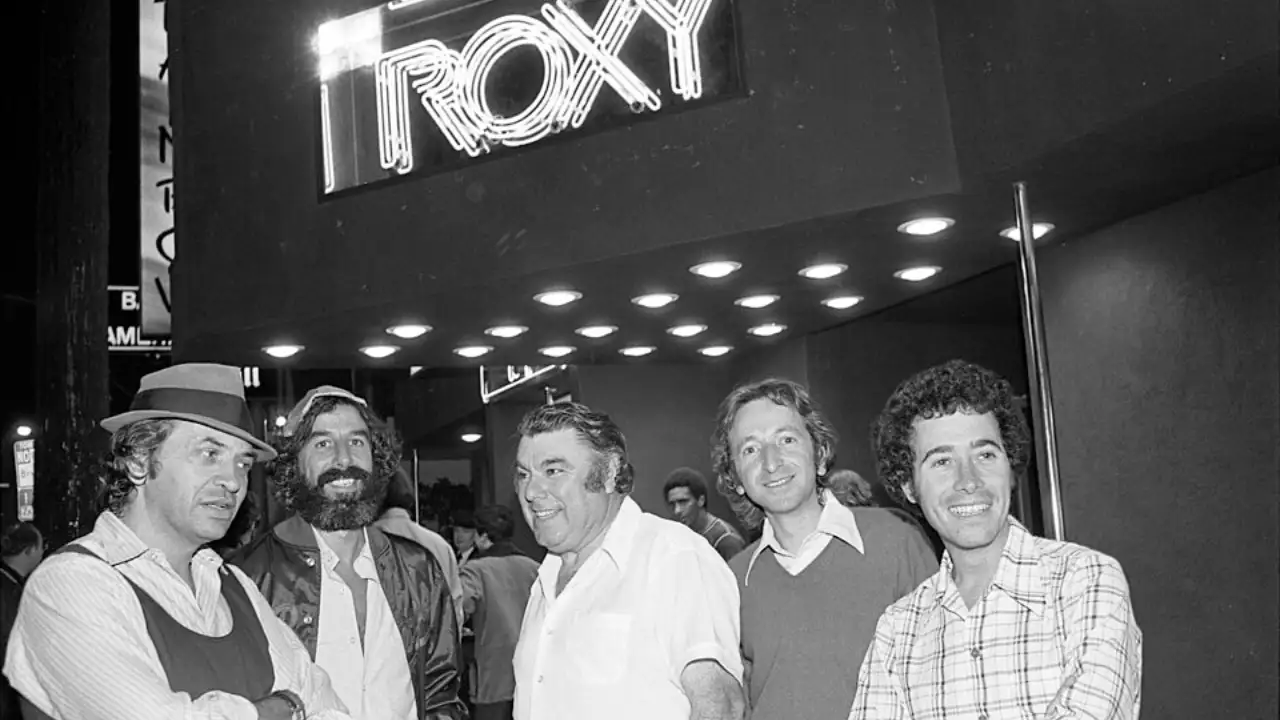
A portfolio image of David Geffen. Image credits: Instagram/@davidgeffen
In 1964, David Geffen joined the mailroom of William Morris Agency in New York. He was 21 years old and was earning $55 a week. In an interview with David Sheff in 1994, Geffen recalled that five years after entering the entertainment agency, he had transitioned into an independent agent and made $2 million through a music-publishing deal involving singer-songwriter Laura Nyro. He eventually contacted William Morris and secured a mailroom position in 1964. In 1965, after discovering a competitor’s client list that had originally been sent to his supervisor, Geffen took it to the head of the New York office. By 1966, he had become an agent in the television department. Geffen’s move into music management brought him into contact with Laura Nyro, a singer-songwriter whose career had met a setback after a challenging show at the 1967 Monterey Pop Festival. Geffen secured a 50% interest in the company. The PBS timeline notes that an agreement to sell Tuna Fish Music was reached in 1969, while the formal paperwork was completed in 1971 after the dispute reached a settlement. Geffen shared a more compressed account While speaking to Sheff in 1994. Recalling the period around the 1969 Woodstock festival, he said he had already made $2 million. He shared that he owned half of Nyro’s publishing rights and that the catalogue was sold for $4 million, thus giving him $2 million. In 1972, he sold the company to Warner Communications for $7 million. After a period away from the record business, he returned in 1980 and established Geffen Records.
Geffen had reportedly found this job after trying several jobs in the entertainment industry following his college dropout. it placed him inside one of the industry’s influential talent agencies While the position in the mailroom was not glamorous. There, he could observe and learn how agents negotiated deals and built relationships with artists. The money wasn’t from his salary at William Morris; it came from selling his interest in Nyro’s publishing catalogue. In his interview with Sheff, he shared that while listening to those conversations, he realised that it was something that he could do as well. He also admitted that he had claimed to be a UCLA graduate on his application, although he had not completed a degree there. In the interview, he shared that to prevent the company from discovering his false claim, he reached the office early every day while he was still working in the mailroom and went through every single piece of mail that came into the agency, looking for the letter from UCLA. Geffen was born in Brooklyn, New York and had struggled academically. He even attended more than one college without completing his studies. Prior to joining William Morris, he worked as an usher at CBS Television Studios in Hollywood. Following that, he even had a stint as a receptionist at a production company. Those jobs served as an introduction to the entertainment business, but he wished for a role that brought him closer to making decisions. His progress at the agency, however, was not an uninterrupted promotion. His supervisor sacked him, but the agency’s senior management rehired him and promoted him to an assistant position. Later on, Geffen started helping an agent recruit new clients. He became her agent and manager. As he started working for Nyro, he reportedly also became involved in her publishing business, Tuna Fish Music. The value of the publishing catalogue increased with the attraction from other performers and recordings of Nyro’s compositions. However, this arrangement became entangled in a legal dispute that involved Nyro’s past contracts with manager and publisher Artie Mogull. Asylum became an important part of Geffen’s move from talent agent to music ownership. His new company represented artists like John Lennon and Yoko Ono, Elton John, Donna Summer, Aerosmith and Guns N’ Roses.