
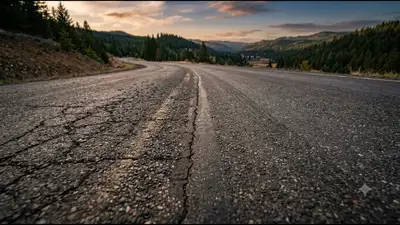
AI Representation: In 1977, a road in Washington was rebuilt using 72% recycled old asphalt rather than new material. Image credits: Wikimedia Commons
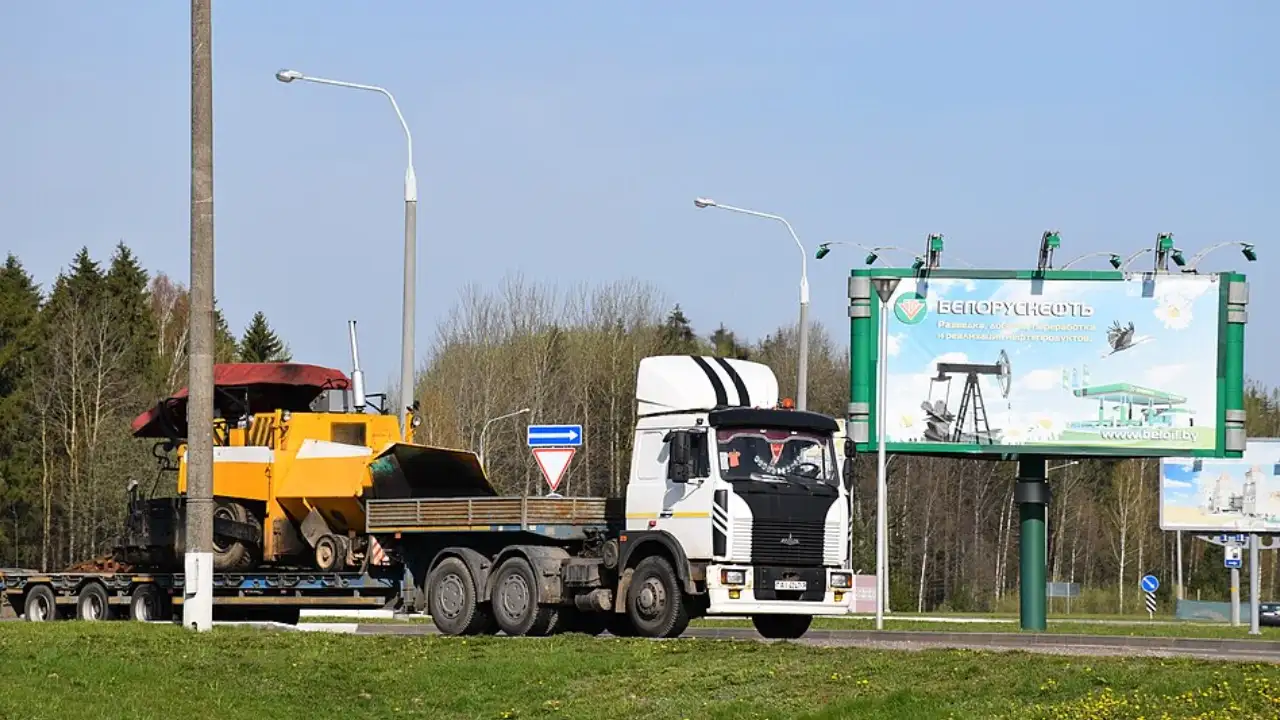
The recycled pavement gave 16 years of actual service, against 10 years for the original layer, so in this case the recycled mixture provided durable road construction. FHWA’s Pavement Recycling Executive Summary and Report explains that the agency started Demonstration Project 39 in June 1976 to promote and assess asphalt pavement recycling. MAZ-6422 transporting asphalt pavers by the road. A pavement with a large share of reclaimed material and a recorded service life of 16 years shows that using existing pavement does not necessarily mean building a shorter-lived road.
The FHWA report said binder sampling took place over eight years. The project also tested asphalt binder retrieved from pavement cores taken over the following years, not just the condition of the road after reconstruction. The average properties of the retrieved binder stayed within the limits for absolute viscosity and penetration during the first five years, which allowed the aged binder’s performance after recycling to be evaluated. The Washington State Department of Transportation also tested the resilient modulus of the recycled mixture and the results showed stiffness comparable to conventional hot-mix asphalt, both initially and over time. The service life comparison was the key finding. Oil prices helped drive interest in asphalt recycling Washington’s project was one of many pavement recycling efforts in the United States. An oil embargo in the 1970s was one reason construction costs rose. The programme helped establish that recycling was a technically viable way of rehabilitating roads. Image credits: Wikimedia Commons Reclaimed asphalt pavement is material produced by milling or removing existing asphalt pavement. It contains aggregate and aged asphalt binder and can be reused for paving, alone or combined with virgin aggregate, new binder, or a recycling agent. FHWA’s guidance identifies conserving materials, reducing waste and potential cost savings as benefits and stresses appropriate material selection, mixture design, processing and quality control. One project’s results do not guarantee longer-lasting roads The Washington project illustrates how reclaimed asphalt can perform in road building. Nevertheless, the results cannot show that recycled asphalt lasts longer than newly produced asphalt. Pavement lifespan also depends on the condition of the reclaimed material, mixture quality, construction quality and environmental conditions. Reclaimed asphalt can become a real source of construction material if engineers evaluate it properly. You use AI every day. Now get your AI Quotient. Take the AIQ test.
A road rehabilitation project it carried out in 1977 produced notable results. The Federal Highway Administration (FHWA) reported that the recycled hot-mix asphalt provided 16 years of actual service, compared with 10 years for the original layer it replaced. The 1977 project reused most of the existing asphalt The Washington State Department of Transportation removed 45 mm of old pavement and laid recycled hot mix asphalt in its place. A thin open-graded friction course was then laid on top and FHWA’s archived documents give its thickness as either 18 or 20 millimetres. The recycled mix consisted of about 72% reclaimed asphalt pavement (RAP) and 0.75% recycling agent, with no new asphalt cement added.
Road construction often involves removing worn-out pavement and replacing it with fresh materials. Old asphalt does not have to become waste, however. It can be processed and reused for road surfacing, which saves virgin materials for other uses. Washington State considered such an alternative in the 1970s, a period of rising construction costs and oil prices. The agent’s application rate was selected to produce a recycled binder comparable to AR-4000W asphalt cement. These details appear in FHWA’s Performance Data of Recycled Mixtures . The project showed how a large proportion of existing pavement could be reused in a new road layer rather than discarded. Field tests examined the recycled asphalt’s performance