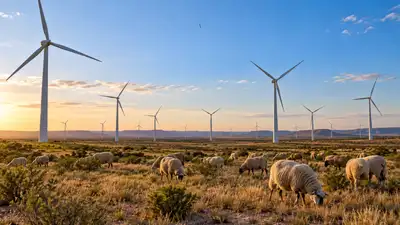
Image AI generated
In May 2001, the Indian Mesa wind farm began operating in Pecos County, West Texas, with 125 turbines and a total installed capacity of 82.5 MW. The project paid about $930,000 in local school district taxes in 2003, according to the US Government Accountability Office (GAO). The details appear in report GAO-04-756, published in September 2004, which summarises visits to nine wind power projects in five states. “about 7,000 of these acres are leased for the project, according to the report. The report then records that “the project paid about $930,000 in local school district taxes in 2003. “in Pecos County, Texas, with a population of about 16,000 the school districts received about $5 million in 2002 from property tax revenues directly associated with wind power projects in that county, according to the GAO.
A footnote in the report explains that “because one of the four landowners was a county commissioner, property taxes were assessed for this landowner’s parcel to avoid the appearance of a conflict of interest.
The GAO reports that “the project is located on 34,000 acres situated on a mesa” and that “one of the four landowners of this acreage is the University of Texas. ” In its general description of how wind projects are developed, the GAO lists a lease or easement agreement with a term “sufficient for financing the project, usually 25 years or more. The report states that “the Iraan-Sheffield School District, obtained one-third of its property tax revenues from wind power projects that year” and that “these projects also added about 30 to 35 full-time permanent jobs to operate and maintain the projects. ” It also cites the Fort Stockton Economic Development Corporation, which said “the county experienced a 10 percent increase in gross sales during the construction of several wind power projects.
The project sits on a mesa where the uses of the land include grazing livestock, primarily sheep, and hunting, and the project does not limit these uses. It continues: “The uses of the land include grazing livestock, primarily sheep and hunting. The project does not limit these uses. On the wider question of land use, the GAO’s introductory letter states that “even large wind turbines use only about a quarter-acre of land each, including access roads, so farmers can continue to plant crops and graze livestock up to the base of the turbines. The report also records that “University of Texas officials indicated that legal and technical resources available to the university were critical to negotiating a favourable lease agreement for a wind project on university property. The GAO does not specify which school districts received the payment in its account of Indian Mesa. You use AI every day. Now get your AI Quotient. Take the AIQ test.