PC: Wikipedia
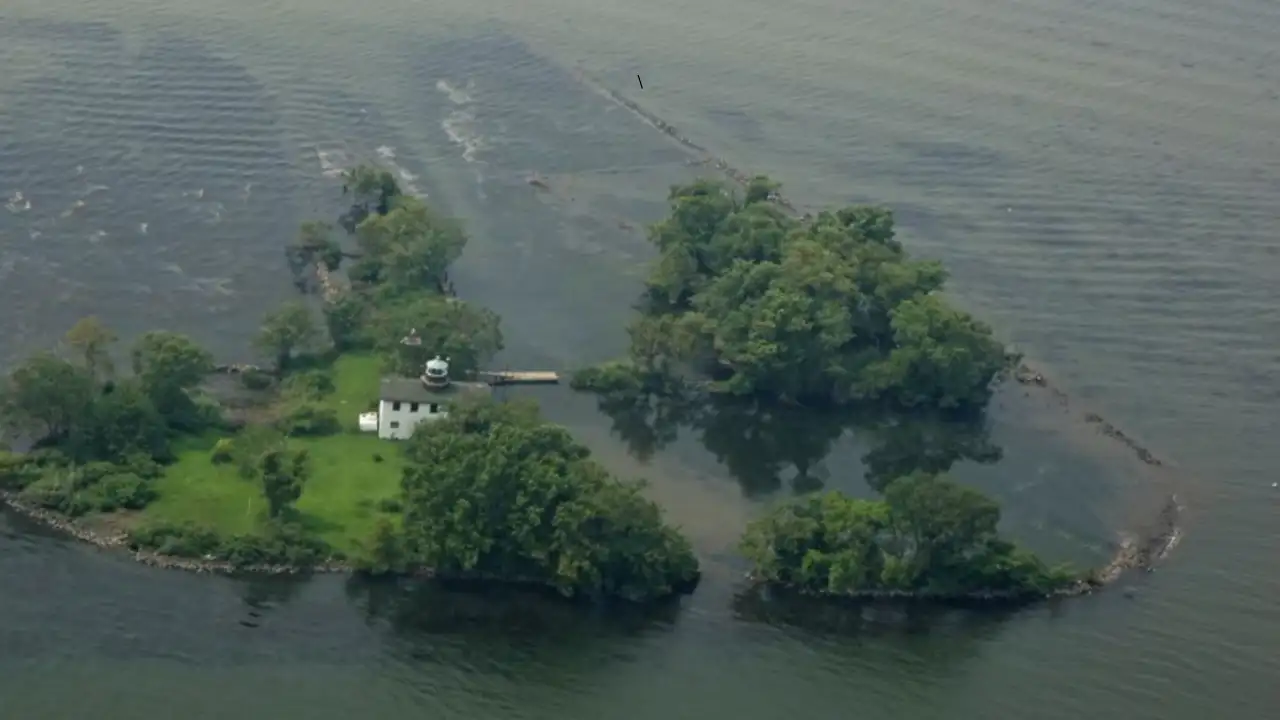
In 2013, Maryland restored Fishing Battery Island in the northern Chesapeake Bay using sediment placed around the remains of the historic man-made island. Fish and Wildlife Service, restored 12 acres of intertidal and upland habitat and included planting 60,000 native plants. The sediment was 95% medium-grained sand and was used to create a U-shaped berm designed to reach 7 feet above Mean Lower Low Water.
The project, carried out by the U.S. Army Corps of Engineers and the U.S. Ten years later, much of the island’s designed footprint remained, with surviving switchgrass and trees that had naturally established across parts of the site.
How was Fishing Battery Island restored with sediment
The berm was designed to be 125 feet wide across the top and reach an elevation of 7 feet above Mean Lower Low Water, according to a report by the National Oceanic and Atmospheric Administration. Its outer edge was graded to a 10:1 slope, while the inner edge was graded more steeply at 5:1 towards the existing island platform. The sediments used for the project were described as 95% medium-grained sand. Sediment placement was completed in early spring 2013, after which the island was planted with native species suited to different elevation zones.
The restoration involved placing sediment around the remains of Fishing Battery Island to form a tall U-shaped berm. The report states that there was no structural component to the built island, meaning there was no sediment containment feature or shoreline hardening.
Why were 1,600 more plants added later in 2013
As part of the 2013 restoration, approximately 60,000 plants were planted across the island. The planting was intended to establish vegetation appropriate for the different elevation zones of the restored feature. Heavy human foot traffic and grazing by geese led to an additional planting effort later that year.