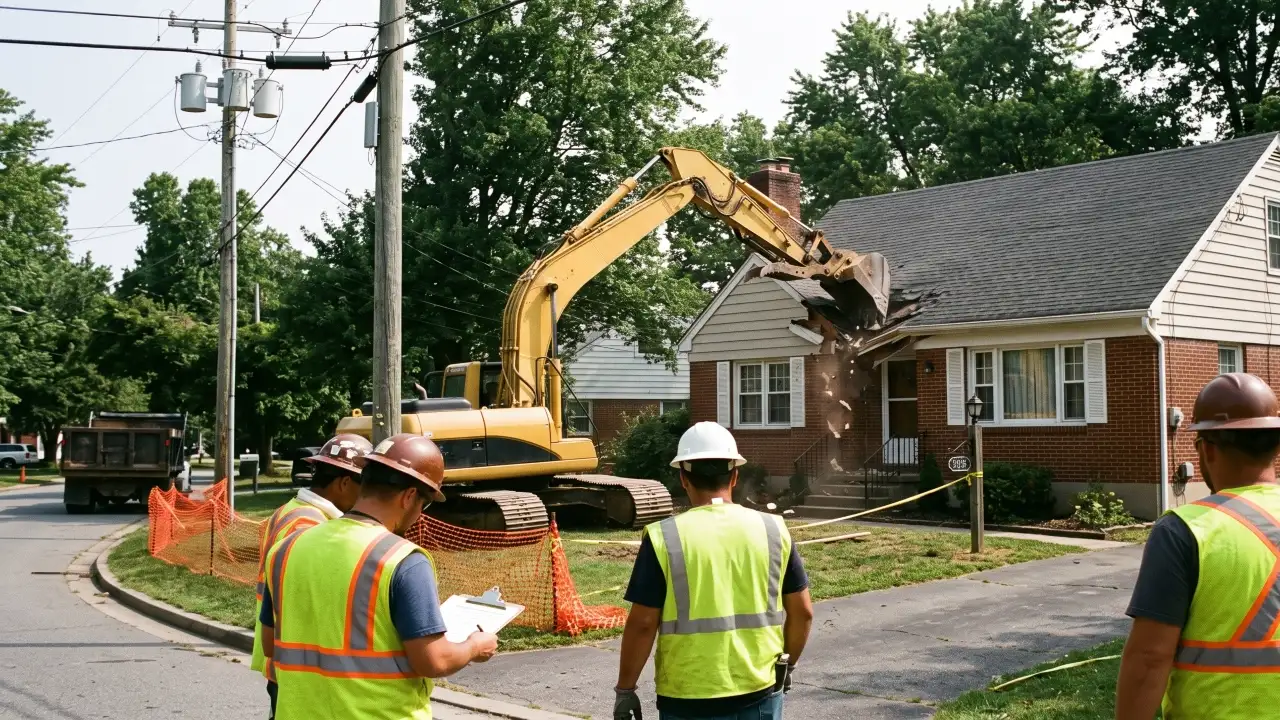
AI-generated representative image showing the aftermath of a house mistakenly demolished at the wrong address in an Atlanta residential neighborhood. Credits – Google Gemini
The news was as terrible as it could get for Susan Hodgson, a homeowner from southwest Atlanta, in 2023. Because of an error that took a demolition crew a matter of hours to make, she had kept the family property standing all those years just so she could decide its future herself, only to lose that choice completely.
The required paperwork, including site plans, a current rodent treatment letter, and a plumbing permit for the sewer connection, was never filed before any legal demolition could take place, according to Atlanta’s own demolition permit protocols . Georgia law says wilfully damaging another person’s property without permission can be a criminal offence. One of the most disconcerting ways for homeowners to discover that something has gone wrong at home is when their vacation ends with a call from a concerned neighbour. When she returned from a trip, she discovered that the long-standing family property she had kept locked, insured, and maintained for about fifteen years had been completely demolished by a construction crew that had just gone to the incorrect address. One call to a neighbour altered everything When she returned to Atlanta, her family home was gone, leaving only trash and timber behind. For one thing, the city’s own building laws say this kind of destruction should never happen without a permit. The City of Atlanta’s building code requires a permit before any structure can be legally demolished, precisely to prevent situations in which a property owner is given no warning that work is about to begin on their land. In this case, no permit had been filed, as the crew was never supposed to be on that property. And cases like these aren’t as rare as they sound. The same year, a different Georgia homeowner experienced a similar situation when a county-owned demolition team demolished a house he had bought and was renovating, citing an address error again; this time, the demolition was carried out by a government contractor rather than a private company. What both cases share is not just the mistaken address but what came next, or rather, what didn’t. Neither homeowner appears to have received prompt compensation or a formal admission of fault from the party responsible, despite a permit being legally required before any demolition, private or government-led, can proceed. That gap between what the law demands before a structure can be torn down and what actually happens once it has been torn down by mistake is where homeowners in situations like these tend to find themselves stuck, left to prove damages after the fact rather than being protected from the loss in the first place. No apology, just an acknowledgement For the Atlanta homeowner, the aftermath was almost as frustrating as the demolition itself. Instead of compensation or even a formal apology from the responsible company, she received a notice from the city threatening code violation citations for the very mess the crew had left behind and for the missing permit paperwork for a demolition she had never authorised in the first place. The city then explained that the issue was a civil dispute between the property owner and the corporation, rather than something it would resolve directly, leaving the homeowner to pursue the contractor through the courts on her own. AI-generated representative image showing a demolition crew working at a residential property while verifying the site address. Credits – Google Gemini Not an isolated case Such wrongful demolitions fall under a unique area of law. If the damage surpasses five hundred dollars, the Georgia General Assembly’s own code structure considers it a more serious concern than a mere misunderstanding. Whether a demolition contractor who genuinely made a good-faith error in the address would be criminally prosecuted is quite a different question and usually boils down to prosecutors weighing intent against mere negligence, but at least the statute makes it clear that tearing down a house without the owner’s consent is not something the law takes lightly. You use AI every day. Now get your AI Quotient. Take the AIQ test.