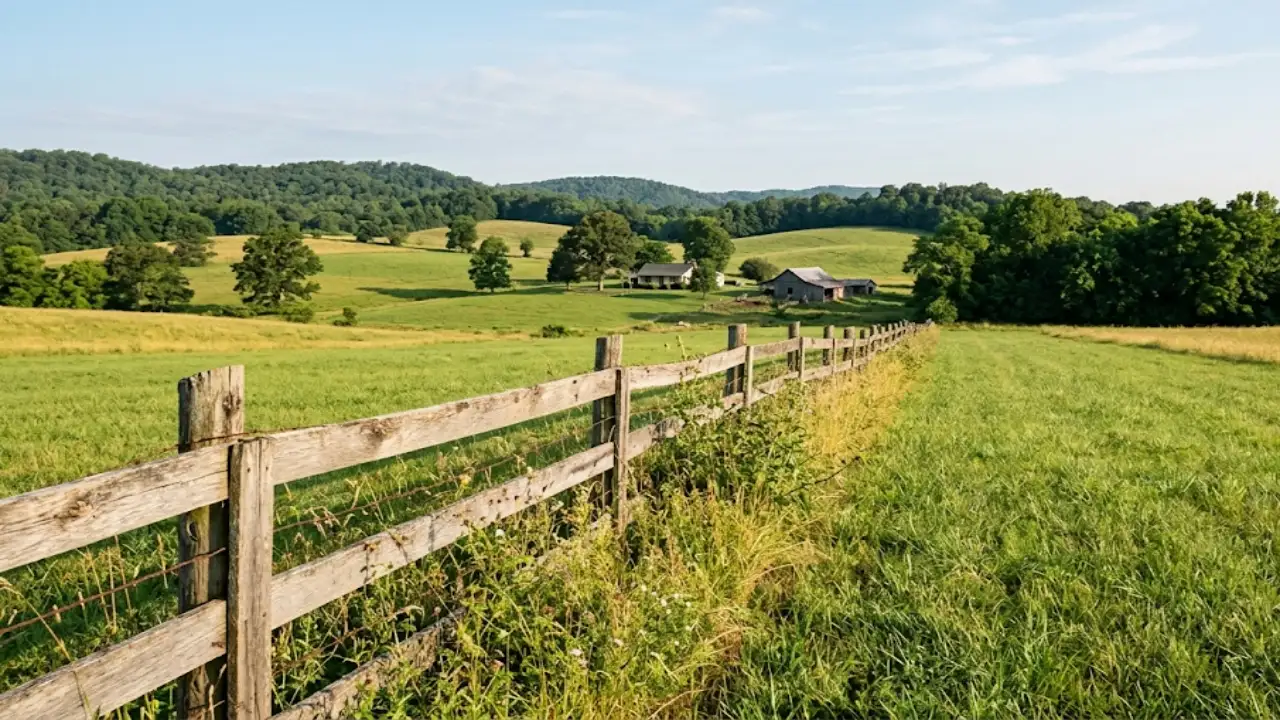
AI-generated representative image showing. Credits – Gemini
In 2024, Susan and Marianne Fowler conserved an additional 36 acres of the farm with support from the charity Land Trust for Tennessee. The new acreage adds to the 56 acres of ancient farmland they had already preserved on the property in 2010. A promise to protect the farm The land has been in the Fowler family since 1900. In 2010, while their aunt was still alive, the sisters placed the first 56 acres under a conservation easement. In 2024, they fulfilled that promise by placing another 36 acres under an easement.
Susan Fowler says her father was born and raised in the house, which her uncle later occupied. Susan Fowler described the landscape this way: “This is a beautiful valley, and some of it needs to be maintained the way it was to begin with.” The same scene keeps repeating as you drive through East Tennessee’s valleys. After a century of hay production, a field receives a survey flag, a sign and finally a row of new homes. As more people relocate to the state and buyers seek out open land to build on, land that has been in one family for many generations is discreetly changing hands, and the pace has accelerated. A modest deed of the opposite kind stands out against that background since it was intentional and planned to remain forever. Regardless of what happens to the surrounding area, two sisters in Anderson County resolved that the farm where their father was born should remain a farm. Their promise to their aunt, along with the sight of nearby property being bought up for development, motivated them to protect the additional acreage. After her uncle died, his wife and Susan’s sister Marianne became increasingly concerned about development in the area. They promised their aunt they would protect the adjacent acreage as well.
It can also be partial and phased, as the Fowler farm was protected, initially in 2010 and then in 2024. Credits – Gemini Why Tennessee’s farming is under threat LTTN says it has helped protect more than 137,000 acres in 76 Tennessee counties over more than 25 years. But the loss on the other side of the ledger is substantial.A University of Tennessee analysis cited by American Farmland Trust estimates that Tennessee converted about 1.1 million acres of farmland to other uses between 1997 and 2017 and another 430,000 acres between 2017 and 2023. Spread across six full years, the latter figure averages about 8.2 acres per hour. With Tennessee’s average farm size at 170 acres, that is equivalent to roughly one average-sized farm every 21 hours. The American Farmland Trust forecasts that between 2016 and 2040, Tennessee will lose more than one million acres of farmland, the third-highest loss in the nation. The 36 acres protected in 2024 add to the 56 acres the Fowler sisters placed under conservation easement in 2010.
It’s the legal documents that protect the land long after the people who signed them are gone. Once the documents are signed, the land trust gets to work.
Owners may also be eligible for a federal income tax deduction for the decline in the appraised value of the land, the trust says, and recommends they consult a legal or tax specialist first. The new protected property is located in the north central portion of Anderson County, in the Dutch Valley on the east valley floor of Walden Ridge. It is a piece of East Tennessee that has been moulded by the North Cumberland Mountains, the Clinch River and Norris Lake. But the most important feature is not on a map. How does a conservation easement work A conservation easement is a legal, binding contract in which the landowner voluntarily limits the use or development of his land in perpetuity. The LTTN notes that land with an easement is still private property and can be sold or left to heirs, but the easement goes with the land no matter who owns it next. That’s the difference between this arrangement and just selling or giving away land. Each easement is customised. Owners can keep rights to farm, cut timber, hunt or build a future house, though some things may require clearance from the land trust first. An easement does not necessarily mean the land is open to the public. It checks in annually with the landowner on each protected site to ensure the terms are being met, and these visits are especially important when ownership changes. The entire procedure takes an average of six to nine months from initial contact to recorded easement. The trust is free but landowners pay for their own advisors such as lawyers and surveyors. AI-generated representative image. It also defines conservation easements owned by land trusts as a voluntary tool for farmers to limit development rights while retaining ownership and continuing to farm. The sisters still own the property, but the permanent easement held by The Land Trust for Tennessee restricts future development under the agreement’s terms. Those restrictions remain in effect even if ownership changes. You use AI every day. Now get your AI Quotient. Take the AIQ test.