
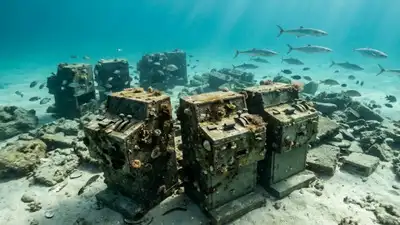
AI-generated representative image showing obsolete voting machines among artificial reef structures, with fish swimming through the underwater habitat. Credits – Gemini
Alabama has employed objects such as voting machines, concrete, barges and Liberty ships, according to a 2016 summary of Gulf reef projects from Texas Parks & Wildlife, hosted by NOAA Fisheries . In testimony before the House Natural Resources Committee in 2013, Chris Blankenship, then head of the Alabama Marine Resources Division, stated the state has seeded more than 17,000 reefs in its reef zone, which includes about 1,200 square miles of federal waters. That ecosystem produces a fishery for red snapper that averages around 30% of the Gulf’s recreationally captured red snapper from less than 5% of its shoreline, he said. An issue across all the Gulf states in the same 2016 assessment is a need for increased scientific understanding of reef biology and design. To summarise, Alabama converted 124 old voting machines, approximately 46.7 tonnes of equipment, into a reef lane of 1.5 miles between two existing reefs, in October 1997.
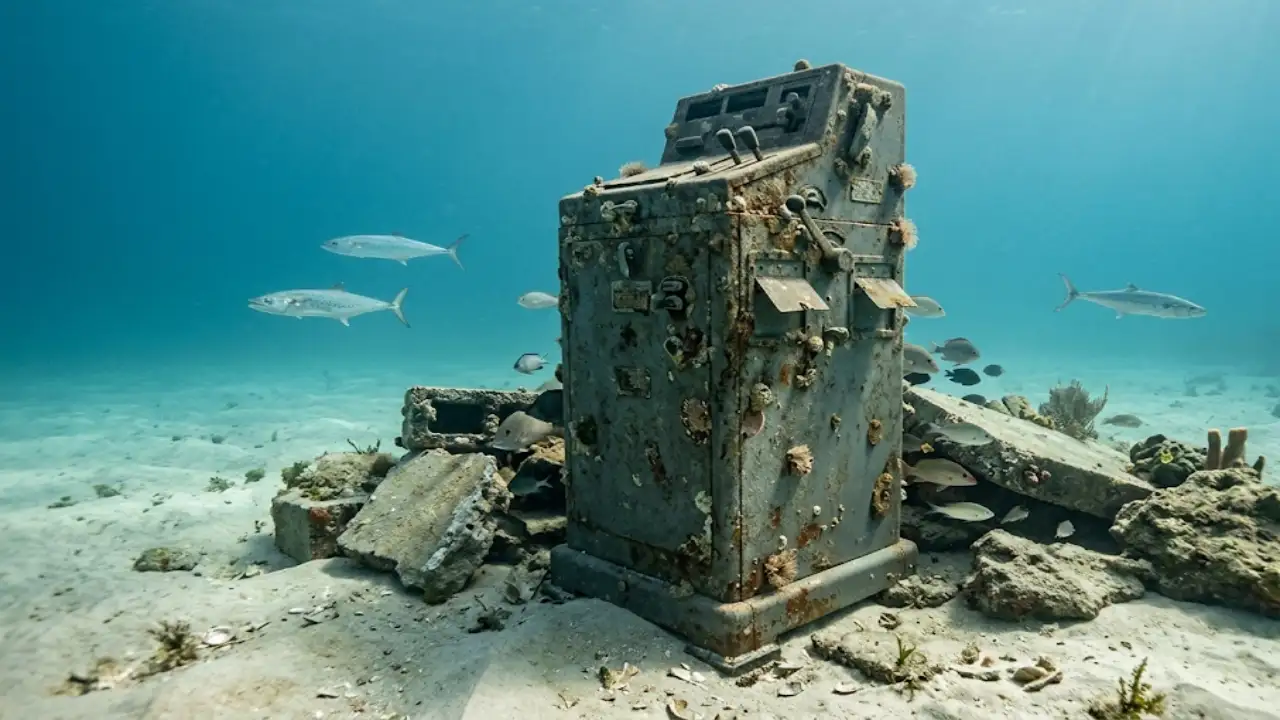
Alabama Outdoor News quoted Minton as saying the crew was surprised by how well the machines remained intact after deployment. The structures formed part of a trolling lane designed to provide habitat and feeding opportunities for king mackerel between two existing reefs. The reef performed what it was supposed to do, but also raises a reasonable issue as to what such efforts actually show. AI-generated representative image showing a weathered vintage voting machine resting among reef rubble, with fish swimming around the submerged structure. Credits – Gemini The voice of the reef The voting machine lane makes a good narrative, but the overall picture is fish and money. There should be a word of warning here, too. Reefs are undoubtedly attractive to fish, but showing how much they contribute to the total population calls for meticulous long-term monitoring. Minton’s account describes the machines remaining intact and forming structures along which king mackerel could feed. It does not establish how quickly fish began using the structures or measure the lane’s long-term ecological effects. State officials stated the equipment was holding up well and they had king mackerel spots to feed. The project illustrates the conversion of a flat sandy bottom into a fishing ground with whatever stout material is at hand. The long-term fish benefits of any one reef are best determined by diligent observation. You use AI every day. Now get your AI Quotient. Take the AIQ test.
When a lengthy row of outdated voting machines was placed across the bottom in October 1997, one of the strangest undertakings was completed. Alabama’s artificial reef program dates to 1953, when the Orange Beach Charter Boat Association sought permission to place 250 car bodies off Baldwin County. These also were heavy things, 830 pounds a piece. Her search for reef material turned up 124 outdated voting machines weighing 830 pounds each. Together, the machines weighed 102,920 pounds, or about 51.5 U.S. short tons (46.7 metric tonnes). The devices were wired up in groups of four, which constituted 31 clusters, and strung out in a single line 1.5 miles, or around 2.4 kilometres, long. The troll alley was completed in October 1997.
Red snapper and many other reef fish require hard structure to survive; therefore, this is bad news for fish that need a place to hide and feed.
With sufficient time, an artificial reef can develop a food web resembling that of a natural reef, according to the state’s artificial reef guidance. Formation of the Reef The idea came from Iris Ethridge, a retired captain and former schoolteacher from Orange Beach, who wanted to establish a nearshore trolling lane for king and Spanish mackerel, according to Alabama Outdoor News. The majority of the sand on the bottom along Alabama’s Gulf coast is flat. The state and local fishing groups have sunk objects as a fairly practical solution to the issue throughout the years. Fish have taken up residence in car bodies, concrete culverts, bridge debris, barges, and even military tanks. The voting-machine project was a later, more targeted effort intended to establish a trolling lane for nearshore king and Spanish mackerel. Why the seabed needed help Much of Alabama’s offshore seabed consists of flat sand, which offers limited hard structure for reef fish. Adding vertical surfaces can attract species such as snappers and groupers. Over time, corals and sponges colonise the submerged material, smaller animals take up residence, and larger fish arrive to feed. That’s why an uncommon substance, a voting machine, can work. What matters is that it protrudes from the sand, provides cover and attracts smaller fish to feed on. She figured if there was a trolling alley for mackerel close to shore, the tiny boats and the big vessels could catch them. Then she collaborated with the late Vernon Minton, long-time director of the state’s Marine Resources Division, on a layout. The line stretched between two existing reefs: the sunken Liberty ship Allen and the Bridge Rubble Reef, an artificial reef made from bridge debris. This provided the boats with a continuous passage from one established reef to the other. Some bridge rubble, concrete and huge rocks were also placed along the line by crews.