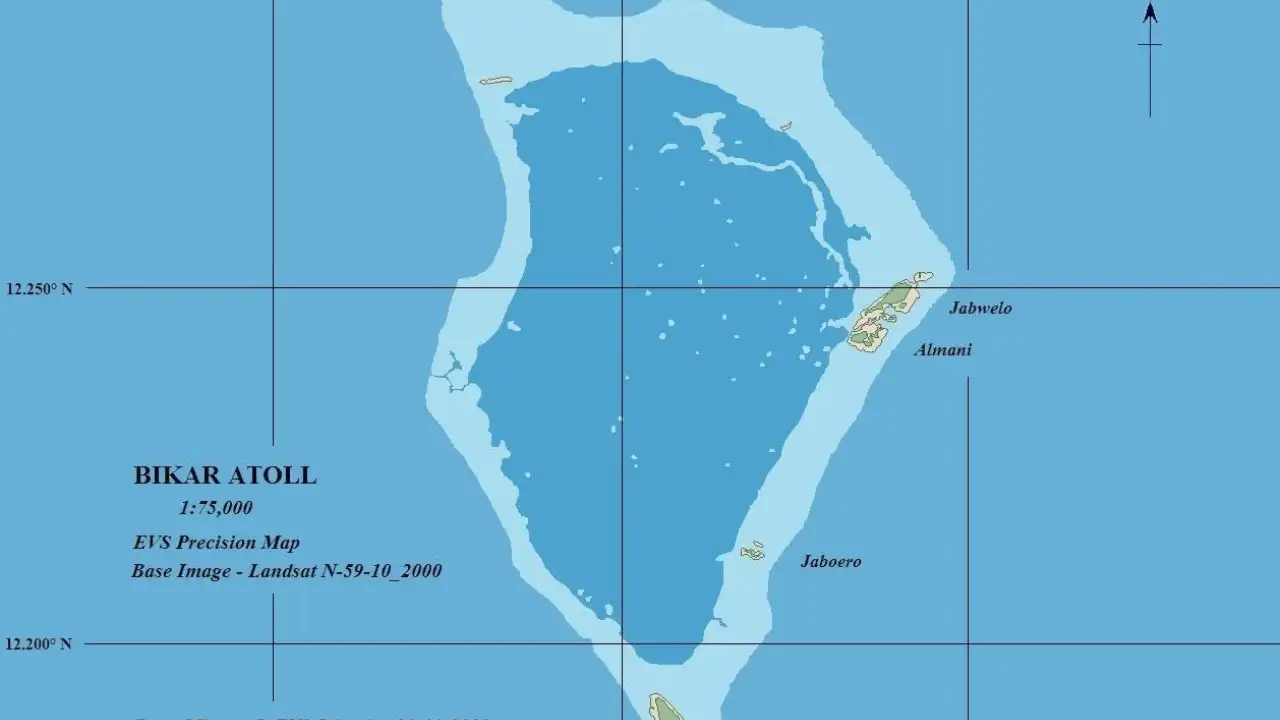
Monitoring teams found a new colony of about 2,000 sooty terns on Bikar and thousands of native tree seedlings across the forest floor | Wikimedia Commons

Island Conservation project manager Paul Jacques visited Bikar and Jemo in 2024, when rats were widespread across both islands.
He told CNN that the animals were running through the forest at night and had become a major pressure on native species. The problem was particularly serious for animals that nest or feed on the ground. Rats can eat eggs and young birds, while also consuming seeds and seedlings before they can develop into mature plants.
CNN reported that the bait was dropped by drone in July 2024 at a rate of about 25 kilograms per hectare. The pellets were distributed in lines across the islands so that rats would have little opportunity to avoid them. The campaign was carried out with the Marshall Islands Marine Resources Authority and the Ministry of Natural Resources and Commerce. The goal was to remove the invasive predator and allow the existing ecosystem to recover.
Island Conservation’s September 2025 report said the sooty tern colony was feeding hundreds of chicks. The organization described the findings as evidence that the 2024 rat-removal campaign had succeeded. The Marshall Islands’ Secretariat of the Pacific Regional Environment Programme said the 2024 rat-removal project was part of the Predator Free Pacific program, with Island Conservation providing technical expertise.
Because sooty terns are vulnerable to predators when they nest on the ground, the result is notable. Island Conservation reported that the recovery was documented by teams from the organization, the Marshall Islands Marine Resources Authority, the Ministry of Natural Resources and Commerce and community members from Utrik Atoll.
Island Conservation said feasibility studies were underway for Bokak Atoll, another remote Marshall Islands ecosystem where invasive rats remain a problem. Removing rats does not automatically guarantee a population increase, but the new colony appeared during the first year after eradication. The monitoring team used trail cameras, traps, spotlight searches and thermal detection equipment to check whether rats remained on the islands. Those methods supported the conclusion that the rodents had been successfully eradicated. The restoration also has a connection to the surrounding ocean. Seabirds carry nutrients from the sea onto islands through their guano, which adds nutrients to the soil, and those nutrients can support plant growth and eventually move back into nearby marine ecosystems. The program involved both Bikar and Jemo and was led locally by Marshall Islands agencies. Bikar is rarely visited outside scientific expeditions, while visitors to Jemo will need to avoid accidentally bringing rats or other invasive species back. There are also plans to assess whether similar work could be carried out elsewhere.