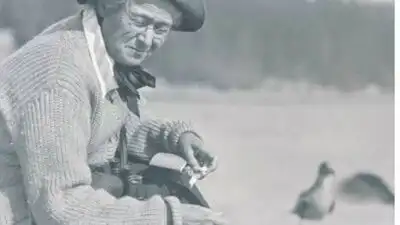
Cerio began planning a bird sanctuary soon after buying Paradise Farm. (Newport History Society photo)
In 1908, she bought the coastal property from the estate of her brother after the death of her father. Decades later, the land would become the Norman Bird Sanctuary, a protected space covering 300 acres. Mabel Norman Cerio spent much of her life between art and nature at Paradise Farm in Middletown, Rhode Island.
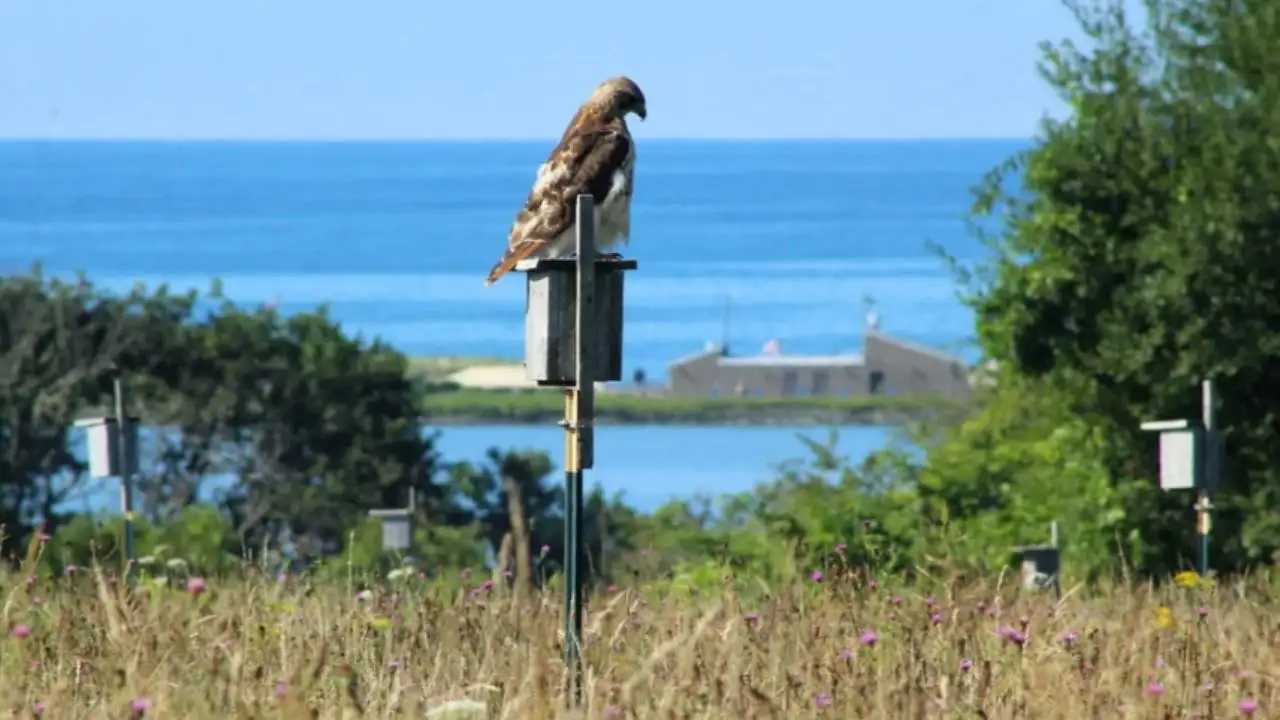
Cerio died in 1949. The organisation was formally established in 1949 through her bequest. It protects 300 acres of diverse habitat and has six miles of hiking trails. The Cultural Landscape Foundation records that the historic coastal farm had a farmhouse built, with later additions, around 1750. After his death in 1900, the farm was inherited by Mabel’s older brother Guy. Cerio later purchased it from him in 1908 and made the estate her home and studio. Today, the Norman Bird Sanctuary remains a protected 300-acre landscape (Photo: Newport string project) While Cerio is now best known for the sanctuary, records from the Newport Historical Society show that art was another major part of her life. Born in Newport in 1876, Cerio spent her early years at the family’s Belair estate before continuing her education away from home. Seven of her portraits were displayed at the Panama-Pacific exhibition in 1915. Between May 1911 and September 1912, Andersen sent Cerio 35 postcards, 11 short letters and four notes on calling cards while she was living at 25 Via Gregoriana in Rome. Its 300 acres include open spaces and wildlife habitat, while its trails provide access across the property. The original farmstead was designated the Smith-Gardiner-Norman Farm Historic District and was listed on the National Register of Historic Places in 2008.
Soon after buying the farm, she began making plans for a bird sanctuary and wildlife refuge, according to Newport Historical Society. She also explored sculpture, according to correspondence preserved by the Newport Historical Society. The sanctuary says its mission is to encourage people to explore nature, care for it and find peace and joy in it.
Cerio was a lifelong lover of art and nature. After making Paradise Farm her home and studio, she spent years painting, caring for animals and birdwatching on the property. Her interest in conservation also grew during this period. Through her trust, she left Paradise Farm to the community for the purpose of creating a sanctuary. The property was named the Norman Bird Sanctuary after her father and her late brother, George H Norman Jr. Its work includes wildlife conservation, habitat restoration and environmental education. Paradise Farm had been part of the Norman family’s property before Cerio bought it. The land had been used for sheep grazing, mixed crops and salt marsh hay, and had passed through several owners. In the late 19th century, Newport businessman George Norman acquired the property to secure water rights for the Newport Water Works. Her decision to preserve the property was not simply about keeping the family land. She became a dedicated artist, with painting as her main medium. Some of the records that shed light on this side of her life come from Hendrik Christian Andersen, a Norwegian-born artist who settled in Italy. His correspondence shows that the two had a close personal and professional relationship. Andersen regularly asked about Cerio’s painting and offered advice about her artistic work. His letters also indicate that she was experimenting with sculpture. The land Cerio left behind has continued to serve the purpose she envisioned. The Norman Bird Sanctuary now protects diverse habitats and provides space for wildlife, visitors and educational programmes. The landscape includes open fields, wetlands and woodlands. Historic features of the original farm remain, including fieldstone walls, parts of an orchard, a garden, a stone-lined sheep pen and an abandoned quarry. Hanging Rock, an outcropping represented in paintings and photographs, is also part of the landscape. Catch the latest World News and Live updates. Download the TOI app.
Today, the Norman Bird Sanctuary is the steward of the largest contiguous open space on Aquidneck Island. The sanctuary’s work today reflects that early interest in conservation, according to the Newport Historical Society.