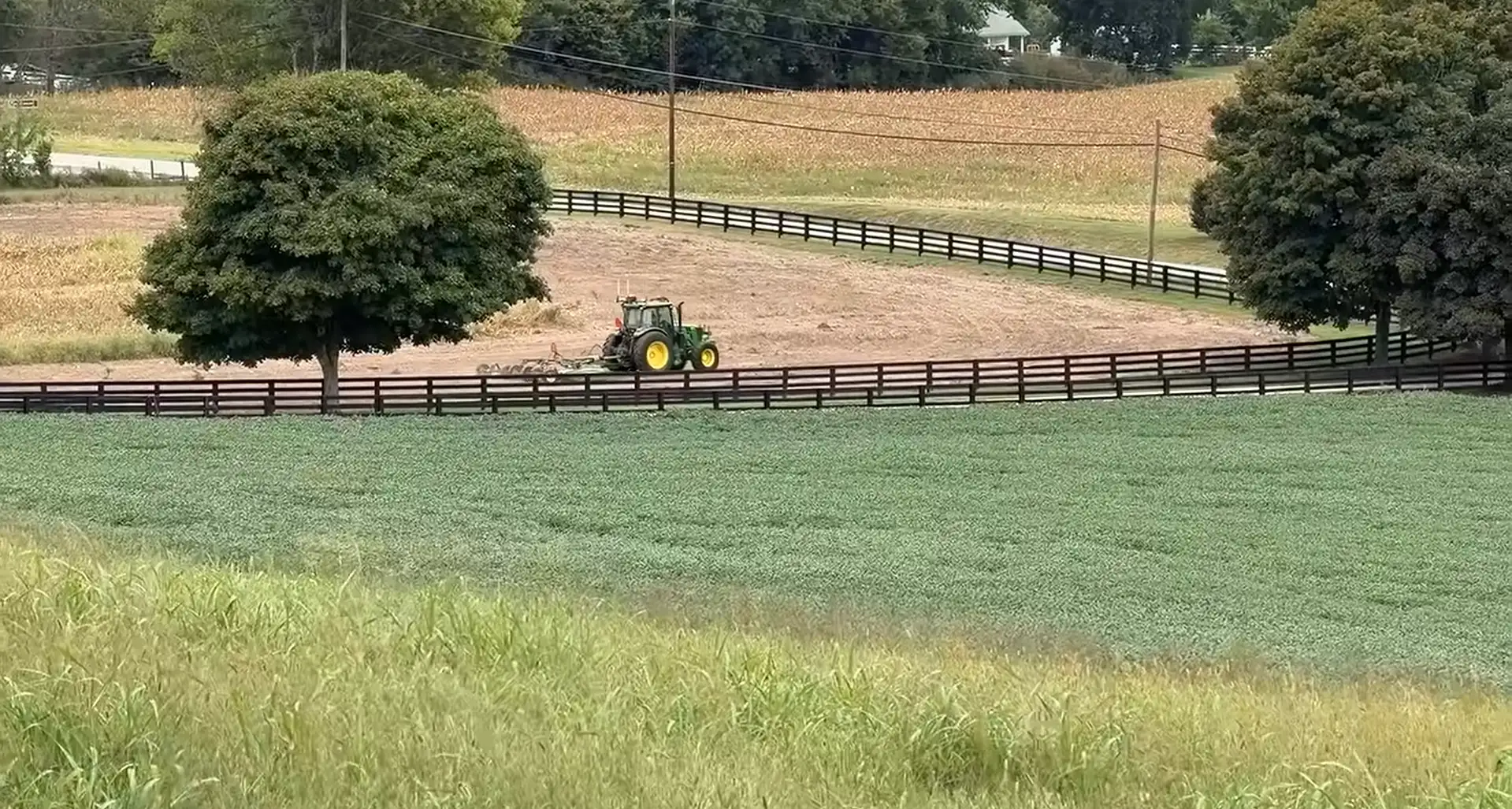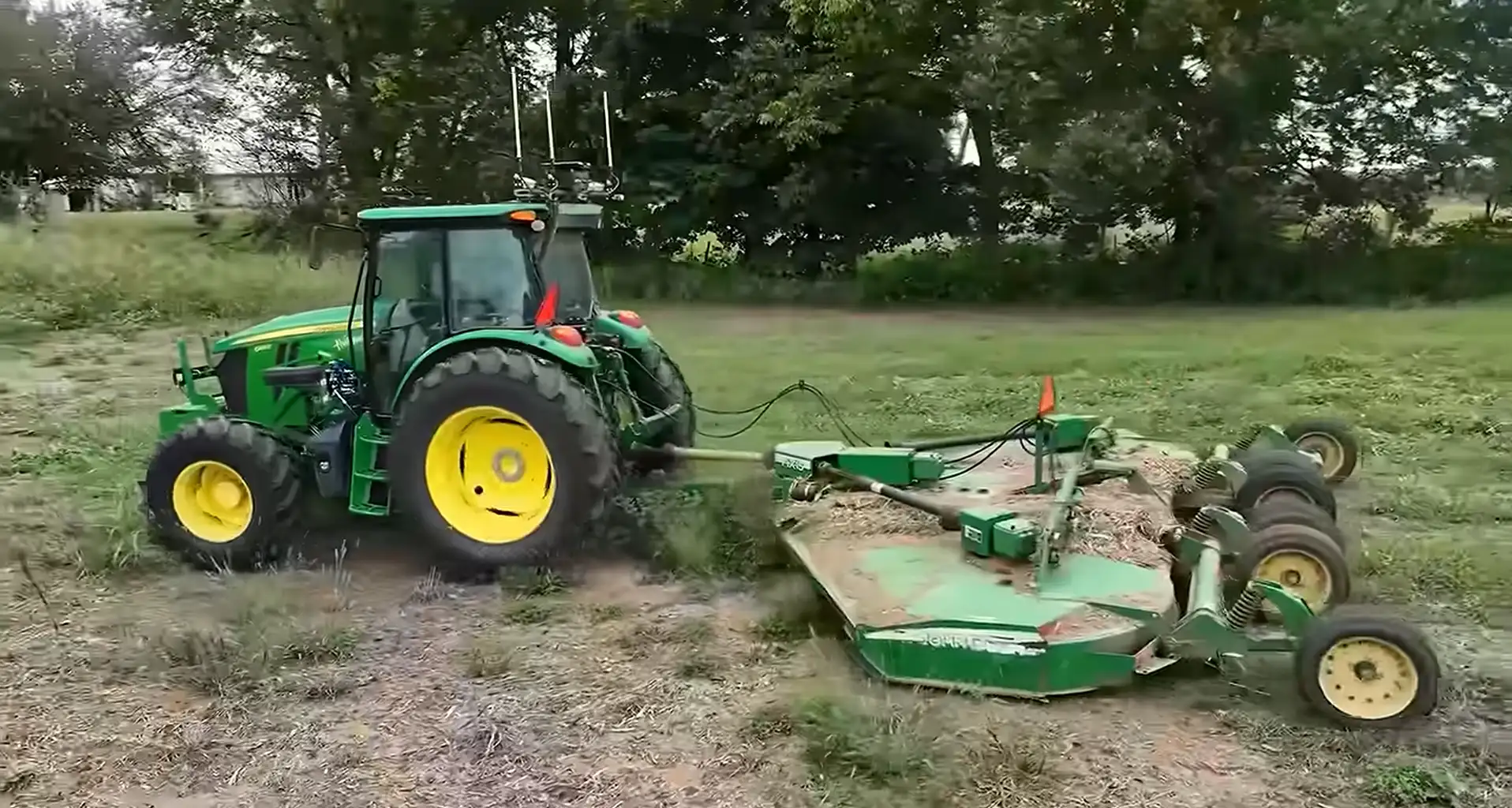
Quint Pottinger is using autonomous tractors to help save his 245-year-old family farm in Kentucky. (Photo: Farm Journal)
After three years of drought, rising expenses and difficult conversations with his banker, eighth-generation Kentucky farmer Quint Pottinger was running out of ways to save his family’s 245-year-old farm. Pottinger’s family has farmed the same land in Kentucky for 245 years. “For the last three years, we’ve had bad dry weather in July and we’ve been making 100 to 130. The farm typically expected yields of around 150 to 170 bushels per acre, making the decline particularly difficult. Using an upgraded John Deere 750 drill, the family planted 500 acres of rye, wheat and barley, along with another 300 acres of cover crops. During planting season, he wakes up around 5.30 am, activates the tractor’s computer remotely and checks its cameras before starting the machine. The system also proved useful during a wet planting season, when around 300 acres had to be replanted three times. For a family that has farmed the same land for 245 years, adopting autonomous technology marks another chapter in its history of agricultural change. “My family’s been here for 245 years.
Pottinger discovered Sabanto, a company developing technology to convert conventional tractors into autonomous machines, after his lender suggested further equipment savings could improve the farm’s cash flow, according to Farm Journal. So, it’s been hard to pay the bills,” Pottinger told Farm Journal. And depending on how his mood was going to be would set your mood for the week,” he said. We even cut our equipment,” Pottinger said. “So I just Googled autonomy, and a company called Sabanto popped up on Google,” he recalled. Let’s just see,” he said. And when it got through, I told Quint, ‘How soon can you get it in here?’” his father recalled. “It’s just a regular tractor that we can control with a cell phone,” Pottinger said. Setting up a mission takes around five minutes, allowing the family to plan many operations in advance, according to him. “We’re the first ones to do it and deploy it at this scale in the world,” Pottinger said, describing the family’s experience with autonomous row-crop planting. “It cannot back up,” Pottinger said. “Maybe not for everyone, maybe not now, but definitely has applications across a wide swath of growers that may use it,” he said. We’ve seen a lot of change, and I think that that’s just bred into us,” he said. “We’re always looking for how do we evolve to make sure we’re serving our community, and that’s what the farm is supposed to be,” he explained. After years of financial uncertainty, Pottinger says the farm no longer feels as though it is constantly fighting for survival.
With costs already cut across seeds, fertilisers, labour and equipment, he needed a different solution. His answer came from an unexpected place: autonomous tractors. What began as an experiment has since changed how the family approaches planting and fieldwork. However, three consecutive years of dry weather in July resulted in disappointing corn yields and mounting financial pressure. Pottinger recalled the anxiety of hearing from his lender during those years. “Well, you knew you were going to get a call from the banker. And you didn’t know what his mood was going to be. The family cut spending wherever possible, including on seeds, fertilisers, employees and equipment. “We cut everything. But there was only so much they could reduce without affecting operations. As he explained, “If the rain doesn’t show up, it doesn’t matter what you put in the ground, it’s not going to grow. Three years of drought have reduced crop yields on the Pottinger family farm. (Photo: Farm Journal) The turning point came when Pottinger’s lender suggested finding further equipment savings. Unsure where else to cut costs, he began searching online. Sabanto was developing a system to convert conventional tractors into autonomous machines. Pottinger decided to test it Although its technology had not been fully developed for row-crop farming. “They hadn’t really developed anything for row cropping, but they wanted to, but nothing ready yet. And I thought, well, send the demo out. The demonstration convinced his father, Remy Pottinger, that the technology had potential. The autonomous tractor helps plant crops while reducing the need for constant manual operation. (Photo: Farm Journal) The family named its autonomous tractor Geneva, after Pottinger’s grandmother. Rather than being a purpose-built driverless robot, it is a conventional tractor fitted with technology that allows it to operate autonomously. He can assign tasks and monitor the tractor remotely. The tractor has already helped plant hundreds of acres. Autonomous farming technology is helping the eighth-generation farmer plant hundreds of acres. (Photo: Farm Journal) Autonomous technology has changed Pottinger’s daily routine, but human supervision remains essential. Farm workers handle refuelling, replenishing seeds and maintenance, while Pottinger monitors its progress. “She plants for two hours. Mike comes in wherever field she’s at. He’ll stop her, put fuel in her, fill her up with seed, and do a full maintenance check on the drill on the tractor,” he explained. The tractor can then resume work remotely and continue into the evening. Pottinger was able to manage one of the replanting operations remotely while travelling in Germany. However, Geneva still has limitations. The tractor cannot reverse independently, requiring careful planning of field layouts and turning points. For Pottinger, the main motivation behind adopting autonomous technology was making farming financially sustainable. He believes the approach could also help other growers reduce costs and use equipment for multiple tasks, including mowing, spraying and hay production. The family has not yet used Geneva for harvesting, although Pottinger has considered how autonomous tractors could eventually support combine harvesters by transporting grain carts. Pottinger recalled working with his grandfather as a child, cutting grass and hay behind two mules. He added that the family continues to look for ways to evolve while serving its community. Asked whether he was still operating in survival mode, he replied, “I don’t. And when asked whether he was enjoying farming again, his answer was simple: “I’m having fun again. You use AI every day. Now get your AI Quotient. Take the AIQ test.
“Well, they came and demonstrated it last year. Today, the family is using technology that allows a conventional tractor to complete assigned tasks with limited direct intervention.