
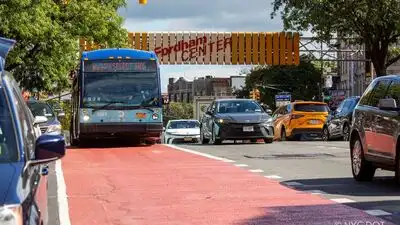
A Bx12 travels along Fordham Road in the Bronx. Image Credit: NYC DOT
The equivalent of over 1.9 million plastic bottles are incorporated into one of the experimental asphalt mixtures, while another contains 96% recycled material. Its October 23, 2026 announcement said the materials use recycled plastic and steel production waste to reduce conventional ingredients. The steel slag mixture contains 96% recycled material, including 66% recycled steel slag aggregate. The material includes the equivalent of more than 1.9 million plastic bottles, according to the transportation department.
CTA Architects reported that the results could help determine whether these recycled construction materials can be used more widely across the city.
NYC DOT says incorporating steel slag into asphalt could reduce greenhouse gas emissions while improving pavement durability. NYC DOT Commissioner Mike Flynn said the department wanted to test the new mixtures as part of the broader transportation improvements while examining how they withstand New York City’s challenging weather conditions. In an attempt to lower construction emissions and increase the longevity of its streets, New York City is testing a novel road surface made from recycled plastic bottles and industrial waste. The Bronx trials, on Fordham Road, could provide a new method of recycling rejected materials and help the city address its persistent road maintenance problems. The project also offers an opportunity to test the durability of recycled materials in the face of the demands of busy urban traffic. The New York City Department of Transportation (NYC DOT) is testing two new asphalt mixes aimed at making road construction more sustainable. The first mixture incorporates steel slag, a byproduct generated during steel manufacturing. The second uses recycled plastic, including material derived from drinking bottles, to modify the asphalt binder instead of relying on virgin polymers. The initiative is part of a broader push to find practical uses for waste materials in infrastructure. Instead of sending industrial waste and discarded plastic to landfill, the city is investigating if they could be useful ingredients for road surfaces. As explained by CTA Architects, the trials demonstrate how construction materials can be reused within a circular system, reducing waste while potentially lowering the environmental impact of infrastructure projects. Steel slag is left behind during steel production and is being tested as a replacement for conventional aggregate in the road surface. This could be particularly useful on heavily travelled roads, where surfaces experience repeated pressure from buses, trucks and other vehicles. The plastic-based mixture follows a different approach. Instead of using newly manufactured polymers to modify the asphalt binder, it incorporates recycled plastic. The two approaches are being evaluated separately, allowing the city to examine how different recycled ingredients perform under real road conditions.
The experimental asphalt has been installed on the eastern section of Fordham Road in the Bronx, between Webster Avenue and Southern Boulevard.
These earlier efforts provide a foundation for the latest experiments, which introduce additional recycled materials beyond those commonly used in existing pavement mixtures.
NYC DOT estimates that the material used in this project will prevent approximately 56.6 metric tonnes of carbon dioxide equivalent emissions compared with conventional materials. The department says this reduction is comparable to the emissions produced by an average petrol-powered passenger vehicle travelling 144,135 miles. NYC DOT already produces asphalt containing an average of 40% recycled material at its two municipal asphalt plants. The city has been experimenting with asphalt containing up to 50% recycled roadway materials on a limited scale since 2019, monitoring how the mixtures perform after installation. In 2026, NYC DOT also developed a 50% recycled asphalt pavement mix in-house for future use on city streets. The corridor is part of a project that will introduce offset bus lanes, helping improve bus speed and reliability for approximately 130,000 daily riders. NYC DOT expects the plan to reduce average commuting times by up to six minutes across 175 bus routes.
Because fordham Road is undergoing a major redesign intended to improve bus service and street safety, the location is significant.
Using recycled ingredients helps reduce the amount of new material required for repaving, according to the department. The environmental benefits of the plastic-based asphalt extend beyond recycling bottles. The figure highlights how changes in road construction materials could contribute to lowering emissions, even without altering the basic purpose of the infrastructure. The approach is particularly relevant for cities that regularly need large quantities of asphalt for street repairs and resurfacing. New York is not beginning its recycled asphalt experiments from scratch. It can also lower costs associated with transporting discarded materials to landfills. The department will monitor the pavement’s performance under everyday traffic and changing weather, including the conditions that can place considerable pressure on urban roads. The Fordham Road project is part of Mayor Mamdani’s Next Stop: Fast Buses, Better Service plan, which aims to make bus journeys faster, more comfortable and reliable. You use AI every day. Now get your AI Quotient. Take the AIQ test.