
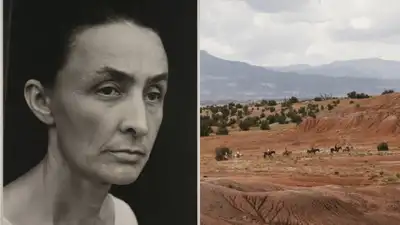
For the unversed, Ghost Ranch sits amid the dramatic red and yellow cliffs of the Piedra Lumbre, about 65 miles northwest of Santa Fe along U.S. 84. The region became closely associated with O’Keeffe, whose paintings transformed its cliffs, mesas, bones and expansive skies into some of the most recognizable images in American art.
The National Ghost Ranch Foundation and the Presbyterian Foundation announced a partnership with the State of New Mexico and the New Mexico Land Conservancy in 2025 to protect approximately 6,000 acres surrounding Ghost Ranch. O’Keeffe bought a small house and seven acres at Ghost Ranch in 1940 and also maintained a larger home and studio in nearby Abiquiú.
Under the Ghost Ranch Conservation Plan, the land, water and wildlife habitat are being protected through conservation easements, according to a report by Presbyterian Foundation. For artist Georgia O’Keeffe, that landscape became both a home and a source of inspiration. Now, decades after she first made Ghost Ranch part of her life, a new conservation effort is working to ensure the scenery that shaped her art remains largely unchanged for generations to come. These voluntary agreements safeguard land for conservation purposes while allowing its owners to retain ownership, the report states. The goal has been not only to protect the area’s natural beauty but also to ensure Ghost Ranch can continue operating its educational and retreat programs sustainably for years to come. Those properties are now separately owned and managed by the Georgia O’Keeffe Museum in Santa Fe. it preserves many of the landscapes that inspired her work, including views toward Abiquiú Lake, the Rio Chama and Cerro Pedernal, known in Tewa as Tsip’in While the new conservation plan does not directly protect those properties.
Long before the desert landscapes of Northern New Mexico became icons of American art, they were simply a vast meeting of red cliffs, golden mesas, open skies and rugged wilderness.