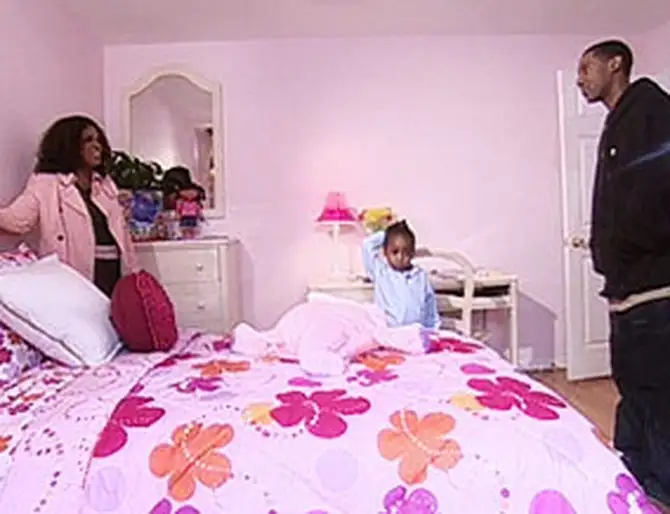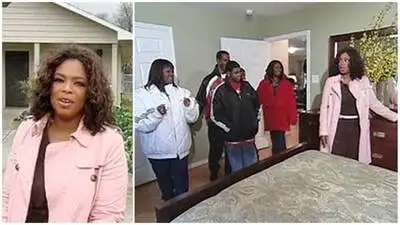
Oprah Winfrey committed $10 million to help build Angel Lane in Houston for hurricane evacuees. (Photo: Oprah.com)
When Oprah Winfrey committed $10 million to help create a new Houston neighbourhood for families displaced by Hurricane Katrina, the project was envisioned as more than a collection of houses. The result was Angel Lane, a southwest Houston neighbourhood where 65 furnished homes were built with support from Winfrey’s Angel Network, another $5 million donated by viewers and Habitat for Humanity volunteers. Because of its small size and the lower incomes of many residents, walter Jones, a former director of Harris County’s Office of Housing and Community Development who advised the homeowners’ association, said Angel Lane faced particular challenges. Because they could not pay the mortgage, still, Jones pointed to an important achievement: only one family had lost a home.
It was intended to give evacuees a fresh start and build a close-knit community. He argued that those factors limited the community’s ability to become completely self-sufficient.
But an archival 2009 report by Jennifer Latson of the Houston Chronicle revealed that the community’s early years had not unfolded as smoothly as many had hoped. Winfrey committed her $10 million shortly after Hurricanes Katrina and Rita devastated parts of the Gulf Coast in 2005. Her Angel Network raised another $5 million from viewers. Habitat for Humanity then helped construct 65 homes in the Glen Iris subdivision for families who had been forced to relocate to Houston. The first families moved into their homes in February 2006. Isaac recalled meeting Winfrey during a surprise 2005 filming and described the experience as a moment when she felt she was being given the opportunity to “start anew in Houston. Angel Lane provided 65 furnished homes for families displaced by Hurricanes Katrina and Rita. (Photo: Oprah.com) Despite their gratitude, some Angel Lane homeowners told the Houston Chronicle in 2009 that problems were emerging in the neighbourhood. Police had been called to Angel Lane more than 150 times since Isaac moved in, although authorities said the crime rate was not particularly remarkable compared with other Houston neighbourhoods. Jerry Morgan, then 26, installed cameras after his truck was broken into and also got pit bulls. One of the biggest frustrations in the 2009 report was the absence of a community centre that had been part of the neighbourhood’s original vision. The community centre was not completed during the period described in the 2009 report, but the long-running promise eventually materialised. A 2013 Houston Chronicle report said the project had finally moved forward after years of delays, with a groundbreaking held in September and construction visibly underway. At the time, Angel Lane had 65 homes and an unfinished community centre. Then, in June 2014, the Houston Chronicle reported that the community centre had finally opened, eight years after the first residents moved into Angel Lane. The project delivered what was initially most urgent: 65 furnished homes for families forced to start over in Houston.
Another resident, Luis Oviedo, said frequent fights among teenagers had made him reluctant to allow his children outside. Residents treasured their homes but were dealing with disagreements, concerns about crime, dwindling participation in the homeowners’ association and frustration over a community centre that had yet to be built. The houses were landscaped, furnished and offered to residents through highly affordable, interest-free mortgages. For residents such as Patricia Isaac and her twin sister Pinky Rembert, the houses represented a chance to rebuild their lives after losing their homes and sense of stability in New Orleans. The incidents ranged from vandalism and fights to break-ins and thefts. There had also been a shooting, although police records showed it was a domestic incident and nobody was injured. Residents responded by installing security cameras, motion-sensor lights and other precautions. Some homeowners were even considering moving away, despite agreements requiring them to remain in their Angel Lane homes for five years. Crime was not the only challenge. With no dedicated gathering place, children and teenagers were using the street to play basketball and other games. The facility was designed to provide residents with gathering space, educational programmes and services including financial literacy, workforce development, entrepreneurship and housing assistance. The centre included classrooms, a large multipurpose space, a kitchen and an outdoor veranda. Residents who had spent years waiting for the facility welcomed its arrival. Angel Lane ultimately became a complicated chapter in Winfrey’s post-Katrina philanthropy. But the experience also showed that creating houses does not automatically create a community. Residents had to contend with crime concerns, disagreements, changing leadership and the practical challenges of building trust among neighbours. The eventual opening of the community centre addressed one of the neighbourhood’s most persistent shortcomings, but the story of Angel Lane also reflected the broader difficulty of sustaining a community after the initial wave of charitable support has passed. For residents such as Isaac and Rembert, however, the meaning of Angel Lane remained deeply personal. Rembert summed up her determination to make the neighbourhood work: “Your heaven and your hell is where you make it. Mine is going to be a little piece of heaven. You use AI every day. Now get your AI Quotient. Take the AIQ test.
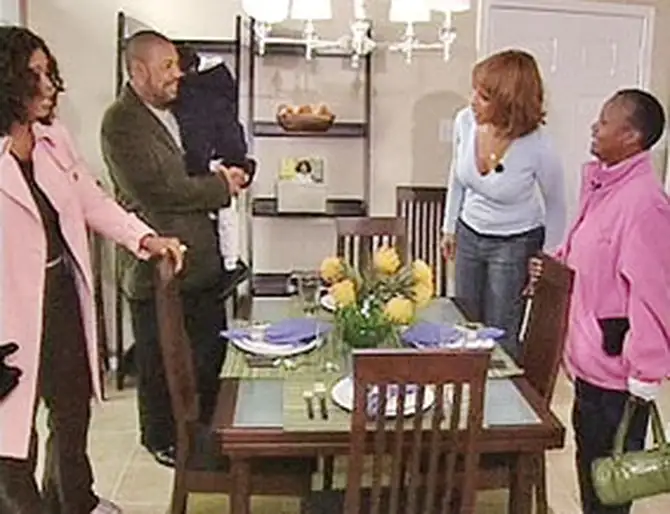
The death of HOA vice president Melissa Hurst in 2007 was described by residents as another setback.
“The transition takes time,” Muhammad said, explaining that residents had to get to know and trust people from different backgrounds while learning how to work together. The homeowners’ association had suffered from disagreements and declining participation. Residents also complained that neighbours who had been brought together by a shared experience of displacement had not developed the strong community ties they had expected. Hurst had been regarded as someone who could bring people together, and some residents felt the neighbourhood became more fragmented after her death. Angel Network employee Sheelah Muhammad acknowledged that building a community from scratch was never going to be simple. Eight years after residents moved into Angel Lane, its long-promised community center finally opened. (Photo: Oprah.com)