
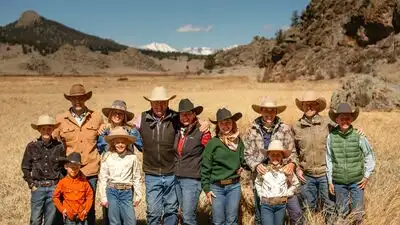
Eagle Rock Ranch of Park County has been selected as the recipient of the 2026 Colorado Leopold Conservation Award. Image Credit: Colorado Cattlemen’s Agricultural Land Trust
Their work has now earned Eagle Rock Ranch the 2026 Colorado Leopold Conservation Award, recognising its approach to conservation. Eagle Rock Ranch in Colorado’s Park County has undergone a major transformation since Dave and Jeannie Gottenborg took ownership of the property. What they inherited was a badly damaged working ranch, with muddy corrals, cut creekside willows, worn-out fencing and hay fields managed in ways that harmed wildlife, soil and water. Over the years, the couple began repairing the land while continuing to run cattle, gradually changing how the ranch handled water, grazing, vegetation and wildlife.
Dave Gottenborg initiated discussions that eventually produced the nation’s first elk migration agreement, according to the Colorado Cattlemen’s Agricultural Land Trust . The Gottenborgs’ conservation work has not been limited to Eagle Rock Ranch. The voluntary programme was developed with the Colorado Cattlemen’s Agricultural Land Trust and the Property and Environment Research Center. It uses private funding and incentives to compensate landowners who allow elk and other hoofed animals to move across their properties. The arrangement has since attracted interest among cattle ranchers and other landowners across the American West. Eagle Rock Ranch also hosts research into elk and deer crossings along county roads and highways. Working with the Property and Environment Research Center, researchers use trail-camera data to examine whether wildlife-friendly fencing can encourage elk to cross roads at safer, designated locations. Instead of focusing only on cattle, fields or individual wildlife species, the survey looks at the wider biological community sharing the landscape.
The Sand County Foundation says this increases forage availability while reducing the impact of livestock on the land. The positioning of those tanks has allowed the Gottenborgs to use rotational grazing. Rather than concentrating cattle in the same areas, the system helps spread grazing pressure across the ranch.