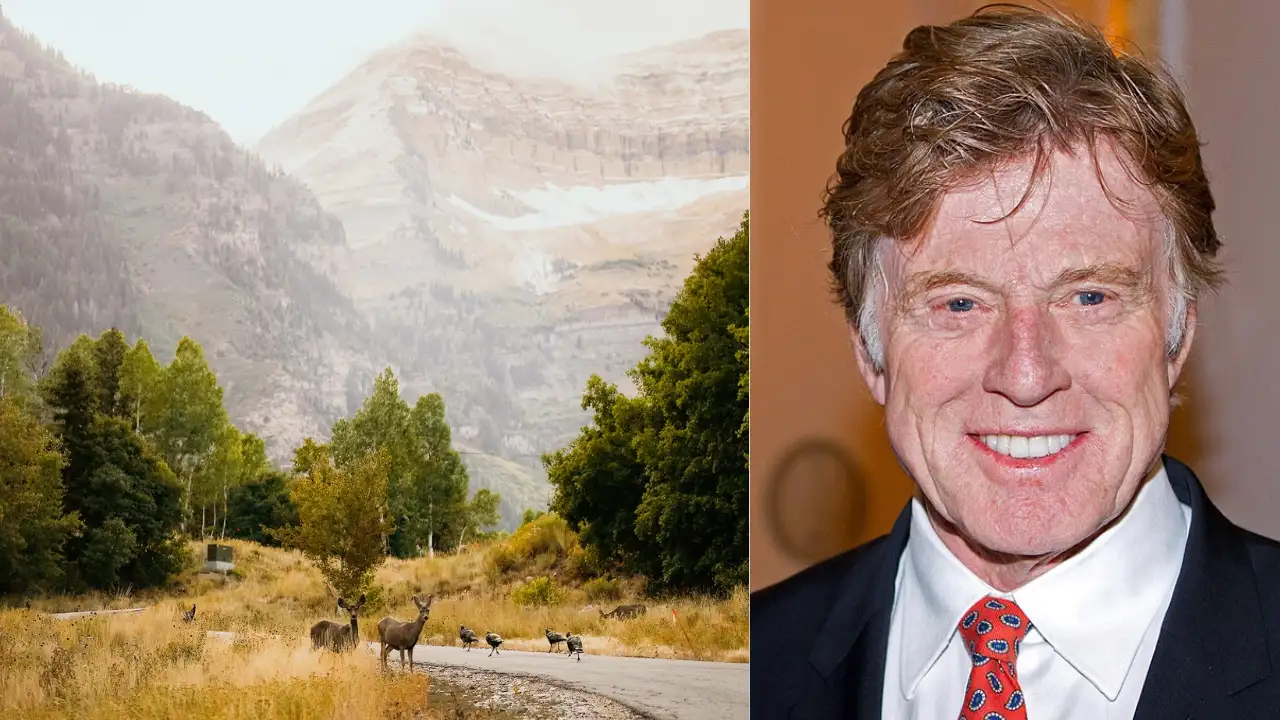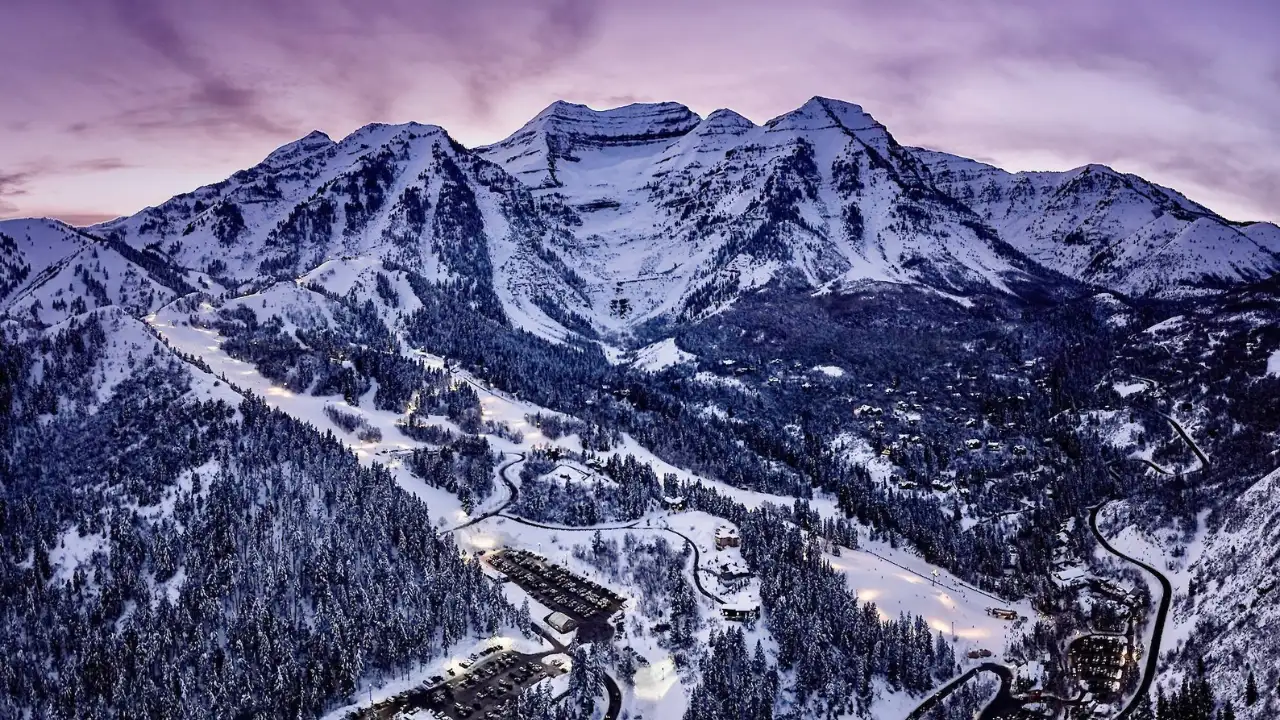
Image: Left/Wikipedia/Right/Sundance Mountain Resort
Robert Redford , the actor and director who died in September 2025 at the age of 89, bought two acres in Utah’s Provo Canyon in 1961 as a place for his family. In 1963 he built a small family house on the land, doing the construction himself, which he called the first important thing he had accomplished. The resort says he owned thousands of acres by 1968. In 1979 he attended an independent film festival in Salt Lake City and realised that experiments were happening in remote places and going unseen. For 20 years, Redford collected Native American art and artefacts, amassing more than 600 pieces that spilt from his home into public spaces. In the Tree Room, a large Navajo weaving from about 1930 covers the back wall.
Because the art reminds him that everything is sacred and nothing is, redford said he enjoys such ironic pairings.
He told his lawyer, “I want to buy a canyon,” the magazine reports. Redford told Architectural Digest that running a resort was never his ambition. Redford said artists there get permission to fail, with no production rules. Curator Brent Beck, Vice President of the Sundance Group, says Redford began with Navajo rugs while making Butch Cassidy and the Sundance Kid, to the puzzlement of his financial advisers.
Over the following decades, he assembled the surrounding land into Sundance Mountain Resort, which became home to the Sundance Institute, the Sundance Film Festival, and preserved wilderness areas. Redford wanted to develop the canyon without damaging it, so he kept buildings small, rustic, and blending into the landscape. Redford summed up his early approach to Architectural Digest with a joke, do another television show, buy another acre. By the late 1960s, after several hugely popular films including Butch Cassidy and the Sundance Kid, he had the means for a bigger gamble. The purchase forestalled a rumoured plan to divide the land into quarter-acre lots. He concluded that Sundance could host a community of artists, with the ski business supporting the arts rather than the reverse. The institute, established in the early 1980s, first offered summer fellowships to screenwriters and directors chosen for original feature scripts. Fellows spent a month in a film laboratory led by mentors including Sydney Pollack, Waldo Salt, and George Roy Hill. The collection spans ancient pottery, historic weavings and beadwork, and modern works. Beck recalls an ancient bowl sitting beside Redford’s Oscar for Ordinary People. Redford’s own house is a plant-filled solar home from the 1970s, built of wood, glass, and fieldstone, whose finest feature is its setting. It includes a windowless music room shaped like a Pueblo kiva, a small round office in a stone tower, and a thinking room above it with no telephone. Redford called the house an environment for his collection, not a museum. The hillside cottages, designed by Salt Lake City architect John Shirley, keep a low visual impact, and Redford dried wildflowers from his rides to decorate them. An Indian blessing, as the magazine calls it, opens each summer session of the institute.
Today, the resort stands as an arts, film, and conservation destination shaped by one man’s devotion to the land.