
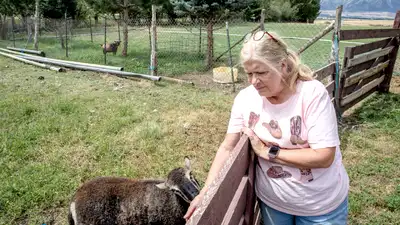
Sheri Schiess and her late husband, Boyd, worked for 14 years to preserve their 25.5-acre farm in Nibley, Utah, as development expanded around it (Image Credit: Brock Marchant/ The Salt Lake Tribune)
Sheri Schiess and her late husband, Boyd, worked for 14 years to preserve their 25.5-acre farm in Nibley, Utah, as development expanded around it. Because conservation does not always mean creating publicly accessible open space, that distinction is important.
Their effort ultimately resulted in a conservation easement with the Bear River Land Conservancy, permanently removing most development rights from the property, according to a report by Utah Public Radio (UPR). Gabriel Murray, executive director of the Bear River Land Conservancy, said that some properties are better suited to remaining private agricultural land while still providing conservation benefits, according to Utah Public Radio. A stretch of green farmland surrounded by growing communities can look increasingly out of place, but one Utah couple spent years ensuring their property would remain that way. The agreement means the farm can continue to be used for agriculture, but it cannot be turned into a subdivision by Schiess, her children or future generations. In the Schiess case, the land remains a working farm. There is also no guarantee that the public will be allowed onto the property. Wildlife habitat and waterways can also be protected through easements even when the public does not have access.
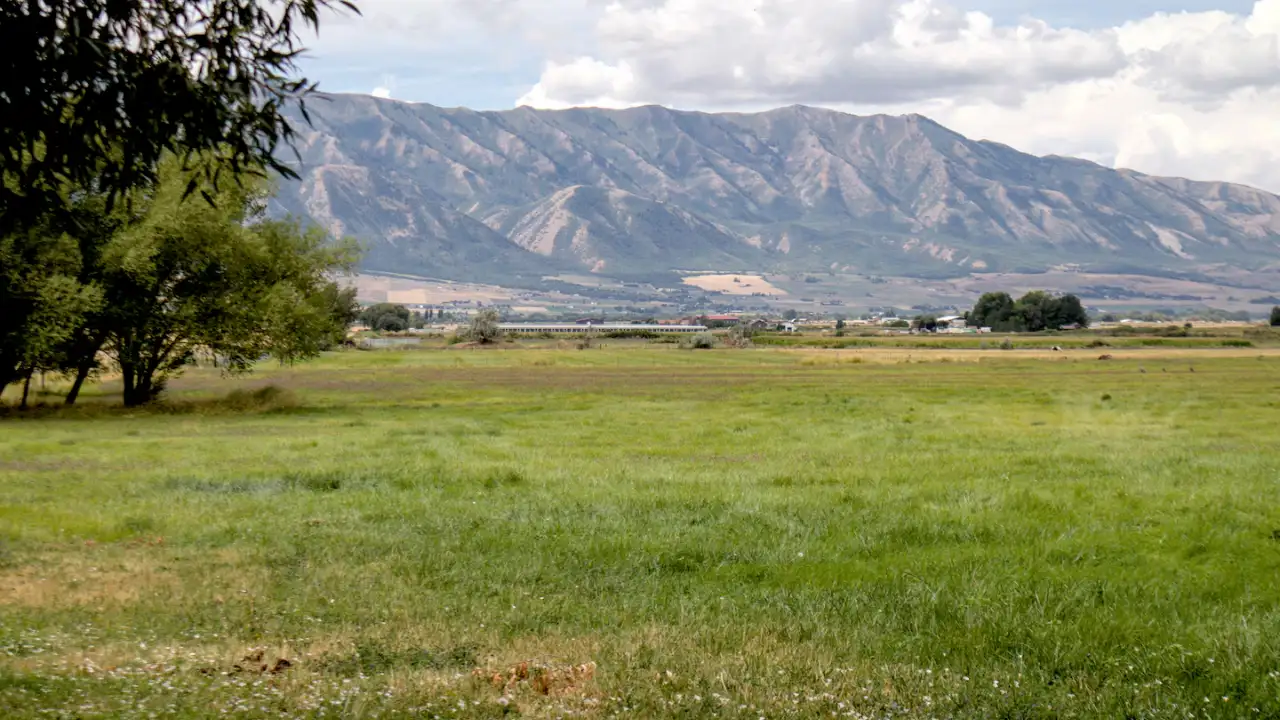
The Bear River Land Conservancy, founded in 2011, uses government and donor funding to acquire development rights from properties in the region. Cache County purchased nearly 800 acres in the Sherwood Hills area in Wellsville in 2025. That $7.5 million transaction included 471 acres that were made available to the public, while another 300 privately owned acres were placed under a conservation easement.
City officials have said Park City owns thousands of acres of open space, while additional land is protected through easements. In cases such as Schiess’ farm, the approach allows land to remain privately owned while preventing future conversion to development. There are examples elsewhere in Utah as well. Park City has also combined outright ownership with conservation easements as part of its open-space preservation efforts.