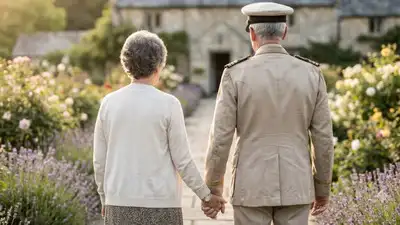
Representative image of a lifelong love story inspired by a U.S. Navy sailor and his wife. Image Credits: Google Gemini.
The couple married and remained together for more than 60 years. Nearly 200 letters kept their relationship alive According to the US Naval History and Heritage Command , Shaw was an aviation machinist’s mate, third class, in the US Navy and spent much of the war period aboard the aircraft carrier USS Enterprise (CV-6). The letters they exchanged, which ultimately numbered close to 200, were written from the naval bases in the US, Hawaii, and on the carrier. A wartime reunion led to marriage Shaw was back in the United States in 1945 for an extended period after many years of war. His 30-day leave was the time when he and his beloved married on 16th January 1945. They were married for over 60 years after the war that had kept them apart ended. Family donation preserved the sailor’s personal history More than 60 years after the wedding, Holland and their daughter Jill decided to tell Shaw’s wartime story by donating some of his belongings to the National Naval Aviation Museum. In 2012, they sent the Navy uniform, which showed what he wore during the war, along with the first letter he had written to Holland, to the museum.
Subsequently, Holland and their daughter donated his Navy uniform and wartime letters to the naval museum so that other people could learn about the love and commitment during World War 2. The National Postal Museum documents how the U.S. military introduced V-Mail during the Second World War to make transporting letters more efficient.
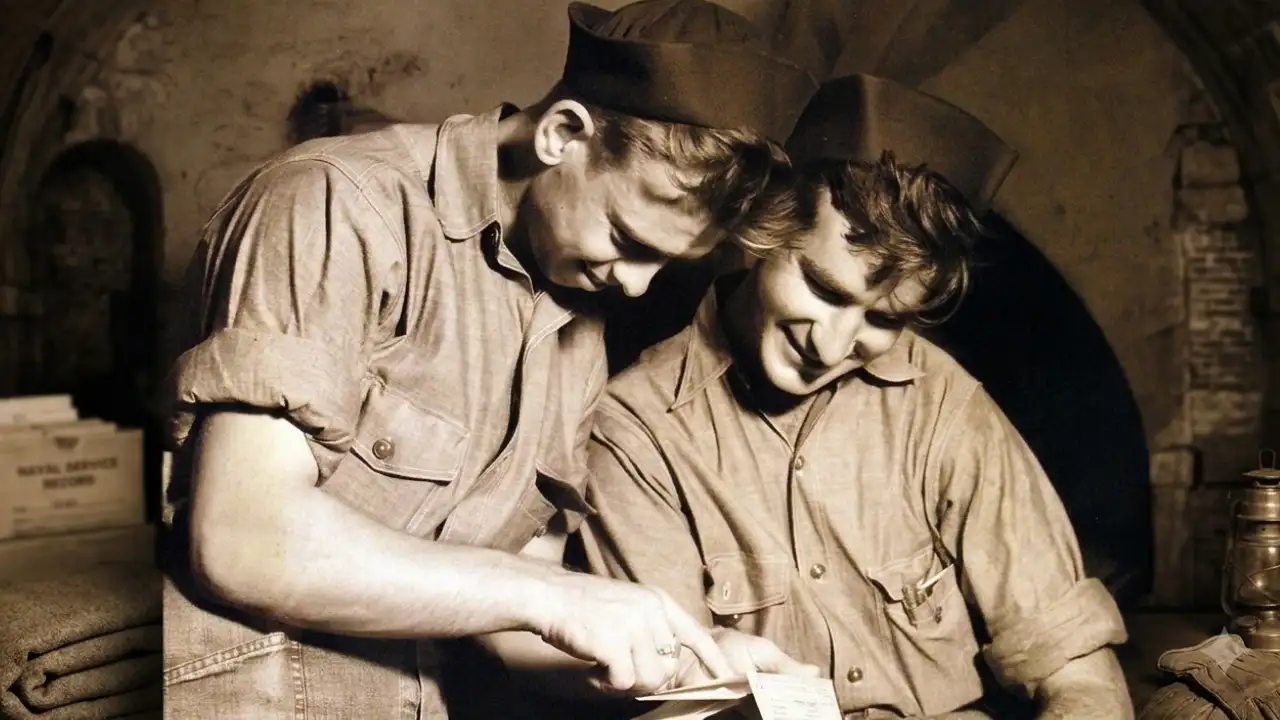
The uniform was a tangible reminder of his Navy service, but the letters told the story of the young sailor behind the uniform and how they were able to maintain the marriage despite the time and distance between the couple. Thousands of American service members were deployed far away from home during the Second World War. Handwritten letters became an important method of communication with loved ones. For US Navy sailor Vernon Shaw, a letter to his wife, Evelyn Holland, was not only a form of contact but also a symbol of hope and love that would help to sustain a relationship and give hope of reunion for several years spent apart. he sent Evelyn an engagement ring with a letter announcing his intention to marry her, hoping that she would be by his side when the war ended While stationed in the Pacific. The ship operated in the Pacific in the main theatres of war against Japan, and his military service kept him at sea for long periods. Keeping in touch with Holland was a significant aspect of their relationship. An early letter of Shaw’s was notable for its story-like tone. He depicts a young couple in love, where a schoolboy filled with precocity and nerve who asked a girl out on a date. It’s set against the backdrop of the war and the threatening spark of their affection. He sent Holland an engagement ring in the post, so he’d have a ready-made future to come back to. Their letter writing was typical of the wartime experience, an essential means for men and women separated by the war to keep alive their longing for each other. Shaw and Holland tied the knot at the First Baptist Church in Fernandina, Florida. Shaw wore his Navy service dress uniform, as a reminder of the service that had brought them together. Their letters, which bridged the distance between them, soon became a family heirloom, preserving their courtship and wartime separation. Wartime correspondence took on special meaning for the families of American soldiers and sailors. The system photographed written messages onto microfilm, reducing the space required for military mail. American servicemen sharing a personal moment through wartime correspondence during the Second World War. Image Credits: Wikimedia Commons. The donation allowed the Museum to preserve items connected to his service career as well as his marriage. The story was later written up by the Museum in its objects of history series as Enterprise Sailor Tells a Love Story. It uncovered an item that otherwise could have been left in the family. Shaw and Holland’s correspondence shows how individual exchanges can serve as valuable historical documents, capturing the hopes and uncertainties of a wartime romance, and how that history can be linked to a larger national narrative. You use AI every day. Now get your AI Quotient. Take the AIQ test.