
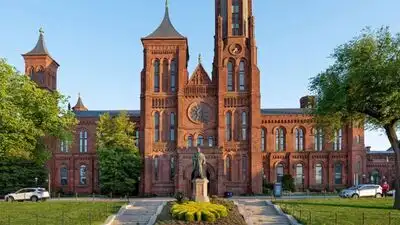
Image Credit: Jeremy Norwood/Smithsonian
The Smithsonian Institution has raised $2.5 billion through its Campaign for Our Shared Future, reaching its fundraising target a full year ahead of schedule. Announced on 5 February 2026, the achievement marks the largest fundraising campaign in the history of a cultural organisation. Launched in 2018, the initiative brought together donors from across the United States and around the world to support the institution’s museums, research centres, educational programmes and cultural projects. The milestone comes in 2026, the year the United States celebrates 250 years since the Declaration of Independence was adopted in 1776.
The Smithsonian’s fundraising effort was designed to support its work across a broad network of institutions rather than focus on a single museum or project. Its museums, research facilities, educational centres and cultural programmes serve different audiences, from visitors exploring American history to scientists studying the natural world.
What will the campaign support across the institution
The Smithsonian’s campaign website identifies 4 main priorities for the money raised: advancing sustainability and discovery, illuminating the nation’s past, opening pathways to new knowledge, and powering creativity and innovation. The report also noted that the Smithsonian’s previous major fundraising campaign, launched in 2014, had sought $1.5 billion. The Smithsonian now describes itself as the world’s largest museum, education and research complex, encompassing 21 museums, a zoo, research facilities, libraries, cultural centres and educational facilities.
These priorities reflect the institution’s wide-ranging responsibilities. Its work includes preserving historical objects, presenting exhibitions, conducting scientific research and making educational resources available to the public. The campaign is intended to strengthen these activities while helping the Smithsonian reach more people. The newer initiative set a substantially higher target, reflecting the institution’s ambitions for its museums, research facilities and public programmes. That original gift helped create an institution whose work has grown considerably over nearly two centuries.